Connect with us

Search by keyword

Computers

Unlock Your Mind’s Eye: Can We See What You’re Imagining?

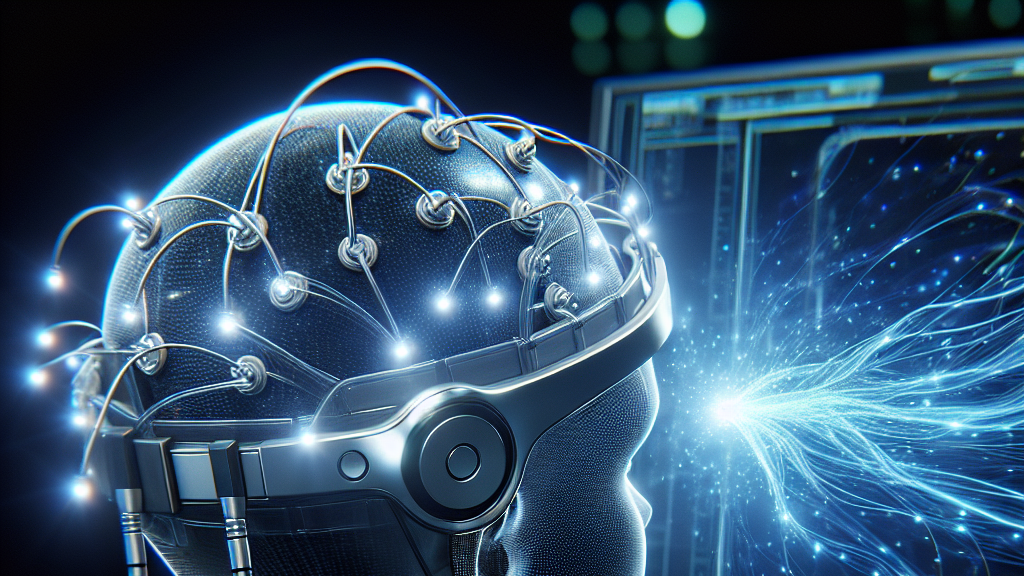
Imagine if we could see the images your mind creates just by reading brain waves! This groundbreaking research uses brain responses to predict and even recreate mental images, opening doors to understanding and sharing our private inner worlds without needing any prior labels or training.

Unlock Your Minds Eye Can We See What Youre Imagining
✨Researched by humans. Explained by robots. Learn more.

Ever wondered if someone could see the image you’re picturing in your mind? This fascinating concept isn’t just for sci-fi anymore. New research is breaking ground in ‘mind seeing,’ where scientists are working on technology that could reveal the pictures and faces we think of by analyzing brain wave data, all without needing any prior training information.

The key here is an innovative algorithm called CURSOR that doesn’t rely on pre-existing labels or training data. By examining the brain waves generated when we perceive or imagine faces, CURSOR can predict how similar our mental image is to an actual visual one. It creates an amazing bridge between mind and machine, capable of ranking different images based on how closely they match what someone is imagining.

Imagine the potential applications—this technology could help people with communication impairments or even enable artists to bring their mental visuals to life without needing a brush or camera. We might soon live in a world where your private imaginings can be shared with others just by wearing a special headset, expanding our capacity for expression and empathy in ways we never thought possible.

Did you know? Humans can generate mental images in just a fraction of a second, and now, technology might let us ‘see’ them too!

FAQs

What is CURSOR and how does it work in mind reading?

CURSOR is a cutting-edge algorithm developed to decode mental images directly from brain activity data, using only EEG (brain wave) readings and without relying on any labeled training data.

How does CURSOR predict what image someone is imagining?

CURSOR compares the similarity of brain wave patterns when a person imagines an image to known patterns and uses this to predict the image’s likeness, enabling it to rank different visual stimuli in relation to the person’s mental target.

What makes CURSOR different from previous mind-reading technologies?

Unlike previous technologies that required large sets of labeled data to train on, CURSOR operates using a self-calibrating approach, which means it doesn’t need pre-labeled data or pre-trained decoders to function, making it more adaptable and potentially accessible.

Could CURSOR be used for communication aids?

Yes, one of the exciting potential applications of CURSOR is aiding communication, especially for individuals who struggle to express themselves verbally, by providing a way to visualize thoughts directly from brain activity.

What are naturalistic images of faces used in CURSOR experiments?

Naturalistic images are representations of faces that are realistic and resemble real-world images, used in experiments to test CURSOR’s ability to reproduce and rank images based on brain data accurately.

Background

Our brains are like incredibly complex computers, constantly buzzing with electrical signals—our thoughts. EEGs are tools that read these signals non-invasively, providing insight into what’s happening in our minds. By studying these signals, scientists can correlate specific brain wave patterns with certain thoughts or images, offering a glimpse into the activity behind our eyes.

History

In the past, attempts to ‘read’ thoughts or visualize mental images mainly relied on substantial labeled datasets, where each brain wave was linked to a specific known outcome. Advances over the years in brain-computer interfaces have aimed to make this process more intuitive and less dependent on prior training. CURSOR builds on this by using a self-calibrating method, requiring no prior data to function, marking a significant leap forward.

Based on “Self-Calibrating BCIs: Ranking and Recovery of Mental Targets Without Labels” by Jonathan Grizou, Carlos de la Torre-Ortiz, Tuukka Ruotsalo, available on arXiv (arxiv.org/abs/2506.11151), used under CC BY 4.0 (creativecommons.org/licenses/by/4.0/).


Trending

Latest

Can AI Save Water Discover How

Computers

AI is transforming the tech world, but it uses lots of water! A new tool, SCARF, helps us measure and reduce AI's water footprint,...

Whats a Forbush Decrease and Why Should We Care Whats a Forbush Decrease and Why Should We Care

Space

Scientists just observed the biggest solar storm event in years, revealing unexpected cosmic ray patterns. Understanding these changes could help us protect our technology...

Can Cars Spot Danger Faster Than Humans Can Cars Spot Danger Faster Than Humans

Computers

Think about how quickly you react when something unexpected happens on the road. This research brings us closer to creating self-driving cars that can...

Can Fear of the Other Stop Social Harmony Can Fear of the Other Stop Social Harmony

Physics

Fear of the unknown might make it harder for people to agree and get along. This study shows that when people have strong xenophobic...

Can AI Revolutionize Breast Cancer Diagnosis Can AI Revolutionize Breast Cancer Diagnosis

Electricity

This research introduces a groundbreaking AI model that can accurately assess HER2-positive breast cancer using widely accessible staining methods, potentially revolutionizing how we diagnose...

Can AI Transform Your Singing into a Choir Can AI Transform Your Singing into a Choir

Computers

Imagine singing solo and having AI turn you into a choir. This research unveils a groundbreaking AI tool that transforms your voice into rich...

You May Also Like

Electricity

Discover Brain2Vec, a groundbreaking tool that uses brainwave data to spot stress, paving the way for personalized stress management and healthier living.

Computers

Imagine a world where computers can understand your feelings just by reading signals from your brain. This breakthrough in emotion recognition through brain waves...

Computers

Imagine using your brainwaves to design 3D objects! This groundbreaking research translates EEG brain signals into digital avatars, revolutionizing virtual reality and opening new...

Computers

New research shows that we can turn brain waves into 3D objects using affordable and non-invasive brainwave recordings. This could bring mind-controlled tech closer...

Computers

Imagine controlling virtual or real-world objects with just your thoughts. This research turns signals from your brain into 3D models, opening doors to exciting...

Electricity

Scientists are using brain signals to decode thoughts, raising possibilities for technology that can read your mind without you saying a word.

Electricity

This study highlights how AI models, when paired with brainwave readings, could revolutionize Parkinson's disease treatments by personalizing care based on medication states, paving...

Quantum Biology

Scientists have found universal patterns in brain activity, revealing how our minds may work similarly across different states like being awake, under anesthesia, or...

Quantum Biology

Our brains aren't just complex—they show universal patterns even when we're asleep or distracted. Using EEG, scientists found that our brain dynamics align in...

Copyright © 2024 8ig8rain.

Disclaimer: The content on 8ig8rain.com consists of AI-generated summaries of scientific abstracts from arXiv. Please note that most arXiv abstracts are preprints and may not have undergone formal peer review. While these summaries aim to convey key ideas and potential applications, they are provided for informational purposes only and should not be interpreted as validated scientific findings or professional advice. The summaries are intended to educate, spark curiosity, and inspire further exploration of science.