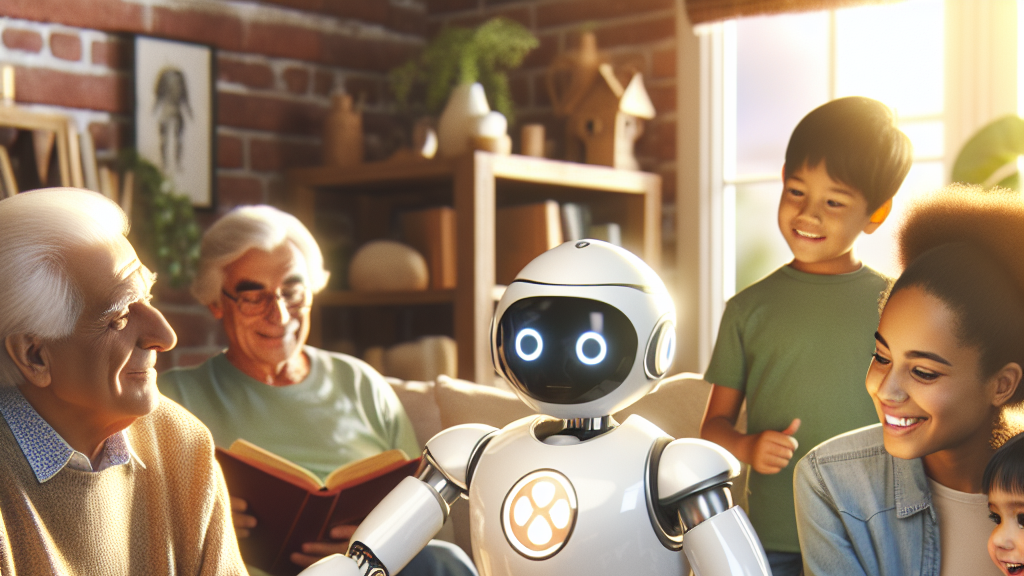
Feeling lonely is something many people experience these days, even though we’re more connected than ever digitally. While smartphones and computers keep us linked, they don’t always help us feel emotionally connected. What if robots could help fill this gap and make us feel closer to others?
Researchers are working on creating social robots that don’t just keep us company but actually help us understand and connect with the stories of others. Instead of acting as mere companions, these robots can act as ‘social proxies,’ sharing stories from one person to another, allowing us to gain new insights and perspectives. In a study, 40 robot stations were placed in homes to see if they could help people feel more connected. The results showed that hearing and reflecting on human stories from diverse backgrounds helped increase feelings of empathy and connection.
Imagine having a robot in your living room that shares a story about someone else’s life experiences. This could open up new ways of thinking and spark conversations that bring us closer to others who we might never meet otherwise. Such technology could transform how we engage socially and might even help combat feelings of loneliness or isolation.
Did you know? By 2025, it’s estimated that personal robots will become as common in homes as smartphones are today!
FAQs
How do social robots enhance human connection?
Social robots foster human connection by acting as ‘social proxies,’ sharing and reflecting on stories from different people, which helps build empathy and understanding.
What are social proxy robots?
Social proxy robots are designed to facilitate the sharing of human stories and emotions, allowing users to connect with diverse perspectives and experiences, enhancing empathy.
Can social robots reduce feelings of loneliness?
By sharing emotionally relevant stories and acting as companions, social robots can help reduce feelings of loneliness and isolation by promoting a sense of connectedness.
What was the real-world deployment study about?
The study involved placing 40 robot stations in homes for two weeks to observe their impact on human connection through the sharing of personal stories and reflections.
How might social robots change future social interactions?
Social robots could transform how we interact by offering new ways to connect and share experiences, potentially reducing social isolation and enriching interpersonal relationships.
Background
Social robots are designed to interact with humans and provide social support. They’re not just tools or gadgets; they’re meant to engage emotionally by sharing stories and empathizing with users. This study focuses on their ability to pass human stories from one user to another, enhancing our understanding and connection to diverse human experiences.
History
The concept of social robots has evolved with advancements in artificial intelligence and robotics. Initially, robots served practical purposes, but over time, their potential to offer companionship and emotional support has been recognized. Previous studies have shown that robots can alleviate loneliness, but this research expands on their role as a medium for human storytelling and connection.
Based on “Social Robots as Social Proxies for Fostering Connection and Empathy Towards Humanity” by Jocelyn Shen, Audrey Lee, Sharifa Alghowinem, River Adkins, Cynthia Breazeal, Hae Won Park, available on arXiv (arxiv.org/abs/2502.00221), used under CC BY 4.0 (creativecommons.org/licenses/by/4.0/).