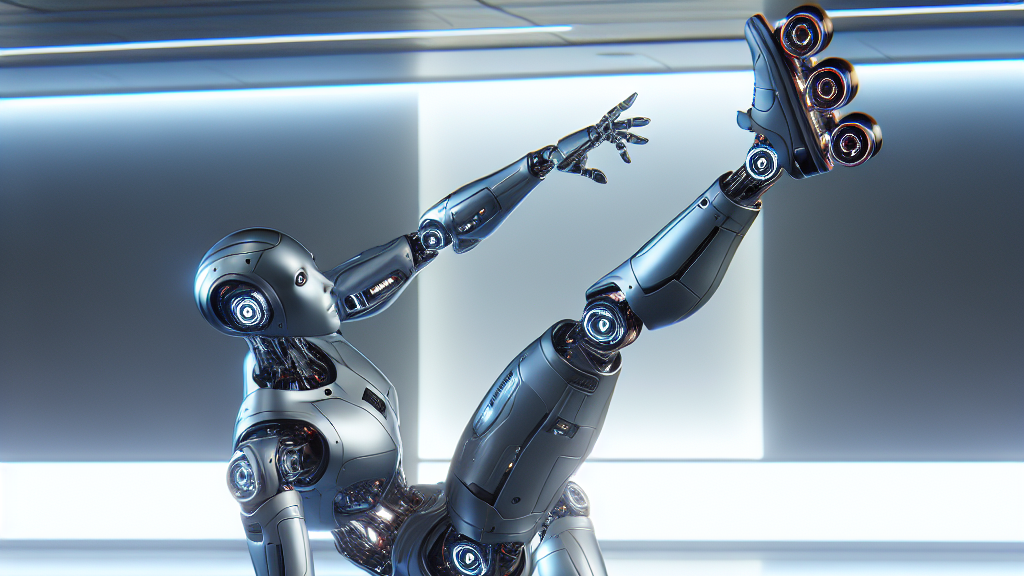
Imagine a world where robots move with the grace and adaptability of a human being. In this exciting research, scientists are stepping up their game by teaching robots to use more than just their hands and feet. Instead of acting like mechanical soldiers, these humanoids could roll, sit, and even take a tumble—just like us. This shift doesn’t just make them more lifelike, but also more useful in everyday scenarios.
The real challenge is enabling these robots to make real-time decisions about how to move when they’re using so many body parts. Traditionally, planning each step was manageable when only focusing on feet and hands, but throw elbows and hips into the mix, and it’s a whole new ball game. Researchers are using advanced computer simulations and GPU technology to make quick decisions about where each part of the robot should go—even when things get unpredictable.
This research could revolutionize how we interact with robots in the future. Imagine a robot assistant in your home that can help with tasks without needing a perfectly flat surface or a carefully planned movement path. It could go from sitting to standing with ease, roll through narrow spaces, and even adapt its moves if it encounters an unexpected obstacle. This adaptability could mean safer, more effective robots working alongside us in our everyday lives.
Did you know? Human-like robots using all their body parts could one day be so flexible, they might out-dance us!
FAQs
Why do humanoid robots need to use their whole bodies?
Using their whole bodies allows robots to move more like humans, enabling them to perform complex tasks like standing up, sitting down, or navigating tight spaces.
How does real-time control improve robot performance?
Real-time control lets robots make quick decisions about movement in unpredictable environments, making them more adaptable and useful in daily life.
What technologies help robots achieve human-like movement?
Advanced simulations and GPU technologies allow for rapid processing of movement decisions, helping robots coordinate their actions efficiently.
Background
Humanoid robots traditionally focus on moving with hands and feet, much like a person who can only crawl. The key to making them more human-like is developing systems that allow them to use their entire bodies to interact with their surroundings, which is a big technical challenge. This involves complex control systems that can manage unpredictable movements, such as rolling or using one’s torso to adjust balance.
History
The study of humanoid robots has long been limited to bipedal locomotion, focusing on feet and hands for interaction. This research builds upon earlier work in advanced robotics where the goal was to create robots that mimic human motion. The breakthrough here lies in enabling robots to use their entire bodies, a concept that had been difficult due to computational limitations but is now becoming possible with sophisticated simulators and powerful processing capabilities.
Based on “Embrace Collisions: Humanoid Shadowing for Deployable Contact-Agnostics Motions” by Ziwen Zhuang, Hang Zhao, available on arXiv (arxiv.org/abs/2502.01465), used under CC BY 4.0 (creativecommons.org/licenses/by/4.0/).