Did you know that AI transformer models, the powerhouse behind technologies like predictive text and recommendation systems, might actually ‘think’ in a way similar to our own brains? Scientists have found that these transformers can mimic a continuous thought process, much like how our brain processes information. This revelation not only deepens our understanding of AI but also opens doors to more advanced and stable artificial intelligence systems.
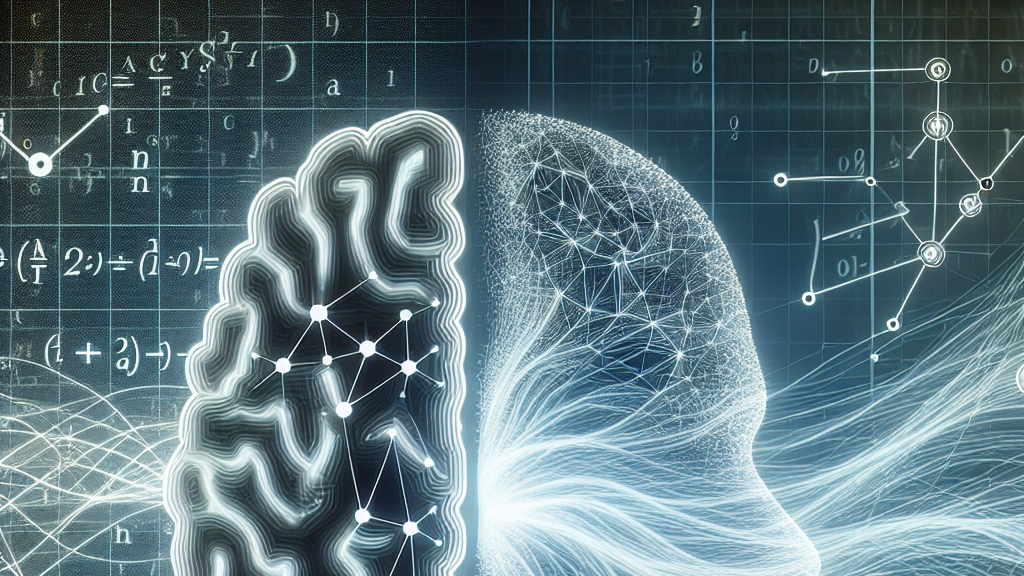
The research dives into how transformers update their information. Imagine a movie played frame by frame, each frame building on the last to create a seamless flow. This is akin to how transformers process data, continuously updating with each layer, similar to a ball rolling down a hill. The research shows that with more of these updates, the AI becomes more stable and precise, resembling a continuous flow rather than a jerky, disjointed process.
In the future, this discovery could lead to AI systems that are not only faster and more accurate but also capable of complex, human-like reasoning. Imagine AI that can not only recommend a movie but understand your mood to suggest the perfect film for your day. By bridging the gap between AI and human thought processes, this research lays the groundwork for truly intuitive technology.
Transformers, the backbone of popular AI models, process information similarly to how human brains think continuously.
FAQs
What are transformer models in AI?
Transformer models are advanced AI systems used for understanding language and context, akin to how our brains process information. They’re the technology behind features like text prediction and recommendation systems.
How do transformer models mimic human thought processes?
Transformer models update information continuously, like the flow of thoughts in a human brain. This research shows that with more updates, their processing becomes more stable and precise, similar to a seamless thought in our minds.
Why does this research on transformers matter?
This research is crucial because it shows that AI can become more stable and reliable, potentially leading to smarter systems. In the future, AI could use these principles to understand human emotions and contexts even better.
How could this transformer research affect future AI development?
The insights gained could lead to AI that reasons more like humans, potentially revolutionizing how AI interacts with us on a personal level, from reading our moods to anticipating our needs.
Are there practical applications for this transformer model research?
Yes, the continuous processing method of transformers could lead to advances in AI that understand and respond to human emotions, making technology more intuitive and user-friendly.
Background
Transformers are a kind of neural network architecture designed to process sequences of data by attentively updating each part based on the whole. Think of how you might read or listen to a story, recalling previous parts to make sense of new information. In transformers, data is updated layer by layer, akin to a human thought process that builds on itself.
History
Transformers were introduced to solve limitations in sequential data processing that older models like recurrent neural networks faced. Since their inception, transformers have evolved from improving translation and language processing to now being pivotal in AI development, underpinning applications from language models to image recognition.
Based on “Flowing Through Layers: A Continuous Dynamical Systems Perspective on Transformers” by Jacob Fein-Ashley, available on arXiv (arxiv.org/abs/2502.05656), used under CC BY 4.0 (creativecommons.org/licenses/by/4.0/).