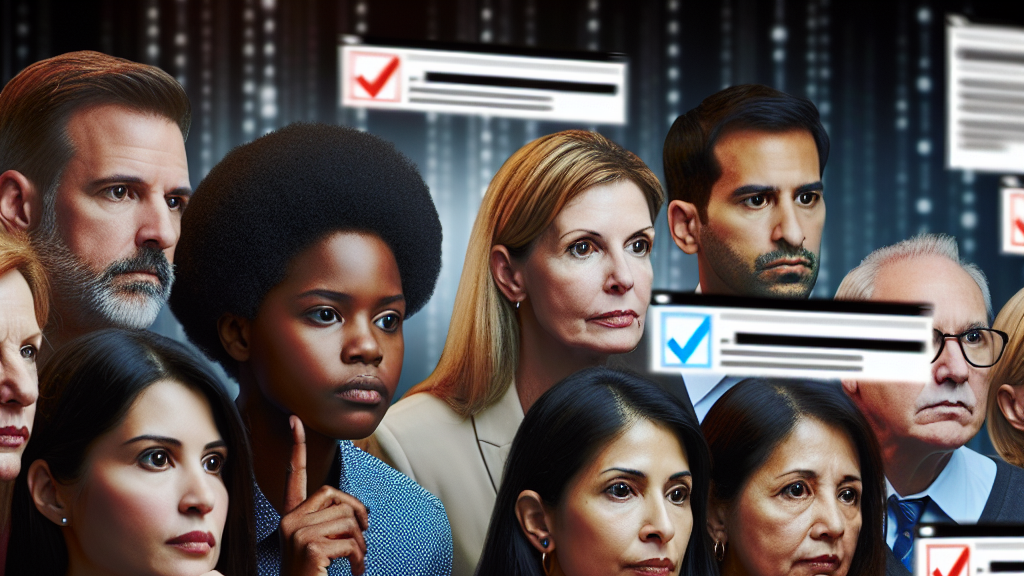
Imagine everyday people just like you helping to fight the battle against fake news online. While professional fact-checkers do an excellent job, there is simply too much information out there for them to handle it all. This is where crowdsourcing comes in—think of it as a modern-day, digital version of everyone pitching in to solve a big problem. By using the collective power of non-experts, there’s potential to debunk misinformation quickly and effectively.
The heart of the research dives into how our own brains can help assess what’s true and what’s fake online. It discovered that when everyday people are equipped with the right tools and timing, their judgments align amazingly well with those of experts. By using large-scale experiments and fancy statistical models, researchers found the secret sauce that makes non-expert opinions trustworthy. Factors like experience and timing played a crucial role in reaching accurate conclusions.
Now imagine a world where online information is vetted not just by experts but by you and me. This research could lay the groundwork for apps or tools where anyone can participate in flagging false information. With so many of us participating, we could create a more transparent and trustworthy online environment, making the internet a better place for all of us—like a digital neighborhood watch for news!
Did you know that crowdsourcing has been used to solve puzzles that even experts struggle with? It’s amazing what gets accomplished when a lot of us contribute a little!
FAQs
How do non-experts compare with expert fact-checkers in judging fake news?
Research shows that non-experts, under the right conditions, can make judgments about fake news that align closely with expert assessments, especially when timing and experience are taken into account.
What role do cognitive biases play in online misinformation assessment?
Cognitive biases can influence how people judge misinformation, but understanding these biases helps develop systems that adjust for them, improving accuracy in truth assessment.
Why is crowdsourcing a promising solution for online misinformation?
Given the sheer volume of information online, crowdsourcing leverages the collective intelligence of numerous individuals, making it possible to assess more content than experts alone could handle, thus tackling the scalability challenge.
Background
Misinformation is like a digital wildfire—it spreads quickly and can do lots of damage. Traditional fact-checkers are like firefighters, but there aren’t enough of them to put out every blaze online. Crowdsourcing helps by using the minds of regular people, like you and me, to spot and correct fake news. It’s like having a whole neighborhood of firefighters ready to help. The challenge is making sure everyone has the right tools and understanding so they can be as effective as the professionals.
History
The concept of crowdsourcing isn’t new. Historical examples include the Oxford English Dictionary, compiled partly by crowdsourcing definitions from volunteers in the 19th century. Recently, the rise of the internet and social media has brought new urgency to fight misinformation with scalable solutions. Earlier studies primarily relied on expert-driven methods of fact-checking, but with the digital age’s bombardment of information, researchers have explored how collective intelligence via crowdsourcing can be a powerful ally.
Based on “In Crowd Veritas: Leveraging Human Intelligence To Fight Misinformation” by Michael Soprano, available on arXiv (arxiv.org/abs/2506.09221), used under CC BY 4.0 (creativecommons.org/licenses/by/4.0/).