While happiness and sadness often dominate conversations about emotions, it’s the intricate interplay of stress and depression that could hold the key to our overall mental well-being. These emotions are pivotal, yet they often fly under the radar. As society becomes more aware of mental health, there’s a growing need to explore how these psychological states affect our daily lives and engagement.
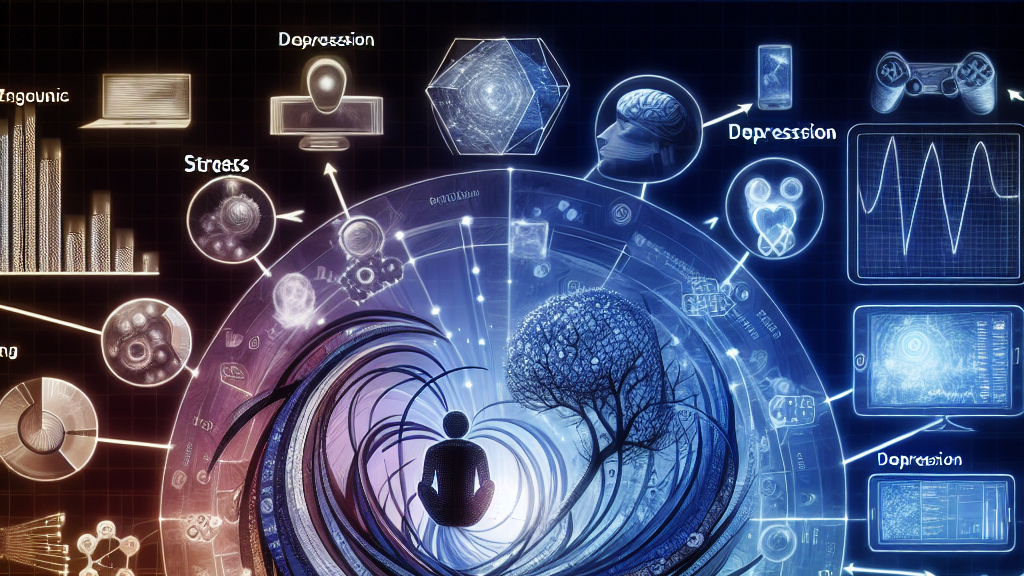
This groundbreaking research dives into the complex world of stress, depression, and engagement by using advanced computer programs to analyze these emotions. It combines various data sources, like your smartphone activity or social media usage, to form a complete picture of how these feelings manifest in our daily routines. The study introduces a new framework for understanding these emotions, proposing that by comprehensively analyzing them, we might improve how we engage with work, relationships, and personal time.
Imagine a future where your phone can give you insights into your emotional well-being, alerting you when stress levels are high, or suggesting activities to lift your mood. This research could lay the groundwork for personalized mental health apps that offer tailored advice, much like a personal coach for your emotions. It’s not just about recognizing when you’re stressed or depressed; it’s about finding ways to stay engaged and fulfilled in everyday life.
Did you know? Your smartphone could be a window into your emotional state, helping you understand your stress and depression levels!
FAQs
What makes stress and depression different from emotions like happiness?
Unlike happiness, stress and depression are complex, interrelated states that have a profound impact on daily engagement and mental health. They require more intricate analysis to understand their effects.
How do computational methods help analyze stress and depression?
Computational methods use data from sources like social media and smartphone usage to detect patterns and better understand how stress and depression influence our daily lives. This approach offers new insights and potential interventions for mental well-being.
What are the potential applications of stress and depression analysis?
Potential applications include personalized mental health apps that can predict emotional states and offer tailored suggestions to improve mood and engagement, ultimately helping individuals manage their mental health more effectively.
What challenges do researchers face when analyzing stress and depression?
Researchers face challenges in data privacy, the complexity of accurately detecting subtle emotional changes, and creating models that can effectively interpret diverse data inputs. Addressing these can enhance assessment and intervention strategies.
Background
Understanding stress and depression in a scientific context involves looking at how these emotional states impact our psychological and physical well-being. Stress refers to how we react to pressure or threats, while depression is a mood disorder that affects how we feel. Both significantly affect our behavior and engagement in daily activities. Scientists use computational methods, like analyzing social media patterns or smartphone activity, to study these states in real-time, offering innovative ways to understand and address emotional health.
History
The study of emotions using technology has evolved over the years, with initial focus on basic emotions like happiness and sadness. As technology advanced, researchers began exploring more complex emotions like stress and depression. This study builds on earlier work by using computational approaches to provide insights that were not possible before, reflecting significant progress in mental health research.
Based on “Computational Analysis of Stress, Depression and Engagement in Mental Health: A Survey” by Puneet Kumar, Alexander Vedernikov, Yuwei Chen, Wenming Zheng, Xiaobai Li, available on arXiv (arxiv.org/abs/2403.08824), used under CC BY 4.0 (creativecommons.org/licenses/by/4.0/).