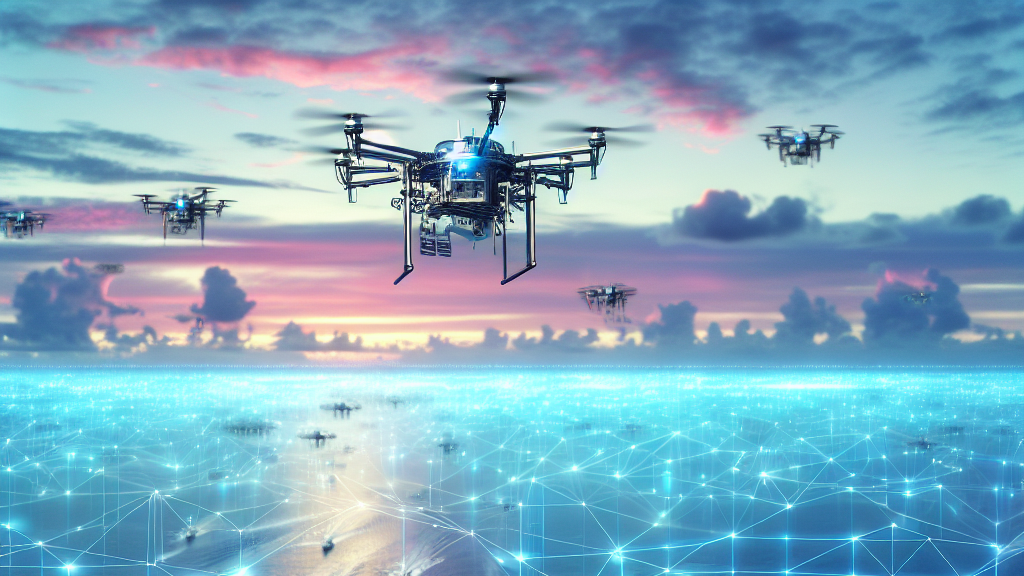
Ever thought about how technology could completely transform life-saving missions at sea? Imagine drones buzzing through the sky, working alongside powerful computers on the ground, all dedicated to assisting unmanned boats in finding and rescuing people in distress. This new frontier in technology doesn’t just sound like science fiction—it’s a very real possibility thanks to some innovative research.
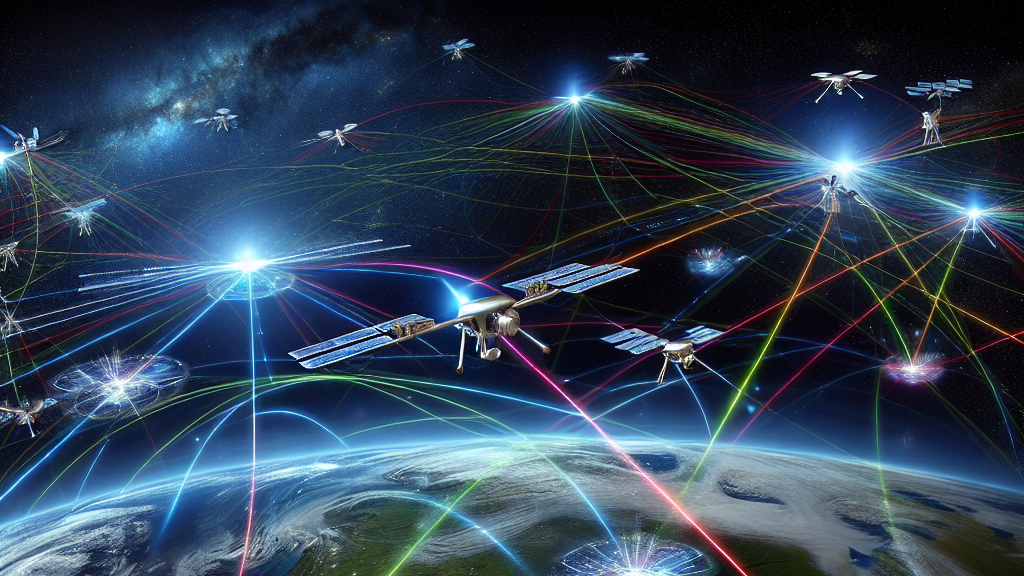
Scientists have come up with a groundbreaking system that allows drones and ground stations to work together, using smart artificial intelligence to support boats during missions. Drones can offer aerial views of wide ocean areas while ground stations provide the computational power to process complex data. This teamwork, however, isn’t straightforward. Handling unpredictable circumstances like changing weather and boat paths poses significant challenges. To tackle this, researchers developed a robust framework named generative artificial intelligence-enhanced heterogeneous agent proximal policy optimization. This framework makes these aerial and ground partners smarter, enabling them to predict changes and make quick decisions on the fly.
Imagine a future where every search and rescue mission is optimized with these drones and ground stations. Such a system could mean faster rescue times, more lives saved, and improved safety on the oceans. As technology continues to evolve, the potential applications of this research span far beyond the seas, promising smarter solutions in various fields like disaster response or complex delivery tasks. It’s an exciting time where technology and human safety unite for the greater good!
The ocean is so vast and unpredictable that nearly 2,000 search and rescue missions are launched each year by the US Coast Guard alone.
FAQs
How do drones and artificial intelligence improve search and rescue missions?
Drones provide an aerial view of large ocean areas, while artificial intelligence processes complex data, making the missions faster and more efficient.
What challenges do UAVs face when working with USVs for rescue missions?
UAVs, or drones, face challenges like unpredictable weather, complex sea routes, and limited computational resources, making coordination with unmanned surface vehicles difficult.
How does the new AI framework help drones and USVs work together?
The AI framework uses advanced technology to predict environmental changes and optimize decisions, ensuring that drones and USVs can efficiently cooperate during rescue missions.
What are the real-world impacts of this cooperative technology?
This technology has the potential to save lives by shortening rescue time during maritime emergencies, improving overall safety for people at sea.
Could similar AI frameworks benefit other fields?
Yes, AI frameworks like this could be applied to disaster response, delivery systems, and other complex coordination tasks, beyond just sea rescue missions.
Background
The study explores the collaboration of unmanned vehicles and artificial intelligence. Unmanned surface vehicles (USVs) are like driverless boats, while unmanned aerial vehicles (UAVs) are essentially drones. Integrating them with ground stations, which are powerful computers, forms a team that can analyse large amounts of data and predict situations that humans might miss. Such integration is crucial in scenarios requiring quick reactions and complex decision-making, like search and rescue missions in the unpredictable ocean environment.
History
Unmanned vehicles have been developing rapidly over recent years, primarily for applications like military operations and agriculture. Earlier studies focused on the capabilities of unmanned aerial and surface vehicles individually. The breakthrough came with advances in artificial intelligence that allowed these systems to be integrated and coordinate their actions effectively, offering new possibilities for complex operations such as search and rescue. This research builds on these advancements and aims to create a seamless network that can face the unpredictable challenges presented by the real world, particularly at sea.
Based on “Generative AI-Enhanced Cooperative MEC of UAVs and Ground Stations for Unmanned Surface Vehicles” by Jiahao You, Ziye Jia, Chao Dong, Qihui Wu, Zhu Han, available on arXiv (arxiv.org/abs/2502.08119), used under CC BY 4.0 (creativecommons.org/licenses/by/4.0/).