Imagine a world where doctors can diagnose life-threatening infections like sepsis in the blink of an eye! Thanks to a cutting-edge AI tool, this could soon be a reality. Researchers have developed an AI system that can identify harmful bacteria and fungi in blood samples with impressive accuracy, potentially reducing the time it takes to diagnose sepsis from days to just hours.
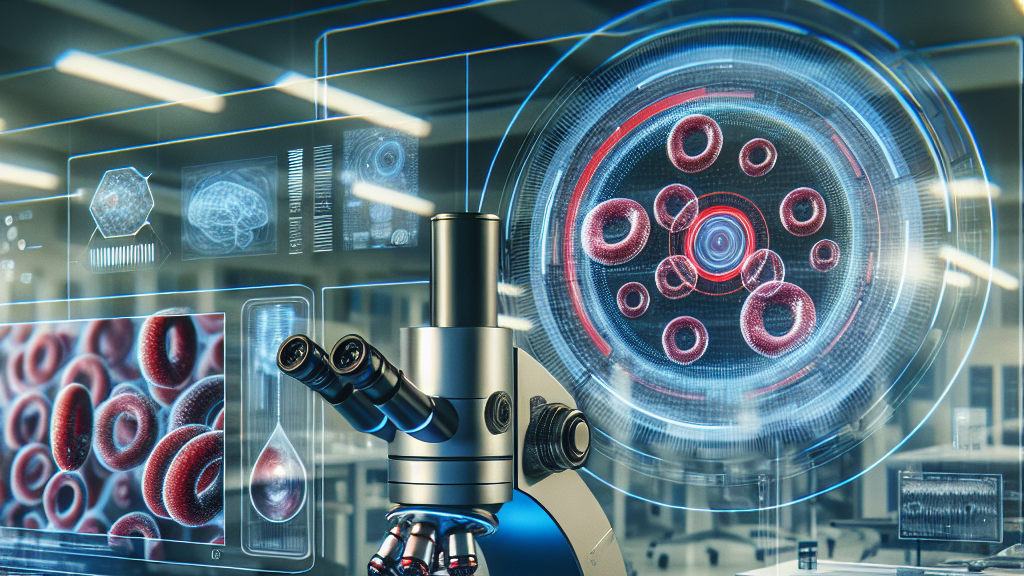
This new system uses advanced deep learning algorithms, which are like super-smart computer programs, to analyze thousands of microscopic images of blood smears. It can recognize 14 different types of bacteria and 3 types of yeast-like fungi with up to 96.2% accuracy. While it excels at identifying certain microbes, the system does face challenges with species that look very similar under the microscope. However, these early results are incredibly promising.
In the future, this AI technology could transform hospital labs, making sepsis diagnosis quicker and more accessible. Imagine having a tool that helps doctors start treatments sooner, potentially saving countless lives. As the system improves and learns from even more data, its accuracy will continue to climb, making it an essential part of modern healthcare.
Sepsis is a leading cause of death in hospitals, and quicker diagnosis could save thousands of lives each year.
FAQs
How does AI improve sepsis diagnosis?
This AI technology uses deep learning algorithms to analyze blood sample images and can detect harmful bacteria and fungi more quickly than traditional methods, potentially speeding up diagnosis and treatment.
What makes this AI system different from traditional methods?
Unlike conventional microbiological techniques that are time-consuming, this AI system can provide fast results by analyzing microscopic images with high accuracy, enabling quicker medical response to sepsis.
How accurate is the AI in identifying microorganisms?
The AI achieved an accuracy rate of up to 96.2% for certain bacteria and 71.39% for fungi, highlighting its strong capability in microbial classification.
What are the potential limitations of this AI system?
While the AI shows promising results, it struggles with identifying closely related species due to their morphological similarities, indicating a need for further optimization and data set expansion.
What impact could this technology have on patient care?
By providing rapid diagnostic results, this AI system could lead to faster treatment plans for sepsis, potentially saving lives and improving patient outcomes in hospitals worldwide.
Background
Sepsis is a severe medical condition caused by the body’s response to infection, leading to tissue damage and organ failure. Early diagnosis and treatment are vital for survival. Traditional methods rely on time-consuming lab cultures to identify the underlying bacteria or fungi causing the infection. This research introduces a deep learning technology that analyzes microscopic images to identify the infectious agents faster and more accurately.
History
Sepsis diagnosis has traditionally relied on microbiological cultures, a process that can take days. Over the years, scientists have explored faster methods, including molecular techniques and rapid tests. Recent advances in artificial intelligence, particularly in image recognition, have paved the way for using AI in medical diagnostics, offering quicker and potentially more accurate identification of microorganisms.
Based on “AI-Driven Rapid Identification of Bacterial and Fungal Pathogens in Blood Smears of Septic Patients” by Agnieszka Sroka-Oleksiak, Adam Pardyl, Dawid Rymarczyk, Aldona Olechowska-Jarząb, Katarzyna Biegun-Dróżdż, Dorota Ochońska, Michał Wronka, Adriana Borowa, Tomasz Gosiewski, Miłosz Adamczyk, Henryk Telega, Bartosz Zieliński, Monika Brzychczy-Włoch, available on arXiv (arxiv.org/abs/2503.14542), used under CC BY 4.0 (creativecommons.org/licenses/by/4.0/).