Imagine a world where doctors can diagnose deadly infections in the blink of an eye, potentially saving countless lives. That’s exactly what this groundbreaking research is working towards. Scientists have developed a deep learning algorithm that can identify harmful bacteria and fungi in blood samples with remarkable speed and accuracy. Traditional tests can take days and are quite costly, but this new technology could change that forever.
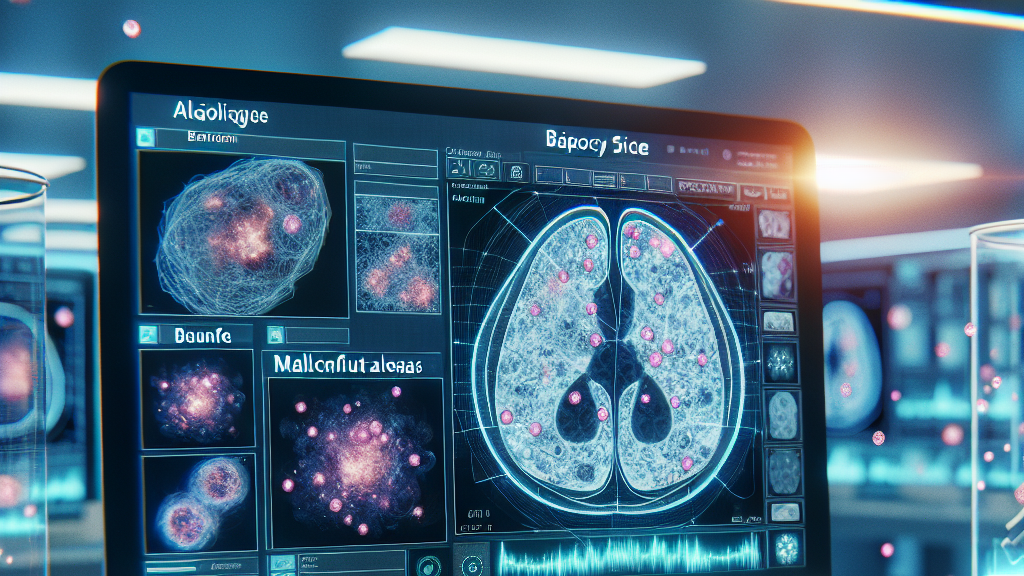
In this fascinating study, researchers used over 16,000 images of blood samples to train their AI model. Leveraging cutting-edge algorithms, they achieved impressive accuracy rates in identifying 14 different bacteria species and 3 fungi types. While some challenging cases due to similarities in appearance still exist, the results have shown great promise, getting even the toughest bacteria right almost every time.
Think about it: in the future, a visit to the doctor for an infection could mean a quick test, powered by AI, that identifies the exact bug you’re fighting. No more waiting for lab results. This could lead to not only faster treatments but also better, more personalized healthcare. It’s like turning the doctor’s office into a futuristic science fiction scene where AI is an unseen hero fighting infections one image at a time.
Sepsis can kill faster than a heart attack, making rapid diagnosis crucial for survival.
FAQs
What is sepsis, and why is a quick diagnosis so important?
Sepsis is a life-threatening condition resulting from the body’s response to infection, which can lead to tissue damage and organ failure. A rapid diagnosis is crucial because the condition progresses very quickly and can be fatal without prompt treatment.
How does AI help in identifying bacteria and fungi for sepsis diagnosis?
AI uses deep learning algorithms to analyze microscopic images of blood samples, quickly identifying specific bacteria and fungi. This speeds up the diagnostic process compared to traditional methods, which are slower and more expensive.
What are the challenges faced by AI technology in microbial classification?
While AI shows promise in identifying bacteria and fungi, it sometimes struggles with closely related species that look similar under a microscope or have high morphotic diversity. Continuous improvements and more training data are needed to overcome these challenges.
Is this AI technology currently being used in hospitals?
The technology is still under development, requiring further optimization and testing before it can be widely implemented in hospitals. However, it holds great potential for future healthcare applications, potentially transforming how infections are diagnosed and treated.
How does the technology impact the cost of sepsis diagnosis?
By speeding up the diagnosis process and reducing the need for costly microbiological tests, this AI technology could significantly reduce the overall cost of diagnosing and treating sepsis.
Background
Sepsis requires immediate attention due to its rapid progression. Traditional diagnostic methods involve culturing blood samples, which can take days. To address this, researchers are turning to AI and deep learning, which use sophisticated algorithms to quickly and accurately analyze digital images of blood samples. Deep learning mimics the way the human brain processes information, allowing it to recognize complex patterns in data. In this study, researchers used a vast collection of microscopic images to train their deep learning model to identify different pathogens in blood samples.
History
Over the past decade, AI in healthcare has increasingly focused on using deep learning for diagnostics. Previously, bacterial and fungal infections were identified using traditional microbiological methods that involved growing cultures from samples, a process that is both time-consuming and costly. Recent developments in AI have allowed scientists to train computers to analyze digital images of samples, speeding up identification significantly. This approach builds on earlier studies that identified individual microbial species and extends them to complex cases involving multiple organisms, aiming to streamline diagnosis and treatment.
Based on “AI-Driven Rapid Identification of Bacterial and Fungal Pathogens in Blood Smears of Septic Patients” by Agnieszka Sroka-Oleksiak, Adam Pardyl, Dawid Rymarczyk, Aldona Olechowska-Jarząb, Katarzyna Biegun-Dróżdż, Dorota Ochońska, Michał Wronka, Adriana Borowa, Tomasz Gosiewski, Miłosz Adamczyk, Henryk Telega, Bartosz Zieliński, Monika Brzychczy-Włoch, available on arXiv (arxiv.org/abs/2503.14542), used under CC BY 4.0 (creativecommons.org/licenses/by/4.0/).