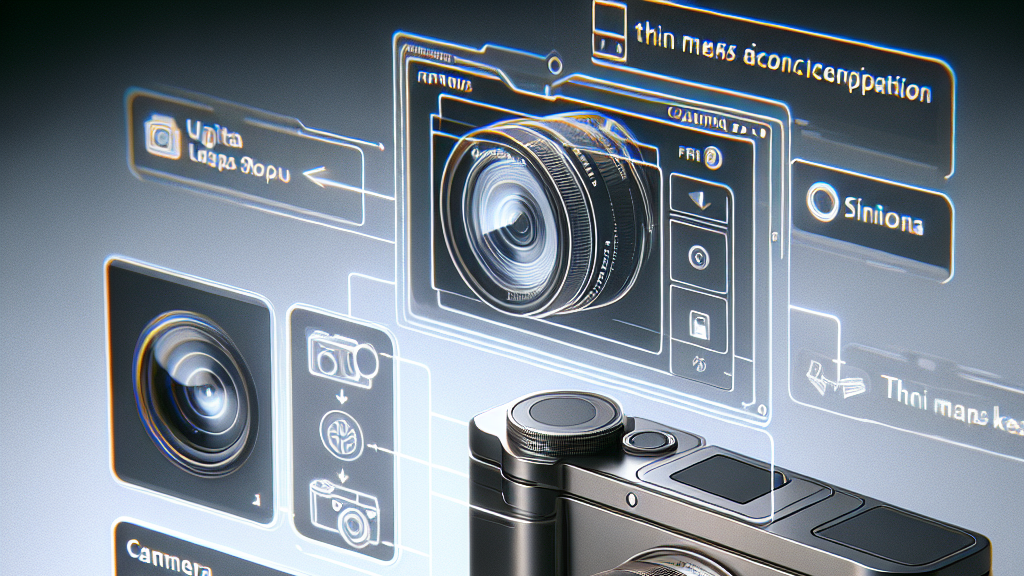
Imagine snapping photos without a big, clunky lens on your camera—sounds like science fiction, right? But that’s exactly what lensless cameras are doing. They ditch the traditional design that mimics the human eye and instead use a thin mask to capture images. The secret sauce lies in smart, digital tricks and advanced tech that processes these images after they’re taken, making photography more innovative and versatile than ever.
Researchers are pushing the boundaries by using neural networks and physical models to improve lensless photography. While the current methods simplify some parts to make them easier to use, there’s still room to grow. They have created a clever system that uses a pre-processor to fine-tune the image before we even get to see it. This approach works wonders across different setups and types of masks, showing just how adaptable it can be. By making these components modular and shareable, they’ve cut down the time needed to develop new systems drastically.
So what could this mean for you? Imagine having a smartphone that’s thinner and lighter because it doesn’t need a bulky lens. Or think about scientific cameras that can capture more accurate images in challenging environments, all thanks to this lensless technology. This could even lead to breakthroughs in virtual reality and augmented reality, changing how we interact with digital content every day. The future of cameras is lens-free, and it’s going to be exciting to snap along for the ride!
Did you know? Lensless cameras can be as thin as a credit card since they don’t need bulky lenses!
FAQs
What is the core concept behind lensless cameras?
Lensless cameras capture images without using traditional lenses. They replace lenses with a thin mask, and the image formation is completed through digital post-processing, making the camera design much more compact and versatile.
How do neural networks improve lensless imaging?
Neural networks in lensless imaging help process the captured data, improving the quality and accuracy of the final images. They allow for flexibility in adapting to different types of masks and can enhance image clarity and detail.
What are the practical applications of lensless camera technology?
Lensless camera technology can revolutionize personal devices like smartphones by making them slimmer and lighter. It also has potential applications in scientific imaging, virtual reality, and augmented reality, offering improved performance and new possibilities in various fields.
How do modular reconstructions benefit lensless imaging?
Modular reconstructions allow components of lensless imaging systems to be pre-trained and reused across different setups. This reduces the time and effort needed for calibration and training, speeding up the development of new systems and enhancing their adaptability.
Why is it significant that datasets and software are open-sourced in this research?
Open-sourcing datasets and software makes the research more accessible, enabling other scientists and developers to contribute, improve, and innovate upon the existing work. It fosters collaboration and accelerates advancements in lensless imaging technology.
Background
Traditional cameras use lenses to focus light onto a sensor, just like human eyes. However, lensless cameras capture light through a thin mask, removing the lens entirely. This light is then processed by computers using advanced techniques like neural networks, turning it into a clear image. This approach makes cameras much simpler in design and opens doors to new applications.
History
Photography has always relied on lenses since its inception, but researchers have long sought ways to innovate and simplify camera designs. Early lensless imaging attempts were limited by technological constraints. Recent advancements in digital processing and artificial intelligence have now made it possible to realistically consider lensless cameras for practical use. This study builds on those breakthroughs by exploring how neural networks can be leveraged to enhance image processing and generalize across different types of masks.
Based on “Towards Robust and Generalizable Lensless Imaging with Modular Learned Reconstruction” by Eric Bezzam, Yohann Perron, Martin Vetterli, available on arXiv (arxiv.org/abs/2502.01102), used under CC BY 4.0 (creativecommons.org/licenses/by/4.0/).