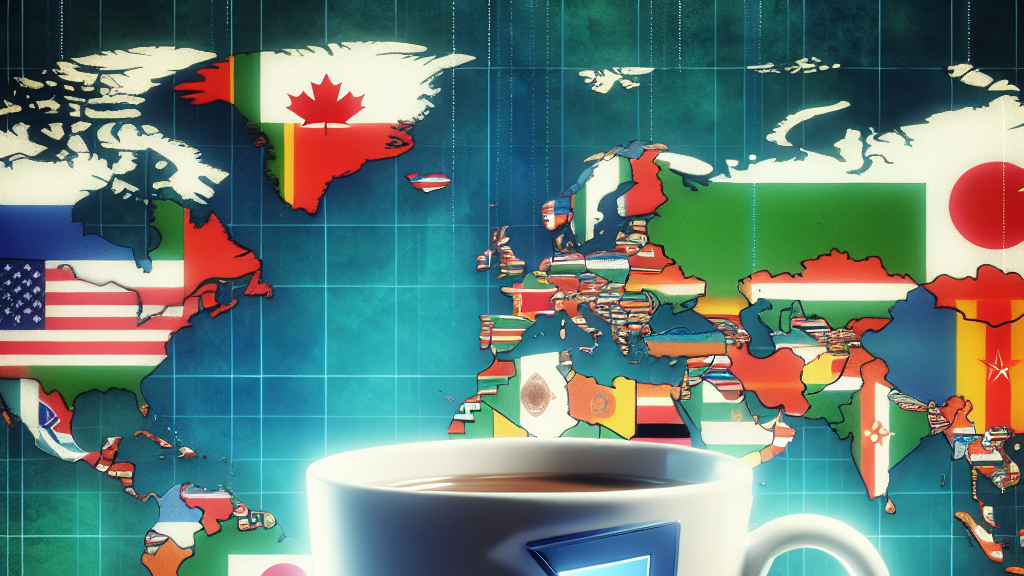
Imagine waking up to find out your daily coffee fix suddenly costs more. That’s the potential reality due to a proposed U.S. trade policy that adjusts tariffs on imported goods, like coffee, based on a concept called ‘Discounted Reciprocal Tariff’. This approach suggests that countries are charged different tariffs based on strategic economic interaction principles from game theory.
The research explored various technical methods including statistical modeling, which is basically using math to predict outcomes, and machine learning techniques that group countries together based on how they handle tariffs and economic complexity. This helps determine how the proposed changes might impact the coffee sector. By using computer simulations, researchers showed that the new tariffs could cause the U.S. to buy coffee from different countries than it currently does, potentially leading to higher coffee prices for you and me.
So, what’s the big deal? Well, if you’re a coffee lover, you might see a jump in your morning brew’s price tag as the U.S. potentially turns to different coffee suppliers with lower tariffs. This isn’t just about coffee; it’s an example of how trade policies can affect the everyday things we rely on. Understanding this can help us anticipate and adapt to economic changes, ensuring we’re prepared for potential cost increases in our lives.
Did you know that a single change in trade tariffs could cause your coffee to cost significantly more at your local cafe?
FAQs
How might new U.S. tariff policies affect coffee prices?
New U.S. tariff policies could make coffee more expensive by changing the countries from which the U.S. imports coffee, leading to higher prices for consumers.
What is a ‘Discounted Reciprocal Tariff’ structure?
A ‘Discounted Reciprocal Tariff’ structure involves adjusting tariffs between countries based on strategic interactions, which can impact trade flows and import demands.
How does game theory relate to this research on tariffs?
The research interprets tariff policies through game theory, focusing on how countries strategically interact with each other economically, impacting global trade dynamics.
Why is economic complexity important in understanding trade policy impacts?
Economic complexity helps identify countries’ capabilities and diversification in exports, which is crucial in understanding how trade policy changes may affect different countries.
What practical changes could this study imply for everyday consumers?
This study suggests that strategic tariff policies may increase import costs, like coffee, making everyday products more expensive for consumers.
Background
Tariffs are essentially taxes on imports, which affect the prices consumers pay for goods from other countries. The ‘Discounted Reciprocal Tariff’ concept involves strategically adjusting these trade taxes between countries based on reciprocal agreements and economic strategies. Game theory is often applied to understand such strategic interactions, predicting potential outcomes in international trade. Economic Complexity helps evaluate countries based on their economic diversification and capabilities, providing a deeper understanding of how trade policies impact global economies.
History
Tariff policies have long been used as tools for countries to protect local industries or to exert economic pressure. Over the years, researchers have studied how tariffs impact global trade and economies. Past studies have used economic models to analyze these effects, and this current research builds on that by integrating advanced statistical techniques and machine learning, focusing on the real-world application of tariffs to the coffee sector.
Based on “Brewing Discontent: How U.S. Reciprocal Tariffs on Coffee Could Echo the Boston Tea Party” by Muhammad Sukri Bin Ramli, available on arXiv (arxiv.org/abs/2504.02915), used under CC BY 4.0 (creativecommons.org/licenses/by/4.0/).