Connect with us

Search by keyword

General Relativity and Quantum Cosmology

What If Gravity Works Like Magnetism?

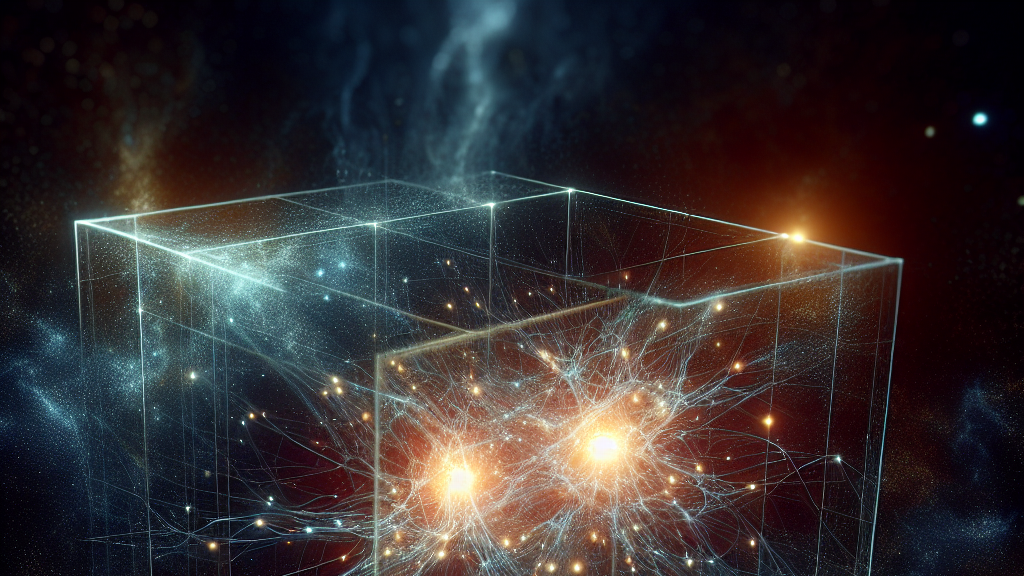
Ever wondered if gravity could work like magnetism? Scientists explored this idea by comparing gravitational and electromagnetic forces. Imagine if we could harness gravity in new ways, just like how we use electricity and magnets today—opening potential doors to innovations in energy and technology!

What If Gravity Works Like Magnetism
✨Researched by humans. Explained by robots. Learn more.

Imagine if the force that keeps us grounded was just like the force that powers your favorite gadgets. This groundbreaking research considers the possibility that gravity and magnetism might be more similar than we thought. This isn’t just an idea for a sci-fi novel—it’s a real scientific exploration into how these two forces could be related.

This study uses something called Gravitoelectromagnetism theory, which treats gravity like an electromagnetic field. By looking at gravitational Compton scattering, the researchers were able to see how this theory might behave under different conditions, like varying temperatures. This approach allows scientists to draw comparisons between gravity and electromagnetism, similar to how they understand light and other electromagnetic waves.

The implications could be huge—imagine harnessing gravity as we harness electricity today! This could revolutionize how we generate and use energy, opening possibilities for advanced technologies in transportation, energy production, or even new scientific breakthroughs that reshape how we understand the universe.

Did you know that if gravity behaved like electromagnetism, we might be able to invent new kinds of energy sources harnessing gravitational waves?

FAQs

What is Gravitoelectromagnetism, and why is it important?

Gravitoelectromagnetism is a theory treating gravity like electromagnetism, showing that similar principles might govern both forces. This insight could lead to breakthroughs in how we use or manipulate gravity.

How could the Gravitoelectromagnetism theory impact our daily lives?

If we can treat gravity like electromagnetism, we might develop new technologies to harness gravitational forces for energy production and transportation, potentially transforming sectors of our everyday lives.

What did the researchers compare in their exploration of Gravitoelectromagnetism?

Researchers compared gravitational Compton scattering using Gravitoelectromagnetism theory and Quantum Electrodynamics to see how these theories behave under different conditions, such as varying temperatures.

Why study gravitational Compton scattering?

By studying gravitational Compton scattering, scientists can understand how gravitational and electromagnetic forces interact with particles, providing insights into the similarities and differences between these fundamental forces.

What potential innovations could arise from this research?

This research may open doors to innovations in energy generation, transportation, and understanding the universe, as we might develop new tools and technologies by harnessing gravity like magnetism.

Background

Gravitoelectromagnetism theory borrows concepts from electromagnetism, attempting to bridge gravity and magnetic fields’ understanding. It explores interactions traditionally explained by gravity, through equations similar to those used in electromagnetism. This theory might suggest that gravity isn’t just a pulling force but can have complex interactions like electromagnetic fields, including waves and scattering.

History

The idea that gravity could resemble electromagnetism dates back to theoretical physics discussions in the 19th century. Over the years, physicists have drawn analogies and made attempts to unify gravity with electromagnetism, with varying degrees of success. This study builds on previous work by employing Thermo Field Dynamics to address thermal effects in gravitational interactions, offering fresh insights and comparisons with Quantum Electrodynamics.

Based on “Gravitational Compton scattering at zero and finite temperature” by L. A. S. Evangelista, A. F. Santos, available on arXiv (arxiv.org/abs/2502.13152), used under CC BY 4.0 (creativecommons.org/licenses/by/4.0/).

Trending

Latest

Can AI Save Water Discover How

Computers

AI is transforming the tech world, but it uses lots of water! A new tool, SCARF, helps us measure and reduce AI's water footprint,...

Whats a Forbush Decrease and Why Should We Care Whats a Forbush Decrease and Why Should We Care

Space

Scientists just observed the biggest solar storm event in years, revealing unexpected cosmic ray patterns. Understanding these changes could help us protect our technology...

Can Cars Spot Danger Faster Than Humans Can Cars Spot Danger Faster Than Humans

Computers

Think about how quickly you react when something unexpected happens on the road. This research brings us closer to creating self-driving cars that can...

Can Fear of the Other Stop Social Harmony Can Fear of the Other Stop Social Harmony

Physics

Fear of the unknown might make it harder for people to agree and get along. This study shows that when people have strong xenophobic...

Can AI Revolutionize Breast Cancer Diagnosis Can AI Revolutionize Breast Cancer Diagnosis

Electricity

This research introduces a groundbreaking AI model that can accurately assess HER2-positive breast cancer using widely accessible staining methods, potentially revolutionizing how we diagnose...

Can AI Transform Your Singing into a Choir Can AI Transform Your Singing into a Choir

Computers

Imagine singing solo and having AI turn you into a choir. This research unveils a groundbreaking AI tool that transforms your voice into rich...

You May Also Like

Physics

A simple tabletop experiment with a levitating magnet could unlock secrets about mysterious forces beyond gravity. Understanding these forces might change how we view...

Physics

This research is diving into the mystery of a potential 'fifth force' that could rewrite our understanding of gravity, using a magnetically levitated particle....

Math

Researchers have figured out how to map the density of atoms by analyzing how light interacts with them. It's like using a special flashlight...

Physics

This new simulation shows how moving alters your view of electric and magnetic fields, making complex physics fun and understandable. Explore how Einstein's theories...

Physics

Scientists are exploring if space sensors can detect dark matter through their gravitational pull. This research could redefine how we understand unseen parts of...

Space

This groundbreaking study of galaxy clusters could change what we know about gravity, potentially unlocking the secrets to how the universe works.

Space

Scientists have made a groundbreaking discovery about how gravity works around the center of our Milky Way galaxy, and it could change how we...

Physics

Scientists found that particles can quickly entangle due to gravity, even when they have lower mass, making quantum experiments more accessible and cheaper.

General Relativity and Quantum Cosmology

Scientists have uncovered a surprising limit on how quickly objects can orbit around dense structures in space, revealing a potential clue to the ultimate...

Copyright © 2024 8ig8rain.

Disclaimer: The content on 8ig8rain.com consists of AI-generated summaries of scientific abstracts from arXiv. Please note that most arXiv abstracts are preprints and may not have undergone formal peer review. While these summaries aim to convey key ideas and potential applications, they are provided for informational purposes only and should not be interpreted as validated scientific findings or professional advice. The summaries are intended to educate, spark curiosity, and inspire further exploration of science.