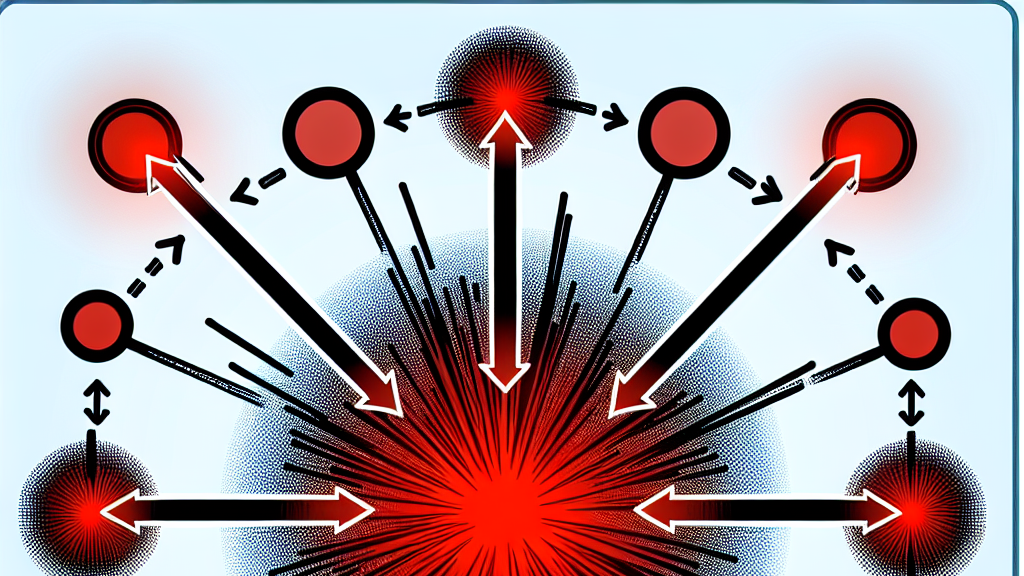
Imagine if one small, seemingly insignificant mistake could bring down a whole network—like a single typo crashing your computer. This isn’t just a tech nightmare; it’s a growing reality for the digital systems that keep our world running. Researchers have found that instead of targeting the most obvious, important points—like major hubs—an attacker might focus on smaller, overlooked nodes to wreak havoc. This revelation turns traditional thinking on its head, suggesting a new strategy for those looking to protect our networks.
The study found that picking on these lesser-noticed nodes is surprisingly effective in causing chaos. Picture a power grid; you’d think losing a major power station would be the biggest threat. But it turns out, nudging a small, unexpected part of the system could lead to far more damage. This discovery not only challenges what we thought we knew but also highlights a new type of vulnerability we need to consider.
So, why does this matter to you? Well, every time you flick on a light switch, send a text, or check social media, you’re relying on complex networks. Knowing that the weakest link might not be where we expect helps improve their security. It means new defenses can be designed, protecting everything from your personal devices to the grid that powers them. The way our systems are safeguarded will have to shift, focusing not just on the big players but also on the little guys holding everything together.
Did you know that a single small node in your Wi-Fi network might be the most vulnerable part, not the main router?
FAQs
How can a small node destabilize a network?
Researchers found that targeting small, low-indegree nodes in a network can cause significant instability because these nodes might not be as well-monitored or fortified as larger, more obvious hubs.
Why are low-indegree nodes more vulnerable than hubs?
Low-indegree nodes typically have fewer connections, making them easier to compromise and influence, causing disproportionate disruption compared to attacking central hubs.
What does this mean for power grid security?
This insight challenges the focus on protecting large stations and suggests that smaller components need better security to prevent widespread outages.
How can this research impact everyday internet users?
Internet security measures might need to enhance the protection of smaller, less obvious entry points to prevent potential large-scale cyber threats.
Is this vulnerability unique to technological networks?
No, the same vulnerability applies to complex social and biological networks, meaning the theory has broad implications beyond just tech.
Background
In networks, nodes are the individual points where data or signals pass through, and edges are the connections between them. Traditional thinking suggested that the most significant points—hubs—were most vulnerable because they handle the most traffic. However, this study challenges that idea by showing that smaller nodes with fewer connections (low-indegree nodes) can be targeted to destabilize a network more efficiently.
History
This area of study has roots in understanding how networks function, from the early days of the internet to modern electrical grids. Previous research largely focused on securing hubs since they were thought to be the most crucial points. However, this new research builds on and diverges from those theories by highlighting the unique vulnerabilities of less connected nodes, marking a shift in how we understand and protect networks.
Based on “Extreme vulnerability to intruder attacks destabilizes network dynamics” by Amirhossein Nazerian, Sahand Tangerami, Malbor Asllani, David Phillips, Hernán Makse, Francesco Sorrentino, available on arXiv (arxiv.org/abs/2502.08552), used under CC BY 4.0 (creativecommons.org/licenses/by/4.0/).