Ever wonder if we could see a massive power outage coming before it actually hits? A new study suggests we just might be able to do that! By looking at patterns from the past, scientists discovered a way to forecast when and where the electricity grid is on the brink of failure.
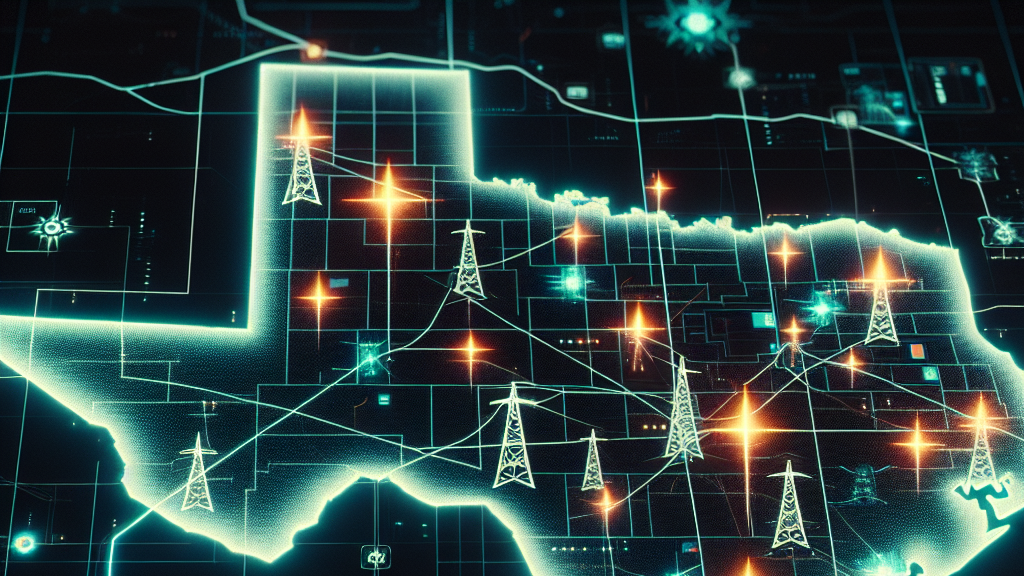
Researchers focused on the Texas power grid, analyzing data from 2014 to 2022 and uncovering patterns that serve as early warning signs for potential blackouts. They noticed that certain mathematical patterns, called critical exponents, changed in ways that hinted at a looming crisis. In fact, these signals were detected 6 to 12 months before the devastating February 2021 outage.
Imagine if power companies could know about risk months in advance! This research offers a way to brace for and possibly avert power outages, making our grids more reliable and reducing the chances of being stuck in the dark. It could lead to improved emergency plans, beefed-up infrastructure, and a brighter, more stable future.
In 2020, the critical exponent for the Texas power grid dropped dangerously low, ringing alarm bells for a massive blackout months before it occurred.
FAQs
What are critical exponents in the Texas power grid study?
Critical exponents are mathematical indicators that help identify changes in power grid stability. In this study, they showed patterns that hinted at the likelihood of future power outages.
How could predicting power grid failures impact everyday life?
By predicting power outages months in advance, utility companies could take preventive measures to strengthen the grid, reducing the likelihood of sudden blackouts and enhancing day-to-day reliability for consumers.
What does the term ‘Self-Organized Criticality’ mean in power grid studies?
Self-Organized Criticality is a concept where complex systems naturally evolve to a critical state where minor events can lead to significant, system-wide changes. It’s used to analyze and predict vulnerabilities in complex systems like power grids.
How did the Texas power grid show signs of vulnerabilities before the 2021 crisis?
The study found a systematic decline in the critical exponent values, dropping below the theoretical threshold and indicating a heightened risk of failure that preceded the 2021 Texas power crisis.
Could this predictive method prevent future power outages?
Yes! By identifying potential issues far in advance, grid operators can take early actions to fortify the system, possibly preventing outages and ensuring continuous power supply.
Background
The study focuses on ‘Self-Organized Criticality,’ a concept where complex systems like power grids naturally evolve to a point where even minor disturbances can cause massive changes, like blackouts. By monitoring how certain mathematical patterns shift over time, scientists can assess the vulnerability of these systems to potential failures.
History
The idea of using critical exponents to predict system failures builds on decades of research into how complex systems behave. Earlier studies have applied these concepts to fields like earthquake prediction and stock market analysis. This study applies these principles specifically to power grids, revealing predictable patterns in outage data from Texas.
Based on “Predicting Power Grid Failures Using Self-Organized Criticality: A Case Study of the Texas Grid 2014-2022” by Mary Lai O. Salvaña, Gregory L. Tangonan, available on arXiv (arxiv.org/abs/2504.10675), used under CC BY 4.0 (creativecommons.org/licenses/by/4.0/).