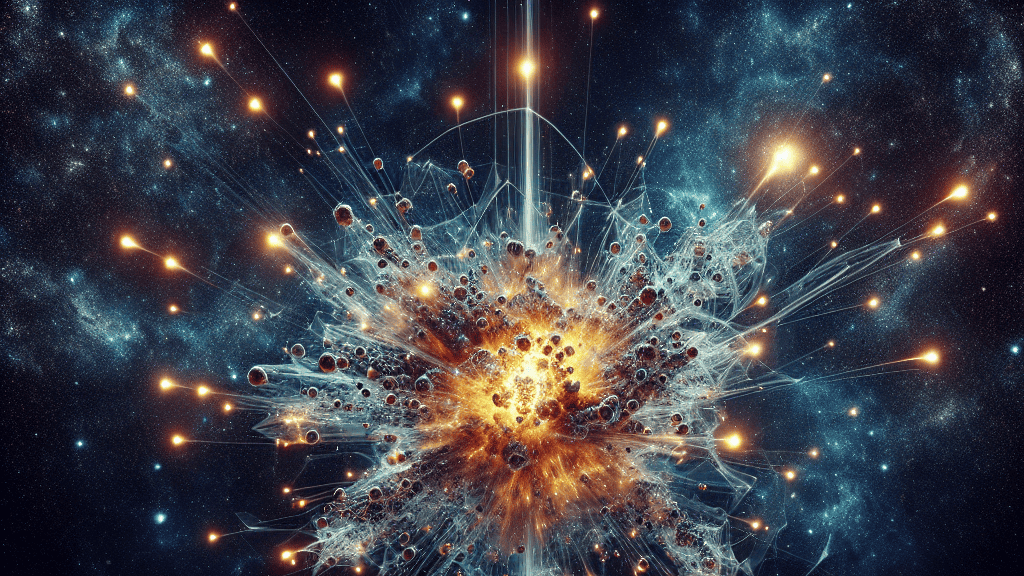
Imagine being able to peer back in time, right to the moments after the Big Bang! Scientists have discovered a state of matter known as the quark-gluon plasma, which gives us a glimpse into the universe’s infancy and helps us understand how matter came to be. This is like having a time machine that reveals secrets of the cosmos right in front of our eyes.
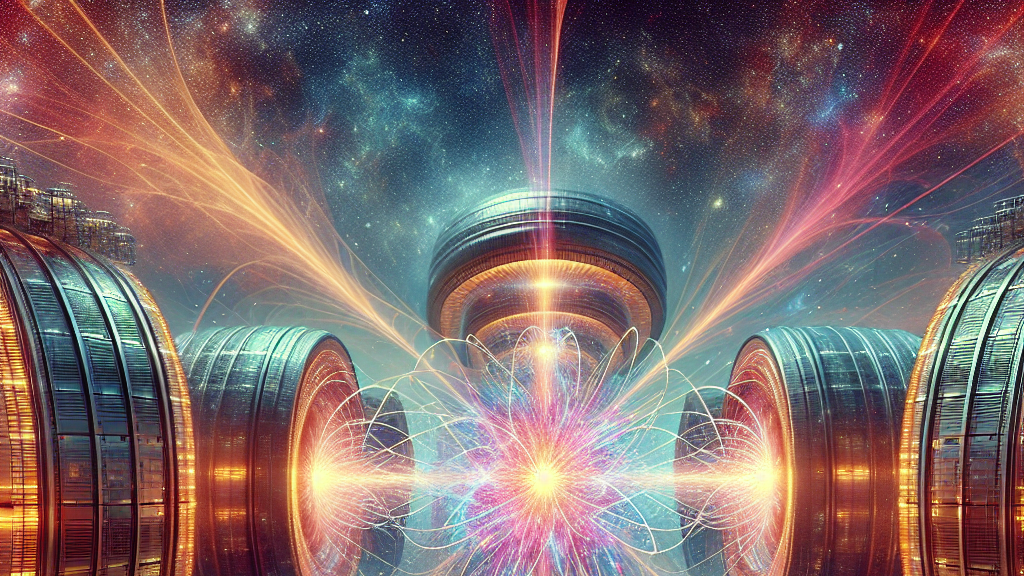
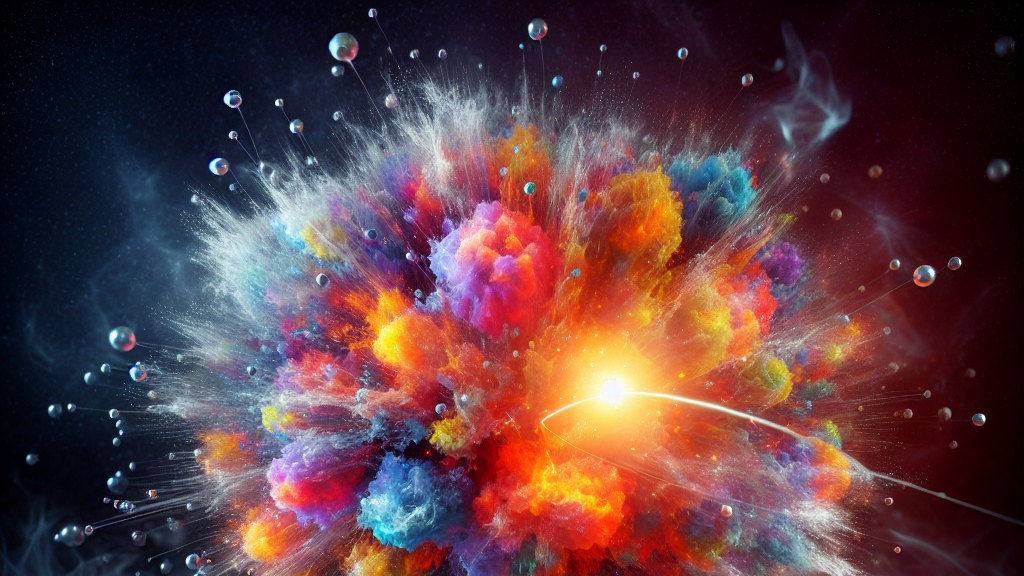
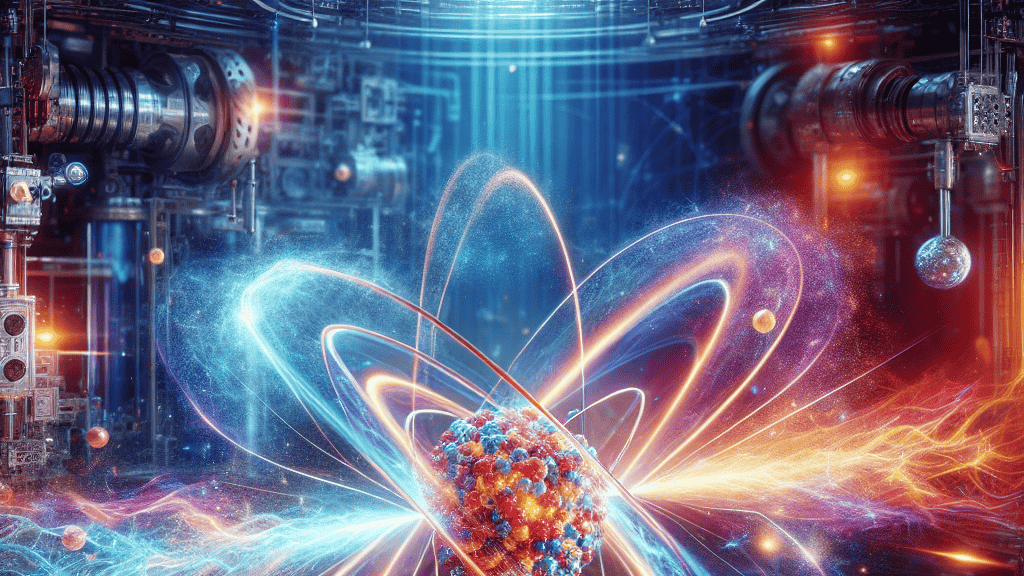
To uncover this plasma, scientists smash heavy ions together at incredible speeds using massive particle accelerators. This collision creates temperatures hotter than the Sun’s core, breaking particles down into their most basic components—quarks and gluons. These form a plasma similar to one thought to have existed just microseconds after the Big Bang. Through theories and experiments, researchers are unravelling the nature of this plasma and rewriting our cosmic history.
Practically speaking, studying quark-gluon plasma might seem like a curious pursuit, but it’s essential for understanding the universe’s building blocks. This knowledge could lead to technological innovations, similar to how insights from particle physics have paved the way for things like MRI machines and the World Wide Web. In the future, quark-gluon plasma research might unlock new physics frontiers, leading to transformative advancements in science and technology.
Quark-gluon plasma is so hot that it’s hotter than the Sun’s core!
FAQs
What is quark-gluon plasma, and why is it important?
Quark-gluon plasma is a state of matter created when quarks and gluons, the building blocks of protons and neutrons, are freed from their usual confines by immense heat and energy. Studying it helps us understand the earliest moments of the universe and the fundamental forces of nature.
How do scientists create and study quark-gluon plasma?
Scientists create quark-gluon plasma by using large particle accelerators to smash heavy ions together at high speeds. These collisions generate extreme temperatures, breaking down matter into quarks and gluons, which can then be observed and analyzed to learn more about this unique state of matter.
What are some real-world applications of quark-gluon plasma research?
While the research is primarily aimed at understanding the universe, it also drives technological advancements. Insights from particle physics have led to developments in medical imaging technology and the internet, and studying quark-gluon plasma could similarly lead to new innovations in science and industry.
Background
Heavy-ion collisions involve accelerating atomic nuclei close to the speed of light and smashing them together. The intense energy and heat from these collisions create a microscopic ‘fireball’ that allows us to observe quarks and gluons—particles that are usually locked inside protons and neutrons. By studying these collisions, physicists hope to understand the strong force that binds quarks and gluons together, a cornerstone of our universe’s structure.
History
The journey to discover quark-gluon plasma began in the late 20th century with theoretical predictions. In the 1980s and 1990s, the use of powerful particle accelerators allowed physicists to test these predictions through heavy-ion collisions. By the early 21st century, experiments at facilities like CERN and Brookhaven National Laboratory confirmed the existence of this new state of matter, marking a significant milestone in our understanding of particle physics.
Based on “The quest for the quark-gluon plasma from the perspective of dynamical models of relativistic heavy-ion collisions” by Marcus Bleicher, Elena Bratkovskaya, available on arXiv (arxiv.org/abs/2504.14740), used under CC BY 4.0 (creativecommons.org/licenses/by/4.0/).