Connect with us

Search by keyword

Quantum Biology

How Graphs Help Solve Genome Puzzles

Scientists are using clever tricks called heuristics to solve complex puzzles related to genome comparison. These new methods could help us understand genetic differences much more easily and quickly.

How Graphs Help Solve Genome Puzzles

Ever wonder how scientists compare the massive and intricate libraries that are our genetic codes? It turns out, they use something called the Double Cut and Join Distance Problem — a method that lets them see how different or similar two genomes are. By applying clever shortcuts, or ‘heuristics,’ they make this complicated task a whole lot easier.

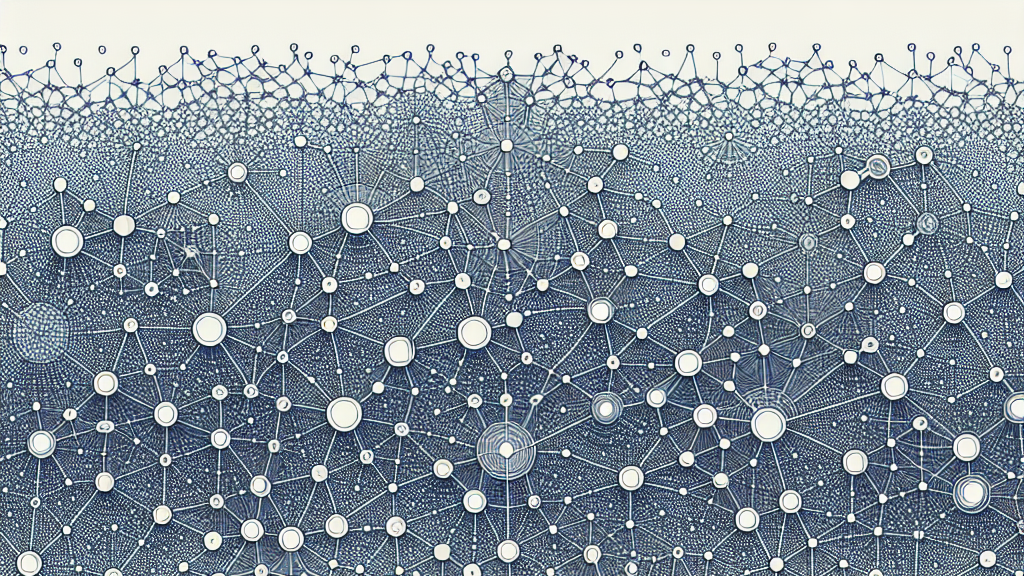
In a recent study, researchers developed new heuristics to tackle this challenge with more precision. They used helpful tools like adjacency graphs, which are like maps showing all the connections between genes. These maps can include tricky features like extra copies of genes or even whole circular bits of DNA. The researchers tested their innovative ideas on made-up genomes and found that their strategies worked better than mere guesswork at solving these puzzles.

Imagine being able to quickly compare the entire DNA sequences of different species or individuals to spot unique traits or evolutionary changes. This research could be a game-changer in fields like personalized medicine or evolutionary biology, paving the way for breakthroughs that help us better understand ourselves and the world around us.

Did you know that your DNA isn’t just one long string? It can include multiple copies of genes and even circular bits of DNA!

FAQs

What unexpected discovery did scientists make?

Scientists found that by using heuristics, they can analyze genome similarities and differences more effectively than random methods.

How can these new methods affect genome research?

They offer a faster, more precise way to understand genetic differences, possibly leading to advances in medicine and biology.

Why is the adjacency graph important in this research?

The adjacency graph acts like a map, helping scientists visualize complex genetic structures and find relationships between genes.

Background

The Adjacency Graph Packing problem relates to comparing genomes by using graphs to represent genetic material. A genome can have multiple copies of genes arranged in circular or linear ways, and comparing them requires turning one genome into another through a series of steps called Double Cut and Join operations. Heuristics are strategies used to solve complex problems more quickly by simplifying them.

History

Genome comparison has long been a challenge in genetics, with early techniques focusing on simpler one-to-one comparisons. The Double Cut and Join Distance Problem introduced a more flexible way to handle complex rearrangements. Over time, advancements like Genetic Algorithms have been used to tackle these challenges by simulating natural selection processes, leading to more efficient solutions.

Based on “Heuristics based on Adjacency Graph Packing for DCJ Distance Considering Intergenic Regions” by Gabriel Siqueira, Alexsandro Oliveira Alexandrino, André Rodrigues Oliveira, Zanoni Dias, available on arXiv (arxiv.org/abs/2501.07606), used under CC BY 4.0 (creativecommons.org/licenses/by/4.0/).


Trending

Latest

Can AI Save Water Discover How

Computers

AI is transforming the tech world, but it uses lots of water! A new tool, SCARF, helps us measure and reduce AI's water footprint,...

Whats a Forbush Decrease and Why Should We Care Whats a Forbush Decrease and Why Should We Care

Space

Scientists just observed the biggest solar storm event in years, revealing unexpected cosmic ray patterns. Understanding these changes could help us protect our technology...

Can Cars Spot Danger Faster Than Humans Can Cars Spot Danger Faster Than Humans

Computers

Think about how quickly you react when something unexpected happens on the road. This research brings us closer to creating self-driving cars that can...

Can Fear of the Other Stop Social Harmony Can Fear of the Other Stop Social Harmony

Physics

Fear of the unknown might make it harder for people to agree and get along. This study shows that when people have strong xenophobic...

Can AI Revolutionize Breast Cancer Diagnosis Can AI Revolutionize Breast Cancer Diagnosis

Electricity

This research introduces a groundbreaking AI model that can accurately assess HER2-positive breast cancer using widely accessible staining methods, potentially revolutionizing how we diagnose...

Can AI Transform Your Singing into a Choir Can AI Transform Your Singing into a Choir

Computers

Imagine singing solo and having AI turn you into a choir. This research unveils a groundbreaking AI tool that transforms your voice into rich...

You May Also Like

Computers

Music is personal and subjective, which current AI struggles to capture. By using your feedback, this new AI approach could soon craft music that's...

Computers

Discover how studying the arrangement of pages and queues in graph layouts might lead to more efficient data organization and processing tricks that could...

Math

Exploring how random factors impact network connectivity could offer insights to optimize real-world systems, from internet connections to social networks.

Math

This research shows how math can predict patterns in complex networks, potentially transforming fields like computer science and network design by revealing hidden patterns...

Computers

Social networks might be more private than we believe, thanks to hidden mathematical properties that protect against certain security threats.

Math

Imagine a smarter way to plan energy systems that cuts down on time and resources without sacrificing quality. This research uses graph theory to...

Physics

Quantum walks, a new method inspired by electric flow sampling, could significantly speed up processes like random walks in computer algorithms, making them much...

Computers

Researchers are uncovering if AI can truly plan or reason by teaching it to solve puzzles, like finding the shortest path in a network....

Copyright © 2024 8ig8rain.

Disclaimer: The content on 8ig8rain.com consists of AI-generated summaries of scientific abstracts from arXiv. Please note that most arXiv abstracts are preprints and may not have undergone formal peer review. While these summaries aim to convey key ideas and potential applications, they are provided for informational purposes only and should not be interpreted as validated scientific findings or professional advice. The summaries are intended to educate, spark curiosity, and inspire further exploration of science.