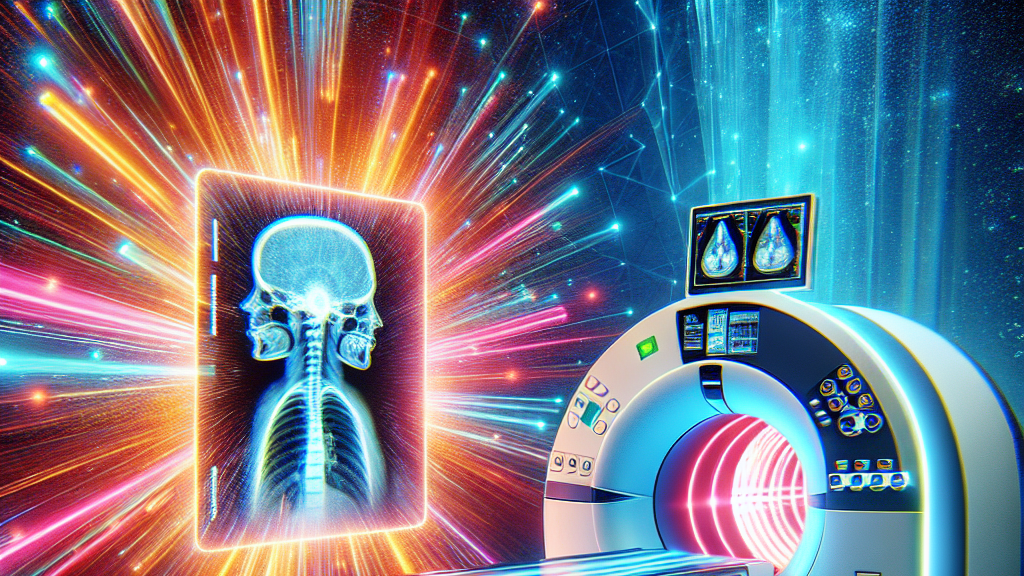
Imagine if doctors could get a perfectly clear look inside your body with only half the scans they use today. Quantum computing is about to make that a reality! This new tech leap can tackle those tricky computational puzzles that classical methods struggle with—especially in medical scans like tomography, which is often used to peer inside the human body without surgery.
At its core, quantum supremacy—an exciting concept where quantum processors pull off feats that regular computers can’t—has found its way into the world of medical imaging. Scientists developed a quantum algorithm that can reconstruct tomographic images, like CT scans, using half the data while also standing firm against errors that usually spoil the picture. They even tested it with deliberately messy data (imagine trying to reconstruct a puzzle with the wrong pieces) and still got clear images!
The implications are huge. With this quantum-powered approach, medical professionals might one day perform scans that are faster, safer (since fewer scans mean less radiation), and more reliable—even when data isn’t perfect. Beyond healthcare, this could open new doors in fields like materials science, eventually affecting everything from how we research new materials to how we implement safety checks in construction.
Did you know? Quantum computers can process data a million times faster than classical computers!
FAQs
How does quantum computing impact tomographic imaging?
Quantum computing offers faster and more accurate image processing, allowing medical professionals to perform scans using fewer data, which reduces radiation exposure and error rates.
What is quantum supremacy in simple terms?
Quantum supremacy is when a quantum computer performs a task that is beyond the reach of classical computers, showcasing its superior capabilities.
Why is reducing projection angles significant in tomographic imaging?
Reducing projection angles means fewer scans are needed, which can minimize exposure to radiation for patients and speed up the imaging process.
How do quantum algorithms deal with image artifacts?
Quantum algorithms enhance robustness against errors that typically cause artifacts, leading to clearer and more precise imaging results even with imperfect data.
What potential future applications could this research have?
This research could revolutionize fields like medical imaging, material science, and advanced tomography, influencing technologies from healthcare diagnostics to safety inspections.
Background
Quantum computing involves leveraging the principles of quantum mechanics to perform calculations far more efficiently than traditional computers. In this study, researchers explore its applications in tomographic image reconstruction, which is a method used to create a visual representation of an object’s interior using data obtained from different angles. This process often suffers from artifacts—distortions that affect the clarity of the images. Quantum algorithms promise to overcome these challenges by optimizing the reconstruction process.
History
The concept of quantum supremacy has been a cornerstone in quantum computing research since the early 2010s, catalyzing efforts to demonstrate practical benefits over classical computing. Past breakthroughs include Google’s Sycamore processor, which showcased quantum supremacy in 2019. In the realm of imaging, classical computational methods have evolved slowly, but the integration of quantum technologies marks a significant leap, underscoring this study’s contribution to practical applications in medicine and beyond.
Based on “Quantum Supremacy in Tomographic Imaging: Advances in Quantum Tomography Algorithms” by Hyunju Lee, Kyungtaek Jun, available on arXiv (arxiv.org/abs/2502.04830), used under CC BY 4.0 (creativecommons.org/licenses/by/4.0/).