Have you ever wondered what keeps a ball rolling or why Earth orbits the sun without flying off into the cosmos? This mysterious force is called inertia, and it’s been puzzling scientists for centuries. From Newton to Einstein, everyone has pondered that central question: What exactly is inertia? Now, new research is attempting to crack open this age-old mystery by redefining our understanding of motion itself.
The study dives into the world of physics, exploring how objects move. It proposes a new look at ‘geodesic’ motion – think of it as the natural path of least resistance that an object follows. By distinguishing this from the so-called ‘natural motion,’ the researcher aims to bring clarity to the motion patterns defined by both Newton and Einstein. Imagine tracing the smoothest path possible in both everyday life and cosmic scales; that’s the fascinating concept of geodesic inertial motion.
Let’s bring this home with a practical example: Picture your morning bus ride. The bus accelerates, brakes, and turns, and you feel every movement. But, when traveling at a steady pace, it feels almost like you’re floating. That smooth cruise resembles the geodesic inertial path—natural, flowing, and unforced. By understanding this better, we might improve how vehicles are designed or even harness new energy-efficient methods for space travel. The implications for our daily lives and future technologies are profound.
Did you know that even though inertia seems invisible, it’s what keeps the planets orbiting the sun in a perfect cosmic dance?
FAQs
What is inertia and why is it so important in physics?
Inertia is a fundamental concept in physics that describes an object’s resistance to change in its state of motion. It’s crucial because it explains why objects stay in motion or rest unless acted on by a force, governing everything from planetary orbits to your car ride.
How does the study distinguish between geodesic and natural motion?
The study suggests that geodesic motion is the smoothest, most effortless path an object follows due to its innate properties, while natural motion involves more complex interactions. This distinction could help clarify how motion behaves in different contexts, from everyday objects to celestial bodies.
What practical everyday implications could arise from this research on inertia?
Understanding inertia better could lead to improved design in transportation, making rides smoother and potentially leading to new ways of energy-efficient travel. Imagine less bumpy car rides or more efficient space shuttles that follow optimal inertial paths.
Why have famous scientists like Newton and Einstein been so fascinated by inertia?
Inertia is a key player in the mechanics observed by these scientific pioneers. Newton’s laws of motion hinge on this concept, while Einstein’s theories of relativity explore its deeper cosmic implications, making it an essential element in understanding the universe.
What does separating geodesic inertial motion from natural motion mean for future research?
This new perspective might unlock further innovations in physics and technology, offering fresh insights into how forces and motion shape the universe and our everyday experiences.
Background
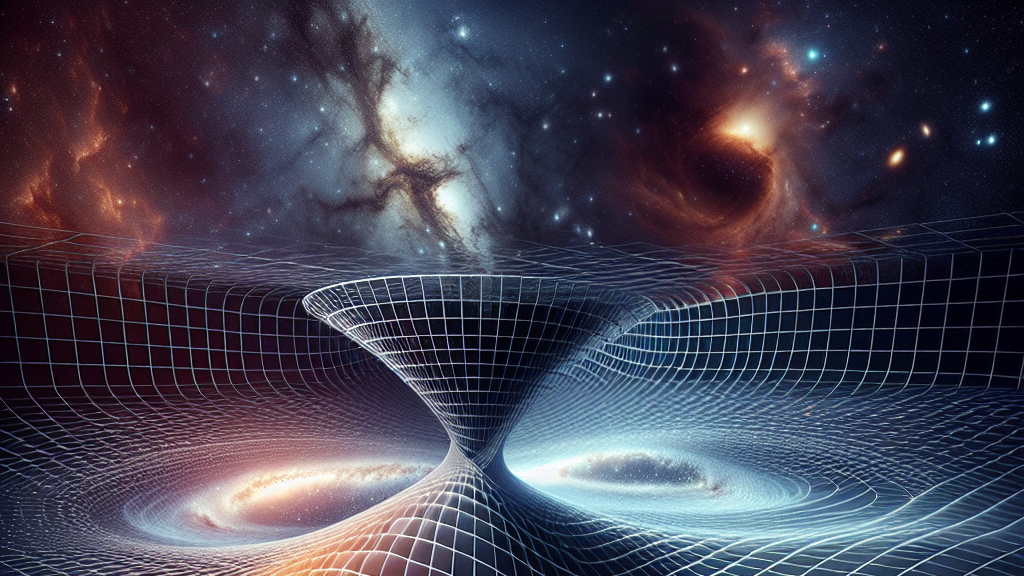
Inertia is a key concept in physics that explains how objects resist changes in their motion. This principle is foundational to Newton’s First Law of Motion, which states that an object will remain at rest or in uniform motion unless acted upon by a force. Einstein expanded on these ideas with his theories of relativity, exploring how gravity and motion interact on cosmic scales. The study of inertia often involves examining geodesics, or natural paths through spacetime, helping to describe the trajectory of moving bodies.
History
Inertia has intrigued scientists since the time of Newton, who crafted fundamental laws explaining motion. His work laid the foundation for classical mechanics. Einstein later refined these concepts, exploring the effects of gravity on time and space through his Theory of Relativity. This new study continues that legacy by examining these motion concepts and attempting to refine our understanding of how bodies move along paths in space, known as geodesics.
Based on “Apples Falling, Buckets Rolling, and Why Inertia Keeps Trolling” by Nicola Bamonti, available on arXiv (arxiv.org/abs/2504.14734), used under CC BY 4.0 (creativecommons.org/licenses/by/4.0/).