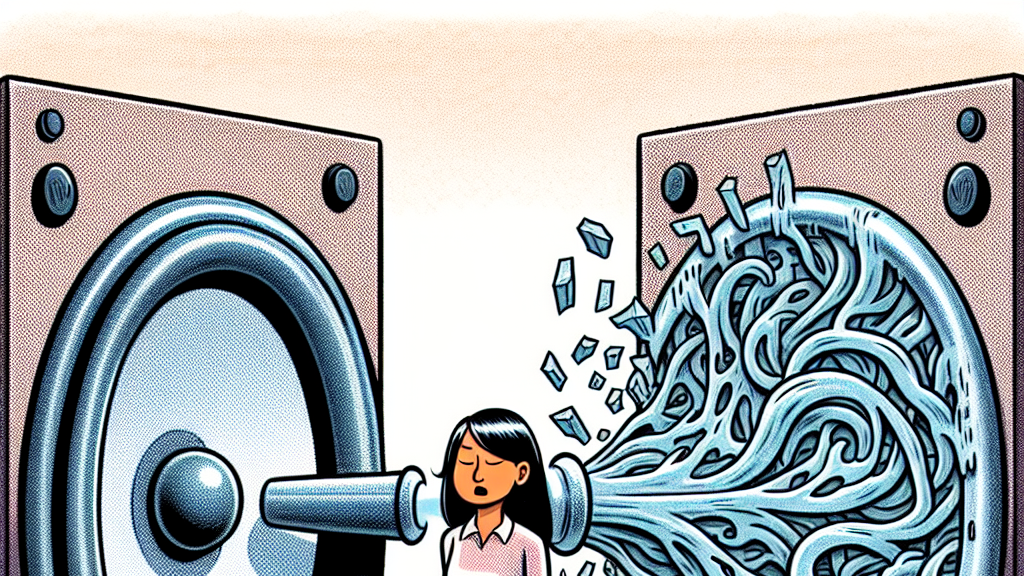
The digital world is buzzing with conversations, but not all of them are friendly. In fact, when it comes to political debates online, discussions can quickly become toxic and divided. This not only makes it harder for people to agree on facts, but it also impacts how engaged they are with democratic processes. By studying millions of tweets and Reddit comments focused on debunking misinformation during major U.S. elections, researchers have found fascinating insights into these heated online exchanges.
The study delved into how language toxicity, pessimism, and social polarization are intertwined in these debunking efforts. Findings reveal that people who are not deeply involved in online communities—those on the outer edges—often contribute to toxic discussions. Social media platforms also play a crucial role in shaping these interactions. Twitter tends to amplify partisan differences with its fast-paced nature, while Reddit, with its community-driven setup, often sees higher overall toxicity levels but encourages more diverse communication.
Understanding these dynamics is important because it shows how digital arenas can both divide and unite us. If platform designers and policymakers take these insights seriously, they could develop strategies to reduce harmful debates and create healthier online spaces. Imagine a world where fact-based discussions are the norm rather than the exception, fostering a more informed and less polarized society.
Did you know? Peripheral participants, or those who aren’t deeply involved in online communities, often contribute the most to toxic discussions, driven by emotional expression and lower accountability.
FAQs
What unexpected discovery did researchers make?
Researchers found that peripheral, or less involved, users play a significant role in making online political discourse toxic and divided.
How do different platforms affect online polarization?
Twitter tends to amplify partisan divides with its rapid exchanges, whereas Reddit encourages diverse communication but may foster higher toxicity levels due to its community structure.
What is the link between language toxicity and pessimism?
Surprisingly, as interactions increase, especially on structured platforms like Reddit, language toxicity tends to decrease, showing a link between engagement and emotional expression in online discussions.
Can online toxicity influence real-world behavior?
Yes, toxic online discussions can impact democratic engagement and contribute to social polarization, affecting how people perceive political issues.
What can be done to improve online discourse?
Policymakers and platform designers can use these findings to create strategies that encourage healthy, fact-based discussions and reduce harmful toxic interactions.
Background
Social media platforms have become breeding grounds for rapid spread of misinformation which influences political discourse. Understanding how language toxicity, emotional polarization, and community dynamics intertwine on platforms like Twitter and Reddit is crucial for mitigating these effects. By analyzing how people engage in debunking conversations, this study helps shed light on these complex behaviors.
History
The rise of misinformation as a central concern in online discourse has roots in earlier studies exploring media’s role in shaping public opinion. Over time, research has expanded to include the dynamics of digital platforms and how they facilitate or hinder social polarization. This study builds on this foundation by focusing specifically on how language and platform architecture impact debunking efforts.
Based on “Polarized Patterns of Language Toxicity and Sentiment of Debunking Posts on Social Media” by Wentao Xu, Wenlu Fan, Shiqian Lu, Tenghao Li, Bin Wang, available on arXiv (arxiv.org/abs/2501.06274), used under CC BY 4.0 (creativecommons.org/licenses/by/4.0/).