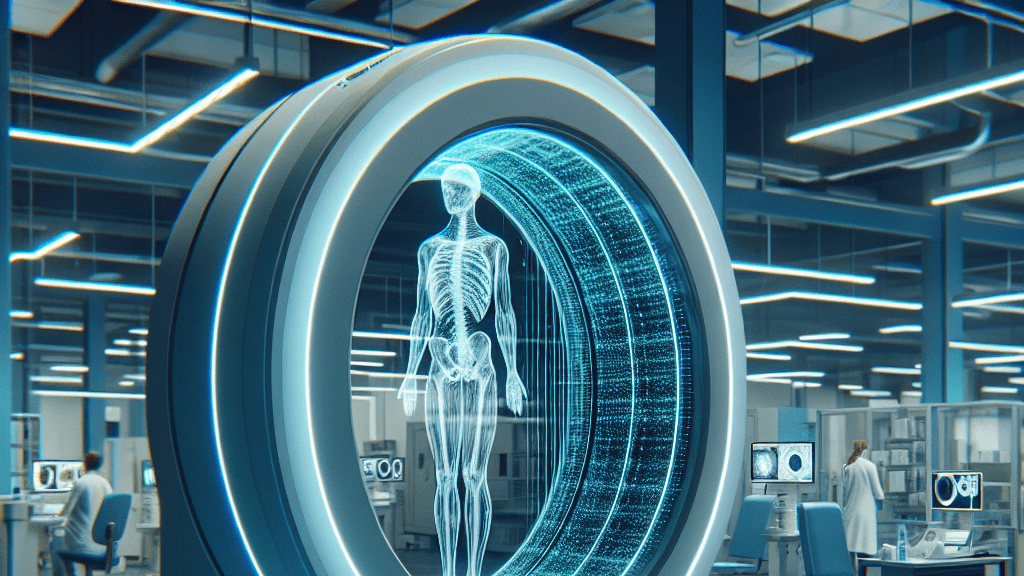
Imagine you need a super-detailed picture of what’s going on inside your body, like an X-ray but in 3D. It’d be like looking at a real-life model of your insides. But the catch? These detailed models usually require a ton of computing power and time, which can slow down the process when you need fast results for something important like a medical diagnosis.
Enter NMSW-Net, a new framework that changes the game. Rather than chopping the image into smaller pieces that lose important details—as is common with current technology—NMSW-Net smartly picks out only the most relevant bits. It peeks at the big picture too, and figures out how to give minimal details that help doctors get an accurate view of what’s happening inside you. This approach cuts down on wasted computing energy and still manages to keep the image clear and reliable.
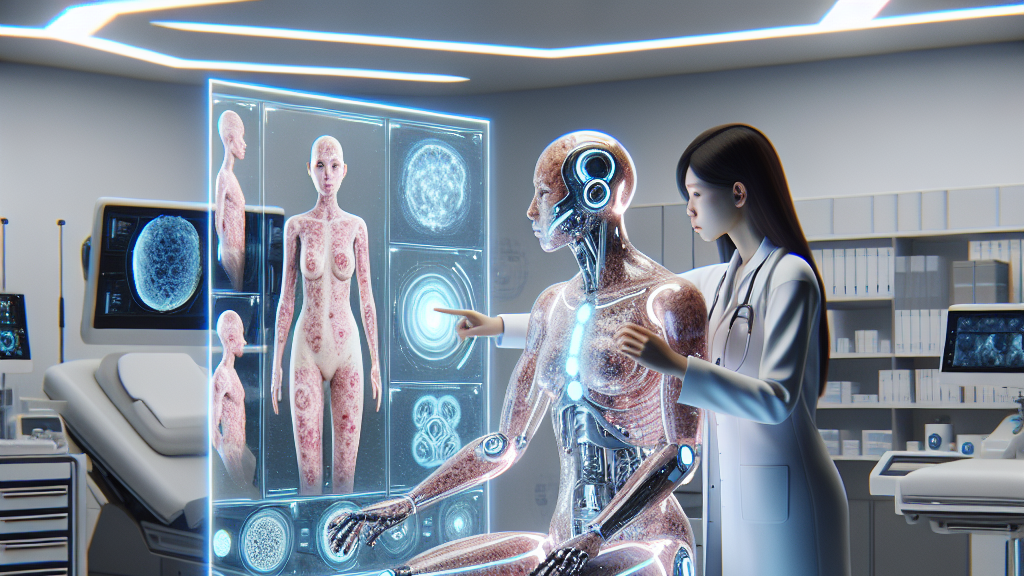
What does this mean for you and me? Well, if you’ve ever had to wait nervously for medical results, NMSW-Net could mean faster, more reliable diagnoses. Imagine your doctor getting back to you with results in record time, and confidently knowing the picture they’re seeing is both fast to get and spot-on. It opens the door to more immediate healthcare responses and potentially lifesaving decisions being made quicker.
Did you know? NMSW-Net can reduce the time it takes to process images by up to 7 times on some systems!
FAQs
How does NMSW-Net improve medical imaging speed?
NMSW-Net reduces complex computations by focusing on the most relevant sections of 3D images, making predictions faster.
Why is NMSW-Net important for healthcare?
It speeds up image processing and enhances accuracy, leading to quicker and more reliable medical diagnostics.
What makes NMSW-Net different from the traditional sliding window method?
Unlike sliding window, NMSW-Net captures global details and relevant features, optimizing both speed and accuracy.
Can NMSW-Net be used with existing 3D models?
Yes, it’s designed to work with any current 3D segmentation models, enhancing their efficiency and performance.
What impact does NMSW-Net have on resource use?
It dramatically cuts down on the need for computational resources, making medical imaging accessible and swift.
Background
3D medical imaging is a technique used to create a full volumetric image of a patient’s body, which is crucial for precise diagnoses. Traditional methods break down these images into smaller patches for analysis, requiring significant computing power and time. The sliding window technique manages this but can be slow and sometimes misses larger patterns or features.
History
Medical imaging has evolved from simple 2D scans to intricate 3D visualizations. Techniques like MRI and CT scans have been groundbreaking, but they demand high computational resources. Over time, methods like sliding window inference were devised for segmenting these 3D scans. NMSW-Net represents a significant leap forward, evolving past these established methods to optimize performance and accuracy.
Based on “No More Sliding Window: Efficient 3D Medical Image Segmentation with Differentiable Top-k Patch Sampling” by Young Seok Jeon, Hongfei Yang, Huazhu Fu, Mengling Feng, available on arXiv (arxiv.org/abs/2501.10814), used under CC BY 4.0 (creativecommons.org/licenses/by/4.0/).