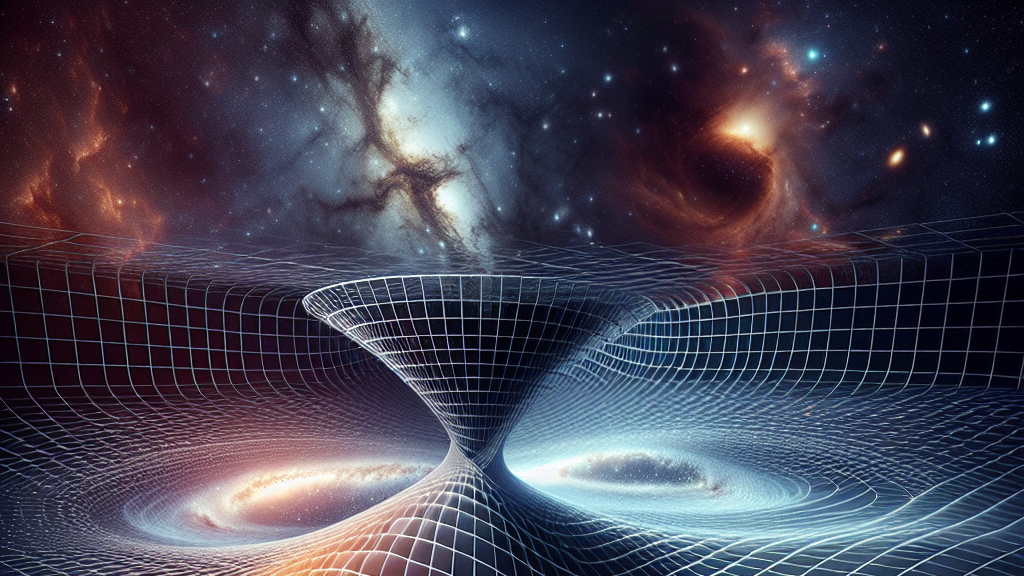
Have you ever looked up at the stars and wondered, what if everything we see isn’t quite as it seems? Scientists have long debated the idea that spacetime, the very fabric of our universe, might be more like frothy foam than a smooth, clear surface. This mind-bending concept, introduced by physicist John Wheeler, suggests that tiny uncertainties could blur the images of far-off galaxies, leaving us with a cosmic mystery waiting to be solved.
Recent observations of a mega-bright gamma-ray burst, named GRB221009A, have offered a fascinating new way to test this theory. Thanks to its extraordinarily bright appearance, scientists have been able to study this burst across a range of energies, from infrared to high-energy gamma-rays. The results are intriguing. They suggest that the foamy nature of spacetime, if true, should have caused noticeable blurring and spreading of the light across the sky, yet the light from GRB221009A was surprisingly precise.
So what does this mean for us? Imagine the unseen corners of our universe becoming clearer, as scientists refine their understanding of spacetime. Your next glance at the night sky might be through a new lens, as researchers harness these cosmic insights to solve one of the universe’s greatest puzzles: how smooth—or foamy—is spacetime? As technology evolves, we could potentially see further into space, revealing even deeper secrets of the cosmos, changing our understanding of space travel and the universe itself.
Did you know? The idea of ‘foamy’ spacetime was first proposed in the 1950s, suggesting cosmic scales might be as frothy as your morning coffee!
FAQs
What does the term ‘foamy spacetime’ mean in cosmic research?
‘Foamy spacetime’ refers to a theory where spacetime isn’t smooth but has tiny uncertainties, like bubbles in foam, potentially affecting the clarity of cosmic images.
How do gamma-ray bursts help test spacetime’s foaminess?
Gamma-ray bursts, especially bright ones like GRB221009A, provide high-energy light that can show if spacetime’s foaminess blurs the light, making them valuable for testing this concept.
What role do telescopes play in observing spacetime foam?
Telescopes capture light from distant cosmic events. By comparing these observations to models of ‘foamy’ spacetime, scientists can test and refine their theories.
How could understanding spacetime foam impact our daily lives?
Unlocking the secrets of spacetime foam might not change our daily lives immediately, but it could revolutionize our understanding of the universe, potentially leading to advancements in space travel and technology.
Why is the recent gamma-ray burst GRB221009A important for spacetime research?
GRB221009A was extremely bright, allowing extensive study across different energy levels. Its precise light contradicts what some models of spacetime foam would predict, challenging and refining these theories.
Background
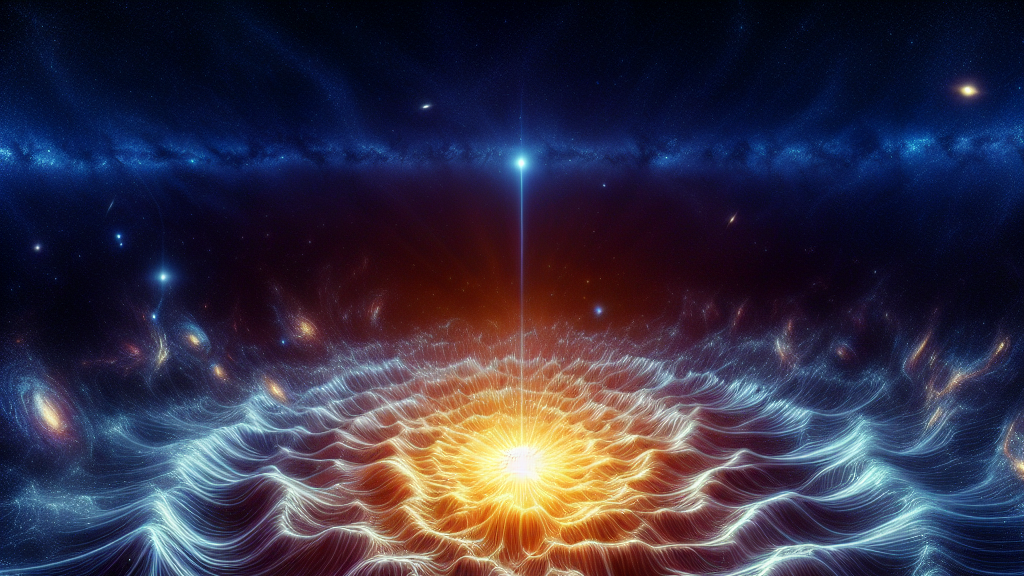
The concept of ‘foamy’ spacetime suggests that at incredibly small scales, spacetime’s texture isn’t smooth like a tabletop but more like a frothy, uneven surface. This idea causes cosmic light to scatter, potentially blurring the images we see in the night sky. Traditionally, telescopic observations have focused on how light travels through our universe, but spacetime foam presents a challenging factor that could alter these paths.
History
John Wheeler introduced the concept of ‘foamy’ spacetime in the 1950s, opening the door to decades of research into how fundamental cosmic principles affect the way we observe the universe. Over the years, with advancements in telescope technology, researchers have been able to test these theories. Gamma-ray bursts, due to their brightness and energy, provide a modern tool to validate or challenge these ideas, setting a new frontier in understanding spacetime.
Based on “Observations of Holographic Quantum-Foam Blurring” by Eric Steinbring, available on arXiv (arxiv.org/abs/2502.04474), used under CC BY 4.0 (creativecommons.org/licenses/by/4.0/).