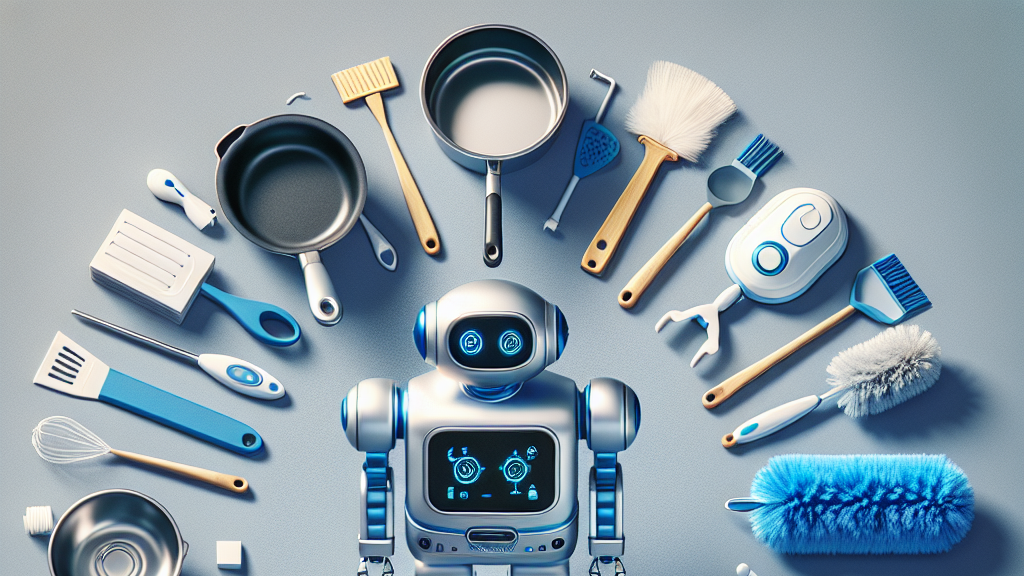
In a world where our devices and gadgets make life easier by the day, imagine if your robotic assistant could manage multiple tasks simultaneously, just like a juggler keeping many balls in the air. It’s not just about handling one job after another but knowing when to carry out actions in parallel, despite disruptions. This ability could define the future of how we interact with machines in our daily lives.
Researchers have come up with a clever way to test this juggling act. They’ve developed a new environment, Robotouille, designed specifically to challenge AI agents on their ability to handle long and complex scenarios that require some serious multitasking. While current artificial intelligence models, like those based on large language models, are great for short, simple tasks, they often stumble when it comes to longer and more intricate plans. With Robotouille, researchers can now push the limits of these AI models to see how well they fare when faced with scenarios that require multiple overlapping actions or when things don’t go as planned.
Imagine if AI could perfectly coordinate making dinner while keeping up a conversation and ensuring the home security system is online. Or, picture a future where robots assist teachers by managing classroom tasks while engaging students in real-time learning. These are the kinds of possibilities Robotouille is aiming to make more feasible, paving the way for a new era of smart, multitasking machines that can enhance both work and leisure.
Did you know that while machines can handle one task pretty efficiently, multitasking with overlapping jobs is a whole new frontier for them?
FAQs
What is the core challenge addressed in asynchronous task planning research?
The core challenge is enabling robots to effectively handle multiple tasks that need to be completed in parallel or sequentially, especially when these tasks involve interruptions or delays.
How does Robotouille test AI agents’ planning capabilities?
Robotouille presents AI agents with complex and long-horizon scenarios that require them to manage multiple, overlapping tasks and adapt to disruptions, thus testing their multitasking capabilities.
Why is asynchronous planning important for AI agents?
Asynchronous planning is crucial as it enables AI agents to efficiently manage and execute tasks that occur simultaneously, improving their potential to assist in real-world applications where multitasking is essential.
What significant findings were made using Robotouille?
The research found that current AI models perform significantly better on simple, synchronous tasks compared to complex, asynchronous ones, highlighting areas for improvement in AI multitasking.
How could this research impact our daily lives in the future?
This research could lead to more advanced AI-powered robots capable of helping with complex, multitask scenarios in homes and workplaces, making our daily routines more efficient and less stressful.
Background
Understanding asynchronous planning involves grasping the concept of handling multiple tasks that may need to happen at the same time or one after another, with potential disruptions. Agents, like robots powered by artificial intelligence, need to plan actions that account for such variability and complexity over a long period, which is a relatively new challenge in AI research.
History
This research stands on the shoulders of previous works that focused on simpler, short-term task execution. Historically, AI has excelled at completing straightforward tasks, but as technology advances, the need for more flexible and adaptive planning abilities becomes pressing. The introduction of benchmarks like Robotouille marks a significant step in AI’s evolution, shifting from basic task completion to sophisticated, multitasking environments.
Based on “Robotouille: An Asynchronous Planning Benchmark for LLM Agents” by Gonzalo Gonzalez-Pumariega, Leong Su Yean, Neha Sunkara, Sanjiban Choudhury, available on arXiv (arxiv.org/abs/2502.05227), used under CC BY 4.0 (creativecommons.org/licenses/by/4.0/).