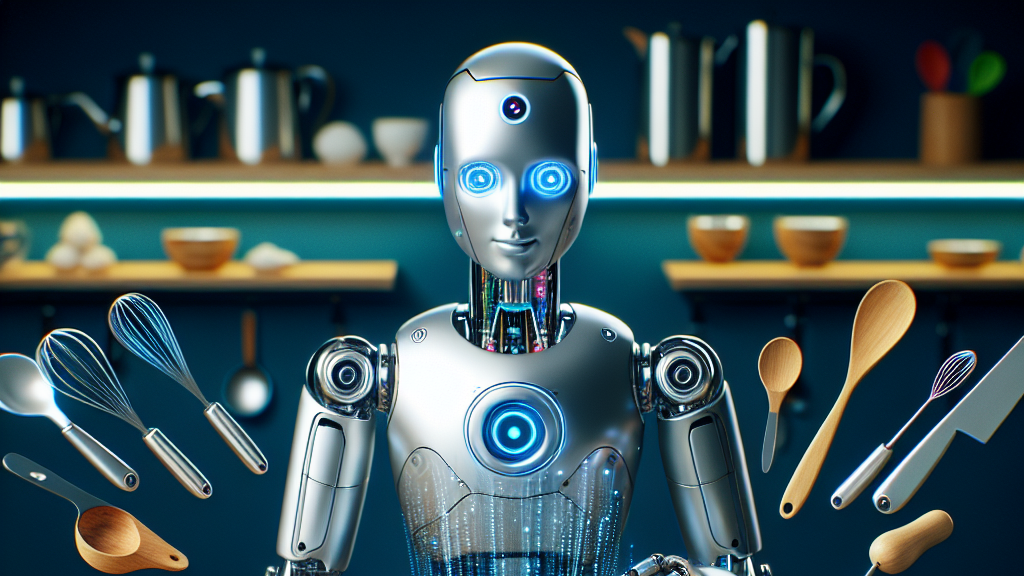
Picture this: a robot learning how to do everyday tasks just by watching human videos online. It’s like a cooking show, but for robots! The technology behind this is called ZeroMimic, and it enables robots to learn a wide range of skills, like opening jars, pouring liquids, and cutting vegetables, by watching recordings that anyone could find on the internet. This means no need for special demos or perfect conditions—just let the robots watch and learn!
So, how does ZeroMimic work its magic? It uses advanced video understanding and grasp detection to guide robots in mimicking human actions captured in daily life videos. By training on a large dataset of human activities, like the EpicKitchens video collection, ZeroMimic helps robots learn to perform tasks not just in a lab, but in real-world kitchens, no matter the layout or the exact tools available. This flexibility makes these robots truly innovative, adapting their skills to various objects and situations.
Imagine your own kitchen robot. With ZeroMimic, robots could offer practical help with everyday chores without needing explicit instructions. They could watch a video of someone making a salad and replicate those actions, helping you with meal prep. This leap in technology may soon mean your robot assistant can learn new skills, just as easily as you might learn a new recipe from a YouTube tutorial.
Did you know? ZeroMimic allows robots to learn tasks just by observing videos, similar to how children learn by watching adults!
FAQs
How does ZeroMimic help robots learn tasks from human videos?
ZeroMimic utilizes advanced video understanding and affordance detection to model how humans perform tasks in videos. It then translates these observations into robotic skill policies, enabling robots to replicate human actions without needing task-specific demonstrations.
What types of tasks can robots learn using ZeroMimic?
Robots can learn a wide range of manipulation tasks, including opening doors, pouring drinks, picking up objects, cutting, and stirring. These skills allow them to assist in various settings such as kitchens and homes.
Why is ZeroMimic’s approach to robotic learning unique?
ZeroMimic stands out because it doesn’t require robots to undergo specific training sessions. Instead, it leverages existing human video datasets to teach robots how to perform tasks. This opens up possibilities for more adaptable and practical robotic learning.
Can ZeroMimic be used with different types of robots?
Yes, ZeroMimic is designed to be compatible with various robot models. By releasing the software and policy checkpoints, it enables plug-and-play use across different robotic setups, making it versatile for different tasks and environments.
What potential impact could ZeroMimic have on everyday life?
ZeroMimic could revolutionize how we use robots in daily life by enabling them to learn new tasks simply from observing human activities online. This means more personalized and efficient robotic assistants that can adapt to individual household needs.
Background
ZeroMimic is built on the idea of imitation learning, where machines learn to do tasks by observing demonstrations. In traditional settings, this requires a robot to be present in the same environment as the demonstration. ZeroMimic innovatively bypasses this limitation by using online video datasets to broaden the spectrum of tasks robots can learn, leveraging advances in visual and grasp affordance understanding.
History
Earlier robotics studies depended heavily on controlled demonstrations to teach robots new skills. These methodologies required precise setup and significant resources. The introduction of video-based learning, like with ZeroMimic, marks a significant pivot by using vast, easily accessible online video data to train robots, making this field more adaptable and applicable to real-world scenarios.
Based on “ZeroMimic: Distilling Robotic Manipulation Skills from Web Videos” by Junyao Shi, Zhuolun Zhao, Tianyou Wang, Ian Pedroza, Amy Luo, Jie Wang, Jason Ma, Dinesh Jayaraman, available on arXiv (arxiv.org/abs/2503.23877), used under CC BY 4.0 (creativecommons.org/licenses/by/4.0/).