Connect with us

Search by keyword

Computers

Does Music Feel the Same Everywhere?

Music can evoke profound emotions, but do we all feel the same way about it? This research explores how people from different cultures describe emotions in music, aiming to uncover universal emotional responses and reveal cultural differences. Imagine a future where your playlist can tap into emotions that resonate globally!

Does Music Feel the Same Everywhere
✨Researched by humans. Explained by robots. Learn more.

Have you ever wondered if the tunes that make your heart swell with happiness or tug at your tear ducts do the same for someone across the globe? Music has an uncanny way of reaching deep into our souls, but whether the emotions it stirs are universal is a captivating question that researchers are striving to answer.

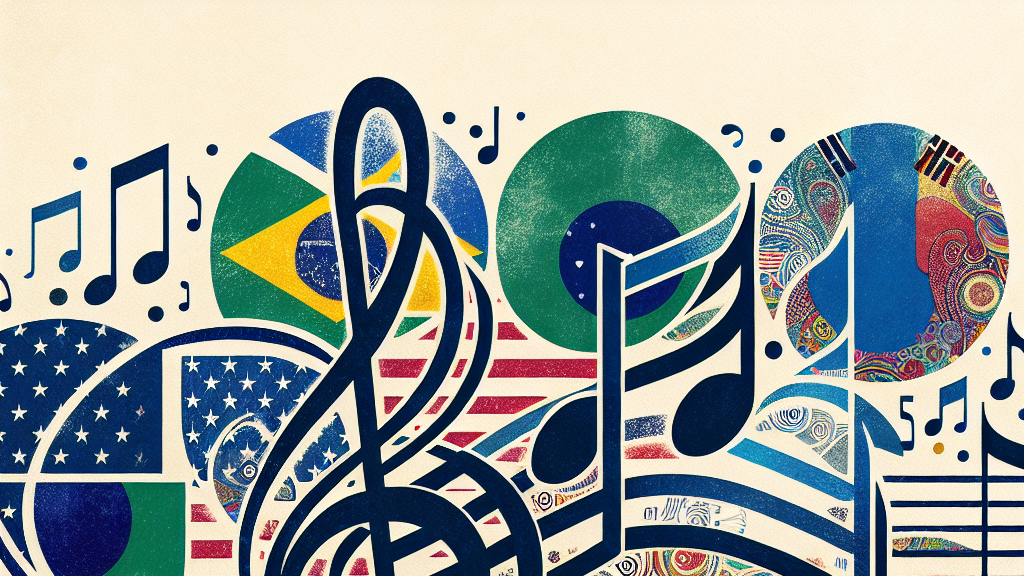
Scientists conducted a large-scale study in Brazil, the US, and South Korea, where participants were asked to listen to popular local music and describe their emotions. The novel approach involved using a bottom-up method where people could freely tag emotions rather than using pre-determined terms. This open-ended technique revealed some shared emotional responses across cultures, particularly with high-energy, uplifting music, but also highlighted the unique ways each culture interprets emotions in music.

Imagine a music playlist tailored not just to your tastes but also to resonate with global emotions, offering tunes that lift spirits worldwide. This research could pave the way for international music platforms that understand and cater to the emotional pulses of many cultures, making your listening experience truly universal.

Surprisingly, translation tools often fail to capture music-specific emotional meanings across languages!

FAQs

What challenge does studying music emotions across cultures present?

One major challenge is the bias in selecting music and emotional descriptors, which often rely heavily on Western traditions and languages. This makes it difficult to understand how people from different cultures experience emotions in music.

How did researchers aim to address cultural biases in music emotion research?

The researchers used a balanced method by including music from Brazil, the US, and South Korea and gathering culture-specific emotional terms through an open-ended tagging process, allowing participants to define emotions in their own words.

What surprising finding emerged about machine translation in this study?

Machine translations often failed to adequately capture the specific emotional meanings related to music, underscoring the need for nuanced, culturally sensitive approaches.

How could this research on music emotions affect the future of music streaming?

In the future, music streaming services might offer playlists that are globally resonant, tapping into emotions that various cultures find engaging, enhancing the listening experience for everyone worldwide.

Why is it important to understand emotional responses to music across cultures?

Understanding these responses can help bridge cultural gaps, foster appreciation for diverse musical traditions, and inform more inclusive global music platforms.

Background

Music is a universal language that can convey emotions from joy and excitement to sadness and nostalgia. However, emotional expressions and interpretations are deeply influenced by cultural contexts. These cultural nuances can result in varied emotional understandings of the same piece of music. Traditional research often lacks diversity in its selection of music and emotional descriptors, leading to biased conclusions that may not reflect the global audience.

History

Historically, emotion research in music has centered on Western music and language, leading to a predominantly Western-centric understanding. Earlier studies often used fixed taxonomies for emotions, limiting the expression of culturally specific feelings. This research aims to diversify the field by incorporating music from various cultures and allowing participants to define emotions in their terms, helping capture a broader spectrum of emotional expression.

Based on “Are Expressions for Music Emotions the Same Across Cultures?” by Elif Celen, Pol van Rijn, Harin Lee, Nori Jacoby, available on arXiv (arxiv.org/abs/2502.08744), used under CC BY 4.0 (creativecommons.org/licenses/by/4.0/).


Trending

Latest

Can AI Save Water Discover How

Computers

AI is transforming the tech world, but it uses lots of water! A new tool, SCARF, helps us measure and reduce AI's water footprint,...

Whats a Forbush Decrease and Why Should We Care Whats a Forbush Decrease and Why Should We Care

Space

Scientists just observed the biggest solar storm event in years, revealing unexpected cosmic ray patterns. Understanding these changes could help us protect our technology...

Can Cars Spot Danger Faster Than Humans Can Cars Spot Danger Faster Than Humans

Computers

Think about how quickly you react when something unexpected happens on the road. This research brings us closer to creating self-driving cars that can...

Can Fear of the Other Stop Social Harmony Can Fear of the Other Stop Social Harmony

Physics

Fear of the unknown might make it harder for people to agree and get along. This study shows that when people have strong xenophobic...

Can AI Revolutionize Breast Cancer Diagnosis Can AI Revolutionize Breast Cancer Diagnosis

Electricity

This research introduces a groundbreaking AI model that can accurately assess HER2-positive breast cancer using widely accessible staining methods, potentially revolutionizing how we diagnose...

Can AI Transform Your Singing into a Choir Can AI Transform Your Singing into a Choir

Computers

Imagine singing solo and having AI turn you into a choir. This research unveils a groundbreaking AI tool that transforms your voice into rich...

You May Also Like

Computers

This study reveals how people with schizophrenia use YouTube vlogs to share their emotional journeys, combining verbal and visual storytelling to engage viewers better....

Computers

Imagine your favorite song changing its tune to match your mood! AffectMachine-Pop promises a future where music can instantly adapt to how you feel,...

Physics

This study delves into how the Eurovision Song Contest has evolved over 70 years, revealing how trends in language, genre, and national pride shape...

Quantum Biology

Music isn't just for entertainment; it's woven into our very brains, enhancing creativity and shaping our individuality. This research suggests that by understanding how...

Computers

This study reveals how people's facial expressions in Instagram posts about the 2024 U.S. presidential election can tell us as much as their words...

Computers

Discover how smart tech could suggest your next favorite movie by learning from your music taste, making recommendations more personalized than ever!

Computers

This research explores a unique VR fire drill simulator that analyzes emotions in real time to enhance training outcomes, paving the way for more...

Computers

Rumors spread faster online because they tap into our emotions like anger and fear, while non-rumors bring more positive vibes. Understanding this emotional interplay...

Computers

By studying how different cultures express emotions through music, researchers are breaking barriers and showing that while we may use different words, the feelings...

Copyright © 2024 8ig8rain.

Disclaimer: The content on 8ig8rain.com consists of AI-generated summaries of scientific abstracts from arXiv. Please note that most arXiv abstracts are preprints and may not have undergone formal peer review. While these summaries aim to convey key ideas and potential applications, they are provided for informational purposes only and should not be interpreted as validated scientific findings or professional advice. The summaries are intended to educate, spark curiosity, and inspire further exploration of science.