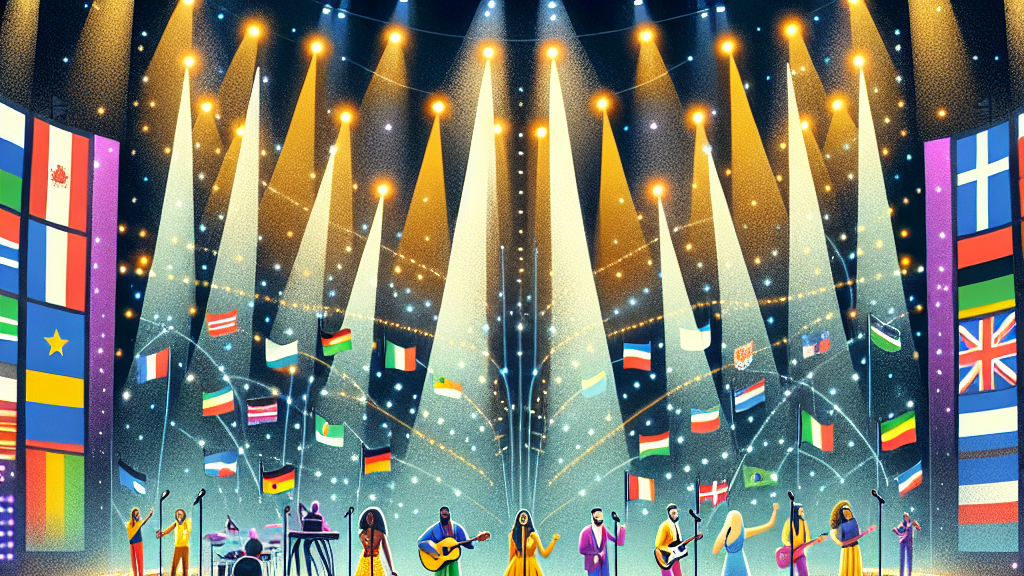
Have you ever wondered what makes a song a hit at the Eurovision Song Contest? It’s not just about catchy tunes and dazzling performances; there’s a lot more at play! This research reveals how participants and organizers have been learning from past contests and adapting strategies over 70 years to clinch that top spot. It turns out, learning from the reactions to songs, language choices, and even rule changes has been key to staying ahead in this musical showdown. Adopting English seems like a surefire way to improve your chances, but some countries are proudly sticking to their roots by singing in their national languages, even if it means not winning.
The study analyzed the trends in Eurovision over decades, highlighting some fascinating insights. As it turns out, pop music has become the dominant genre, and English the preferred language, aligning with global trends. Yet, certain countries value cultural expression over winning, and stick to their native languages for their performances. This shows a unique blend of strategic planning and cultural pride influencing decision-making. Even more intriguingly, rule changes by the organizers seem to respond to unexpected situations in the contest’s history, ensuring the competition remains fresh and fair.
Looking forward, understanding these trends in Eurovision can change how future contests are strategized. Imagine using predictive analytics to pick the perfect song or language that will captivate audiences and judges alike. For countries aiming to make a cultural statement, there’s a lesson here: authenticity might not always win the contest, but it definitely wins hearts. Whether you’re a fan of the contest or not, this blend of culture and competition provides an intriguing perspective on how societies learn and adapt over time.
Did you know that singing in English at Eurovision significantly boosts your chances of winning? Yet, some countries stick to their national languages for cultural pride!
FAQs
How do countries learn from Eurovision outcomes?
Countries observe trends and outcomes in past Eurovision contests to better strategize their song choices, language, and other performance elements, aiming for better results.
Why do some countries ignore the trend of using English in Eurovision?
Some countries prioritize showcasing their cultural identity by singing in their national language, even if it might reduce their winning chances, reflecting a unique blend of pride and competition.
What changes have been made to Eurovision rules over time?
Eurovision organizers have adapted contest rules in response to various occurrences, such as altering voting systems to prevent runaway winners, showcasing the event’s evolution and learning process.
Has pop music always dominated Eurovision?
While pop music is currently popular in Eurovision, previous contests featured a wider variety of genres. Over time, as musical tastes evolved, pop became the prevailing choice among contestants.
How does Eurovision reflect broader cultural trends?
Eurovision mirrors global shifts in music and language, highlighting the influence of popular culture and societal changes on competition dynamics.
Background
The Eurovision Song Contest is an annual international music competition, primarily featuring European countries. Each participant country submits an original song to be performed live. This study examines how countries learn from their own and others’ past performances to improve their chances of winning, using data from previous contests.
History
Since its inception in 1956, Eurovision has undergone many transformations to become the cultural phenomenon it is today. Initially, songs had to be performed in a country’s official language, but this rule was relaxed over time, allowing more linguistic diversity and reflecting broader globalization trends.
Based on “Breaking the Code: Multi-level Learning in the Eurovision Song Contest” by Luís A. Nunes Amaral, Arthur Capozzi, Dirk Helbing, available on arXiv (arxiv.org/abs/2505.11555), used under CC BY 4.0 (creativecommons.org/licenses/by/4.0/).