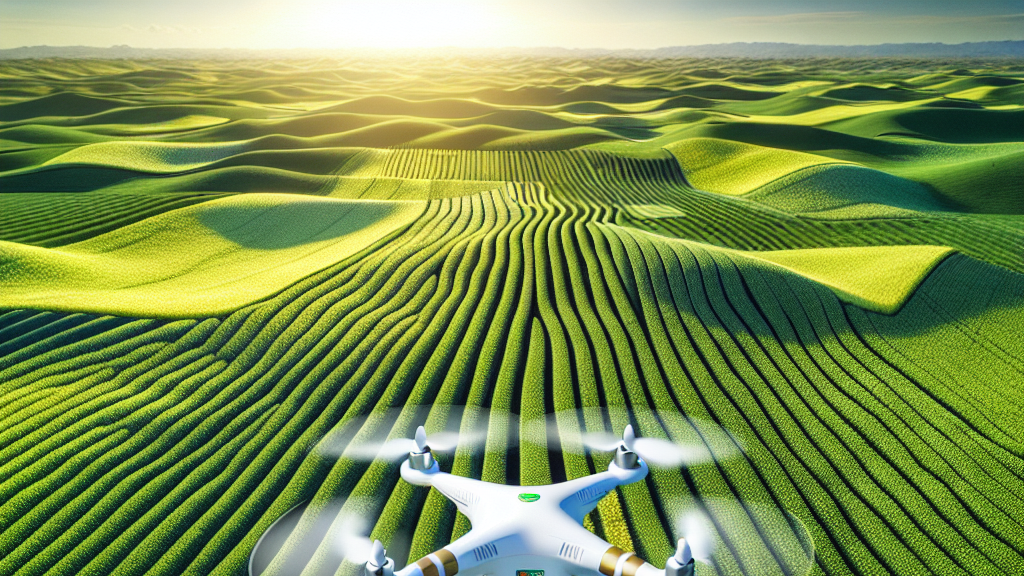
Imagine a future where drones glide over farmland, doing more than just capturing stunning aerial views. They could be the key to revolutionizing farming as we know it. Yes, these flying wonders could soon become farmers’ secret weapon to enhance precision agriculture, offering a cost-effective way to monitor crops closely without the hassle of complex setups.
Research is showing promise in systems where drones carry small sensor tags that don’t need batteries. These innovative sensors collect environmental data, like temperature and humidity, powered just by the drone’s wireless signals. It’s a fascinating blend of advanced technology and simplicity, making it an exciting leap forward for farming technology. However, while initial tests from a research platform showed potential, there were some hiccups when these drones flew, such as signal interference, paving the way for ongoing tweaks and improvements.
Think about it: no more trudging through muddy fields carrying heavy equipment. Instead, these smart drones could effortlessly zip through, collecting data that helps farmers understand their fields better and respond more efficiently. This means healthier crops, less waste, and a more sustainable way to grow food. The impact could be massive, not just for farmers but for anyone who relies on healthy, affordable food—which is all of us!
The drones powering these sensors may soon allow farmers to ditch batteries, making their tech setup much more eco-friendly!
FAQs
What makes drones so beneficial for farming?
Drones can cover large areas quickly and carry wireless sensors that help monitor crops more efficiently and cost-effectively, potentially reducing the use of batteries.
How do these wireless sensors work without batteries?
These sensors harvest energy from wireless signals emitted by drones, allowing them to function without traditional power sources.
What challenges did the research encounter during testing?
While ground tests were successful, airborne trials faced wireless interference that affected data collection, indicating the need for further refinement.
How can this drone technology impact everyday life?
By improving farming efficiency and reducing costs, drone technology can lead to more sustainable agricultural practices, making foods more accessible and affordable for everyone.
Background
Precision agriculture is all about making farming smarter, using technology to measure and respond to plant needs quickly. Drones, or unmanned aerial vehicles (UAVs), are now being explored for their potential to carry efficient, low-power sensors that don’t require batteries. These sensors can collect vital environmental data, which could revolutionize how farmers manage their crops.
History
The integration of technology in agriculture has evolved significantly, from the use of satellite data to more advanced GPS systems. Recent advancements include wireless technology and UAVs, which have the potential to further enhance farming methods. This study builds on that by attempting to implement battery-less sensors that augment the drones’ ability to monitor and optimize crop health.
Based on “Autonomous Agricultural Monitoring with Aerial Drones and RF Energy-Harvesting Sensor Tags” by Paul S. Kudyba, Haijian Sun, available on arXiv (arxiv.org/abs/2502.16028), used under CC BY 4.0 (creativecommons.org/licenses/by/4.0/).