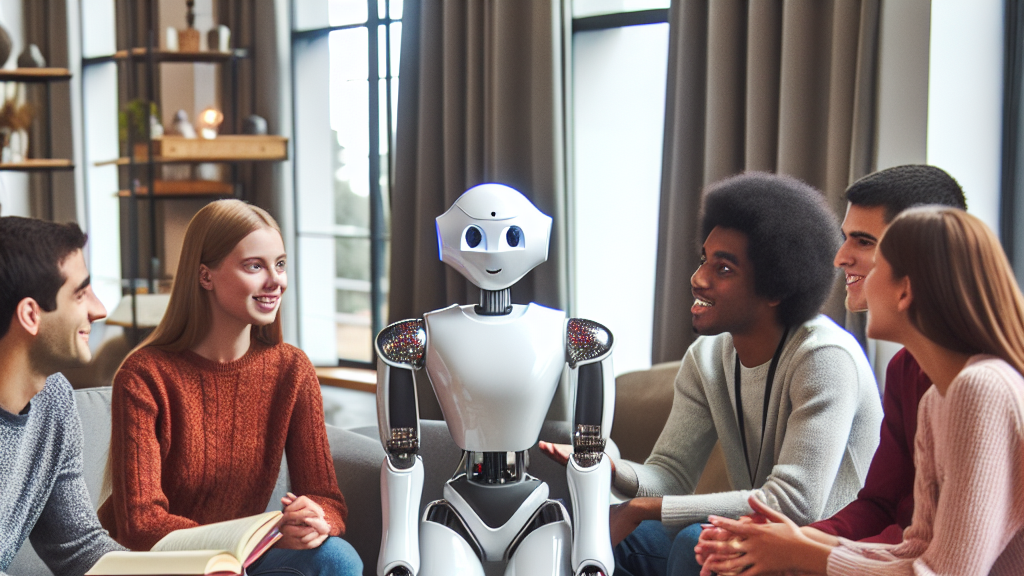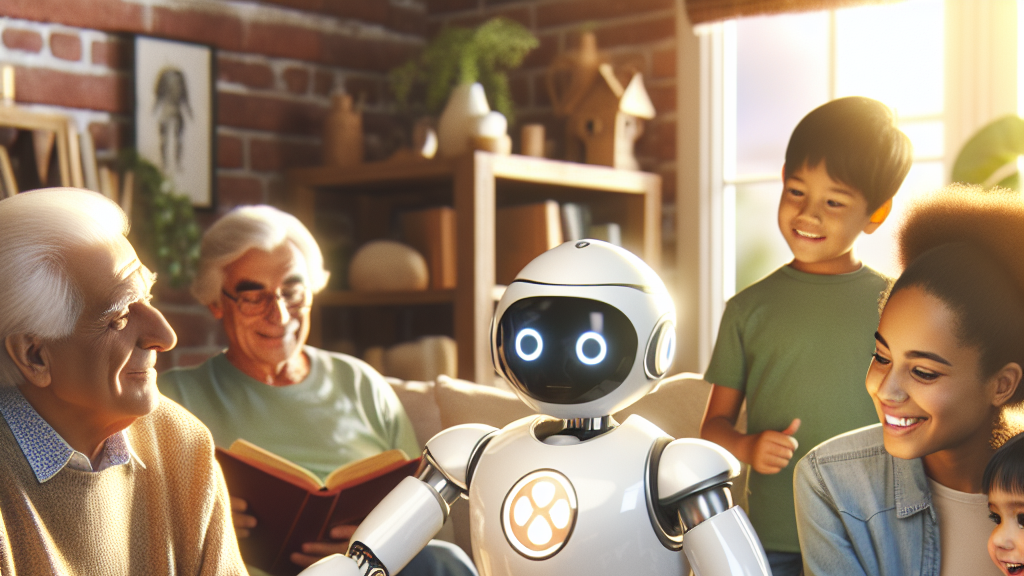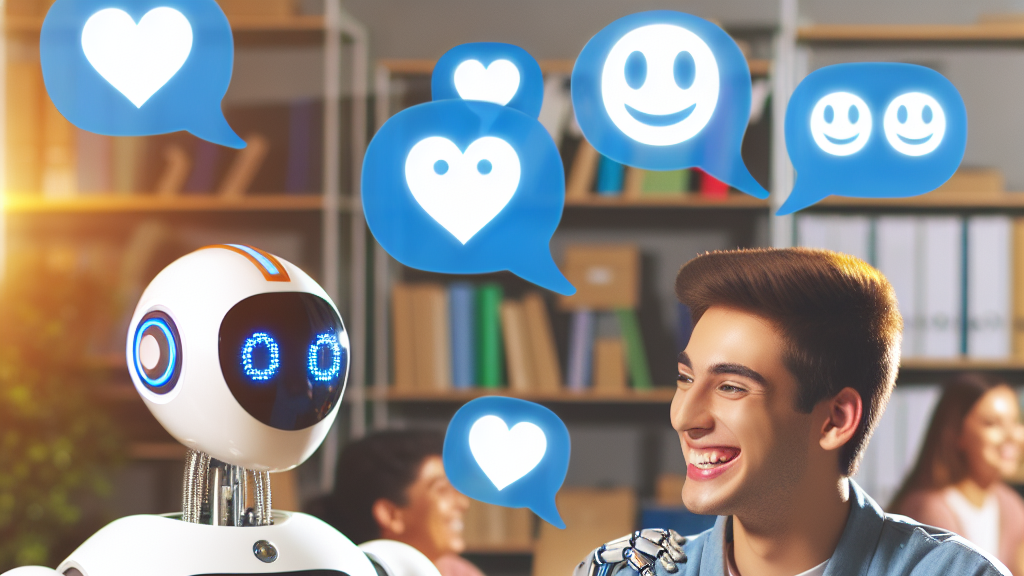
Picture this: a friendly robot giving you advice on how to handle your emotions. Sounds like science fiction? Well, it’s not! A new study shows that interacting with social robots can truly help us manage our feelings better. Imagine having a non-judgmental friend who listens and helps you see things differently. Intriguing, right?
In this groundbreaking research, students engaged with a robot over five sessions. During these interactions, the robot facilitated conversations designed to help the students rethink emotionally intense situations. This process, known as cognitive reappraisal, allowed participants to gain a new perspective on their emotions, leading to better mood and sentiment. The robot’s role as a listener and guide encouraged students to open up more than ever before, helping them tackle emotional challenges they might have avoided otherwise.
So, what does this mean for you? Well, imagine a world where robots not only vacuum your floor but also help you manage stress. As technology advances, we might soon find robots in our homes or workplaces, offering support and guidance in our emotional lives. This could transform how we handle stress and lead to happier, healthier communities. Who knew robots could become our emotional allies?
Did you know? Social robots can make us better at managing our emotions just by having a chat with us!
FAQs
How do social robots support emotion regulation?
Social robots facilitate structured conversations that guide users to reinterpret emotionally challenging situations, a technique known as cognitive reappraisal, ultimately improving mood and emotional control.
What kind of environments are best for using social robots for emotion regulation?
Familiar environments like university halls or personal spaces are effective settings where social robots can provide meaningful support for emotion regulation.
What changes did participants experience after interacting with the robot?
Participants reported significant improvements in understanding and controlling their emotions, such as better mood, increased emotional expressiveness, and greater use of affective language.
Can social robots replace human therapists in emotion regulation?
While social robots can provide valuable support and guidance, they are not a substitute for professional therapy but rather a complement to traditional methods of emotion regulation.
How accessible is this technology for everyday use?
As technology continues to evolve, social robots are becoming more accessible and may soon play a role in everyday emotional support across various settings.
Background
Understanding emotions, especially how we process and regulate them, is a vital skill. One method that helps with this is cognitive reappraisal, where individuals learn to reinterpret negative situations differently. This study uses social robots to guide people through cognitive reappraisal, offering a new tool for emotional regulation.
History
The field of emotion regulation has long explored ways to help individuals manage their feelings more effectively. Cognitive reappraisal has been a focus area for some time, with previous studies highlighting its benefits. This research builds on that foundation by integrating technology, using social robots to facilitate the process in everyday settings.
Based on “A Robot-Led Intervention for Emotion Regulation: From Expression to Reappraisal” by Guy Laban, Julie Wang, Hatice Gunes, available on arXiv (arxiv.org/abs/2503.18243), used under CC BY 4.0 (creativecommons.org/licenses/by/4.0/).