Connect with us

Search by keyword

Physics

Can Chaos Lead to Order?

Imagine if things could organize themselves into perfect order from total chaos, without anyone in charge. This research explores how random movements, like those of ants and beetles, can transform into coordinated, goal-driven actions, potentially revolutionizing how we understand intelligence across biological and technological systems.

Can Chaos Lead to Order
✨Researched by humans. Explained by robots. Learn more.

Did you know that chaos can actually create order without anyone stepping in to control the situation? Researchers have discovered a fascinating mechanism where random actions, like those seen in a swarm of ants, can lead to perfectly coordinated group behavior. It’s like magic happening right in front of our eyes, with no central command pulling the strings!

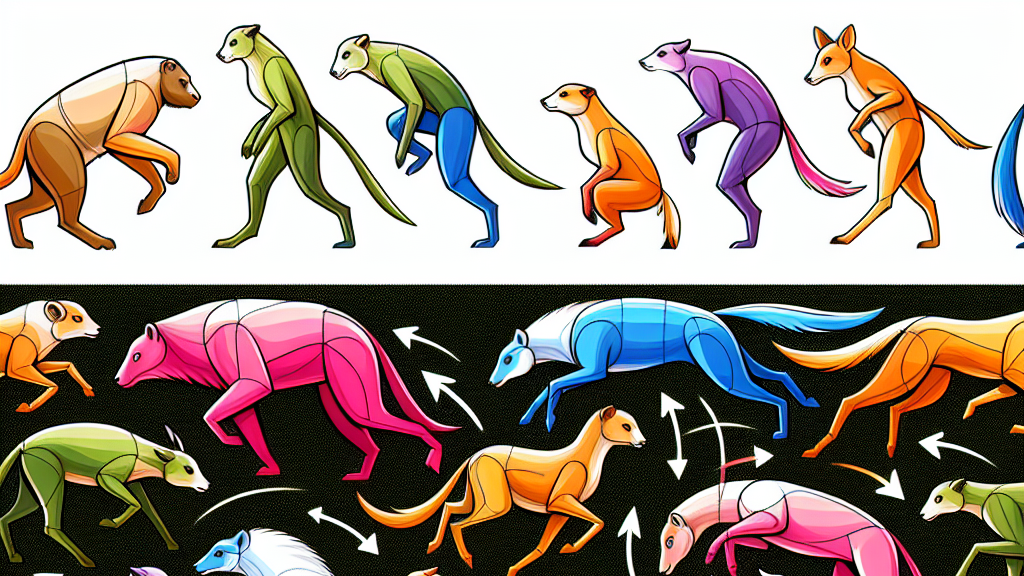
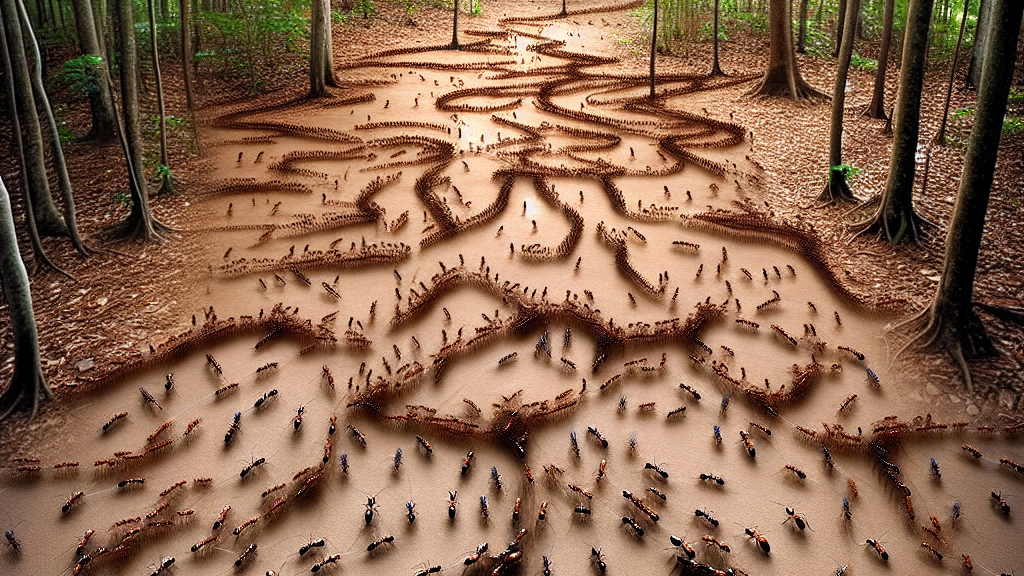
In a detailed simulation, scientists observed how ants and beetles started with random movements and, through simple feedback, organized themselves into a synchronized march. This happens thanks to something called Vector Dissipation of Randomness, where each agent collects environmental information and self-organizes, eventually creating a unified plan without the need for conscious thought. It’s a process that could be found in everything from insects to artificial intelligence!

Picture this: in the future, we could see technology and biological systems borrowing from this idea to solve complex problems independently. Imagine factories that run themselves, traffic that moves flawlessly without lights, or even swarms of drones delivering supplies with perfect efficiency. The possibilities are truly limitless, and it all begins with understanding how chaos leads to order!

Did you know ants don’t need a leader to organize themselves? They just naturally fall into formation!

FAQs

What is Vector Dissipation of Randomness?

Vector Dissipation of Randomness is a concept describing how random behaviors can evolve into coordinated actions without centralized control, using feedback and filtering of strategies.

How does this research relate to nature and technology?

This research shows that the same self-organizing principles seen in nature, like ant behavior, can be applied to technology and artificial intelligence, leading to decentralized control systems.

What is paraintelligence?

Paraintelligence refers to rational functionality in systems like insects that appear intelligent without having consciousness or self-awareness, expanding our understanding of what constitutes intelligence.

How could this concept change the future of artificial intelligence?

By applying Vector Dissipation of Randomness, artificial intelligence systems could become more autonomous, solving complex problems independently by mimicking natural self-organization.

Why is understanding chaos important?

Understanding chaos and its transformation into order can lead to new ways of organizing and optimizing systems around us, from natural ecosystems to advanced technological networks.

Background

Vector Dissipation of Randomness involves observing how disorganized actions can naturally evolve into ordered patterns. Key to this process is feedback, where past actions influence future decisions, allowing agents to filter out unproductive paths and align with successful strategies. This concept underscores how complex systems find order, similar to birds in a flock or fish in a school.

History

The idea of self-organization has roots in biology and physics, where it’s observed in natural phenomena like the formation of snowflakes or the flocking behavior of birds. This study builds on these concepts, formalizing a mathematical model that explains how such systems can organize without a central guide, leading to implications for both biological studies and the development of decentralized AI systems.

Based on “Dynamics of Insect Paraintelligence: How a Mindless Colony of Ants Meaningfully Moves a Beetle” by Eldar Knar, available on arXiv (arxiv.org/abs/2503.18858), used under CC BY 4.0 (creativecommons.org/licenses/by/4.0/).

Trending

Latest

Can AI Save Water Discover How

Computers

AI is transforming the tech world, but it uses lots of water! A new tool, SCARF, helps us measure and reduce AI's water footprint,...

Whats a Forbush Decrease and Why Should We Care Whats a Forbush Decrease and Why Should We Care

Space

Scientists just observed the biggest solar storm event in years, revealing unexpected cosmic ray patterns. Understanding these changes could help us protect our technology...

Can Cars Spot Danger Faster Than Humans Can Cars Spot Danger Faster Than Humans

Computers

Think about how quickly you react when something unexpected happens on the road. This research brings us closer to creating self-driving cars that can...

Can Fear of the Other Stop Social Harmony Can Fear of the Other Stop Social Harmony

Physics

Fear of the unknown might make it harder for people to agree and get along. This study shows that when people have strong xenophobic...

Can AI Revolutionize Breast Cancer Diagnosis Can AI Revolutionize Breast Cancer Diagnosis

Electricity

This research introduces a groundbreaking AI model that can accurately assess HER2-positive breast cancer using widely accessible staining methods, potentially revolutionizing how we diagnose...

Can AI Transform Your Singing into a Choir Can AI Transform Your Singing into a Choir

Computers

Imagine singing solo and having AI turn you into a choir. This research unveils a groundbreaking AI tool that transforms your voice into rich...

You May Also Like

Nonlinear Sciences

This research connects our mind's resilience to its ability to adapt and stay whole, even when things around us change. By using the idea...

Materials

Ever wondered how starlings synchronize their mesmerizing sky dances? New research reveals it's like a perfect choreography where waves of movement spread smoothly through...

Materials

This research explores how small changes in a neighborhood's population can cause rapid shifts, using a new model that combines social behavior with fluid...

Computers

Imagine a future where our gadgets are as smart as scientists! This research dives into what makes artificial intelligence tick, exploring how adaptable systems...

Quantum Biology

This research uncovers how memory effects and time delays in species interactions create synchronized patterns in ecosystems. Understanding these patterns could help us predict...

Quantum Biology

Our brains aren't just complex—they show universal patterns even when we're asleep or distracted. Using EEG, scientists found that our brain dynamics align in...

Materials

Imagine if animals could teach us new ways to organize and work together. Researchers have discovered how simple interactions between different species can lead...

Nonlinear Sciences

Ever wondered how chaos leads to order? Scientists are exploring the mesmerizing transition of random particles into stunning patterns. This research could unlock secrets...

Nonlinear Sciences

What if the chaotic and unpredictable world around us could actually help us make accurate predictions? Imagine using chaos to foresee the future of...

Copyright © 2024 8ig8rain.

Disclaimer: The content on 8ig8rain.com consists of AI-generated summaries of scientific abstracts from arXiv. Please note that most arXiv abstracts are preprints and may not have undergone formal peer review. While these summaries aim to convey key ideas and potential applications, they are provided for informational purposes only and should not be interpreted as validated scientific findings or professional advice. The summaries are intended to educate, spark curiosity, and inspire further exploration of science.