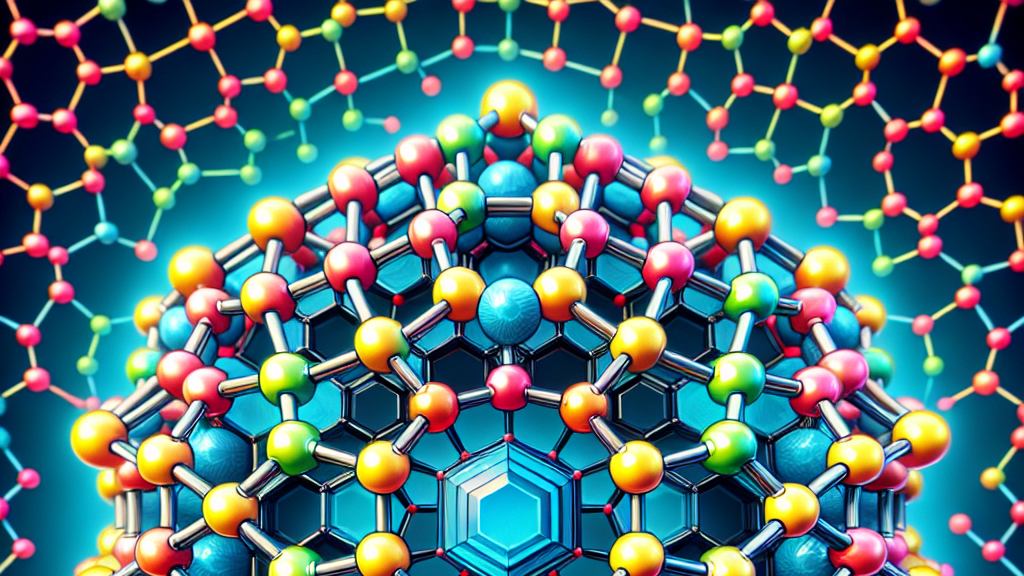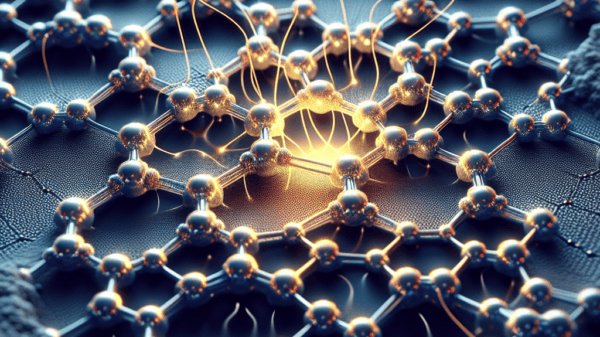
Imagine a world where your smartphone is not just slimmer but exponentially faster and more efficient. This might soon be possible thanks to a phenomenon called the ‘magic angle’ in graphene, a wonder material hailed for its incredible physical properties. Scientists have discovered that when two layers of graphene are twisted at this special angle, it unlocks a new realm of possibilities for how electrons move and interact, like superheroes in a microscopic city.
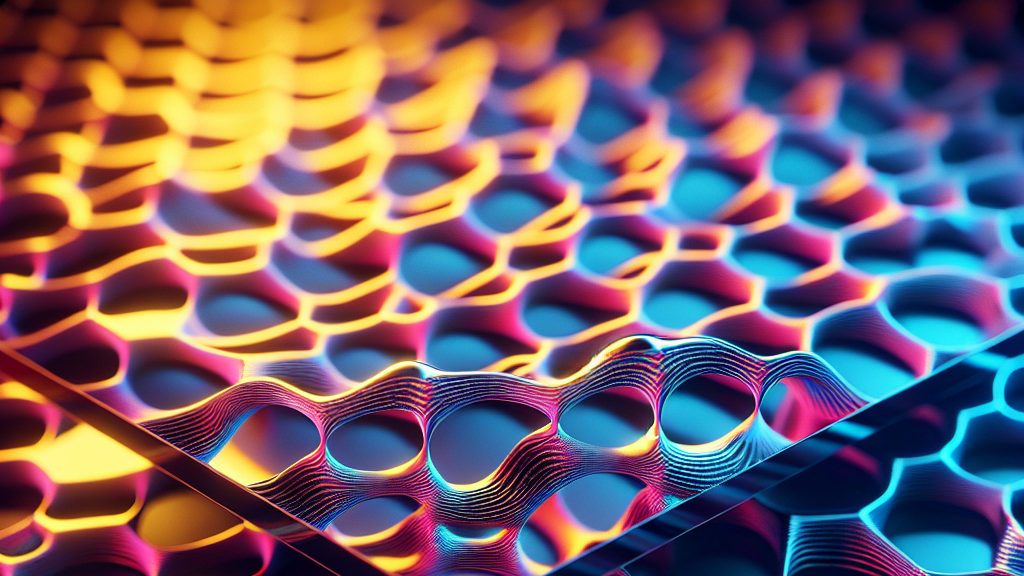
The heart of this research lies in understanding how electrons, the tiny particles that create electricity, behave in this ‘magic’ setting. By twisting two sheets of graphene at just the right angle, researchers have found that the electrons move through the material in a completely unique way, forming what are known as flat bands. These flat bands allow for strong interactions between the electrons, which means they can exhibit remarkable properties like superconductivity and magnetism, typically not seen in standard materials.
The potential applications of this are immense. Picture this: future electronics could be built using these highly efficient materials, leading to devices that consume less power but perform better. This could mean longer-lasting batteries, faster charging times, and new electronics achieving feats we can only dream of today. We’re talking about a future where technology doesn’t just catch up with our needs but anticipates them in revolutionary ways.
Did you know that a single sheet of graphene is only one atom thick, yet it is 200 times stronger than steel?
FAQs
What is magic angle in graphene?
The magic angle in graphene refers to the specific angle at which two layers of graphene are twisted, leading to unique electronic properties. This discovery is revolutionary because it opens the door to new, highly efficient ways for electrons to interact, which could change the way we use electronics.
Why is graphene considered a wonder material?
Graphene is called a wonder material because of its exceptional strength, flexibility, and electrical conductivity, all packed into a sheet that’s just one atom thick. Discovering unique properties like the magic angle only expands its potential uses, especially in electronics.
How could magic angle twisted bilayer graphene impact everyday devices?
Magic angle twisted bilayer graphene could impact everyday devices by making them faster and more efficient. It allows for strong electron interactions, potentially leading to breakthroughs in creating more powerful and less energy-consuming technology.
Background
Magic angle twisted bilayer graphene (MATBG) refers to two sheets of graphene twisted at a specific angle. This affects how electrons behave in the material, allowing them to form ‘flat bands’ where they interact strongly. By understanding these interactions, scientists can explore new physical phenomena like superconductivity and magnetism.
History
Graphene itself has been known for its remarkable properties since its isolation in 2004. Over the years, researchers have been exploring its potential in various applications, such as electronics. The discovery of the magic angle in 2018 has accelerated efforts to understand and harness these new properties, marking a significant shift in graphene research.
Based on “The Many-Body Ground State Manifold of Flat Band Interacting Hamiltonian for Magic Angle Twisted Bilayer Graphene” by Kevin D. Stubbs, Michael Ragone, Allan H. MacDonald, Lin Lin, available on arXiv (arxiv.org/abs/2503.20060), used under CC BY 4.0 (creativecommons.org/licenses/by/4.0/).