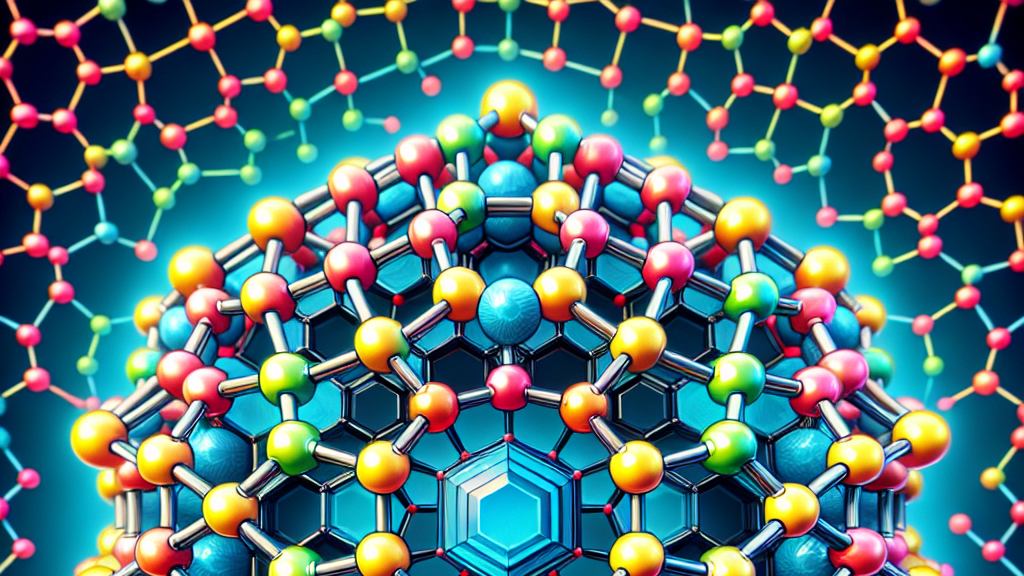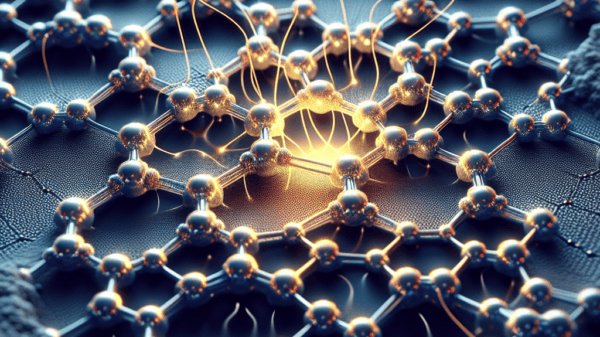
Imagine a world where invisible forces are guiding the building blocks of future technology! These unseen powers, inspired by a phenomenon known as the Casimir effect, might be the secret to creating the next generation of super-thin and strong materials. The Casimir effect, first described in 1948, is a fascinating quantum physics concept where tiny, invisible forces emerge between surfaces without any touching, shaping how materials can behave in incredible ways.
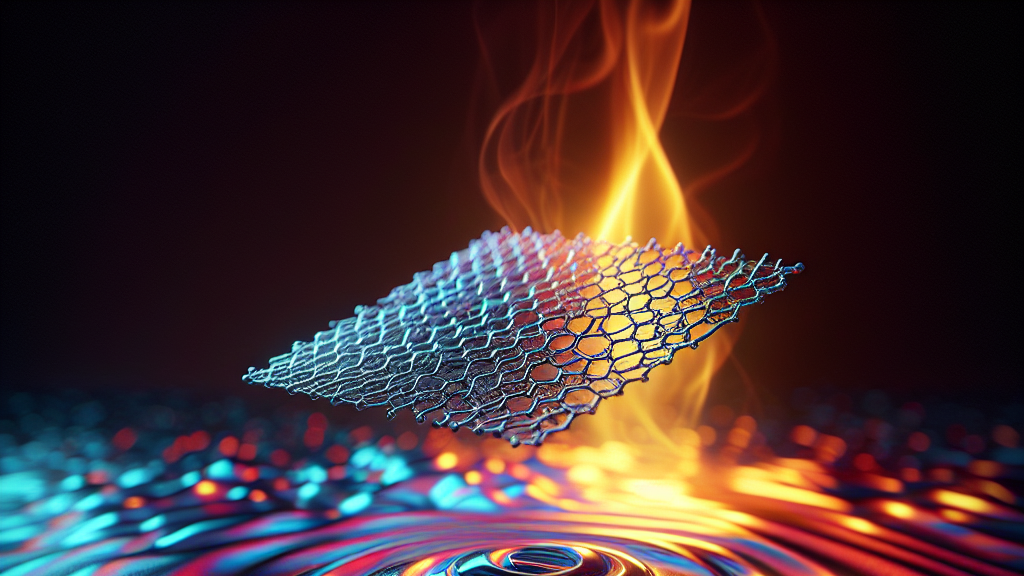
In a fascinating twist of science, researchers have discovered that these mysterious forces can drive the self-assembly of two-dimensional materials, like graphene, on molten metals. By observing them through advanced microscopy techniques, we’ve seen these layers move and join together with nearly perfect precision thanks to forces similar to the Casimir effect. This research means we can harness these secret forces to improve how we grow and stitch together layers of graphene, creating seamless sheets of material that could change the tech landscape.
So, why should you care? Picture your smartphone, tablet, or laptop becoming even thinner, lighter, and more powerful. This research means that architects of the future could design materials from the molecular level up, using the Casimir-like effect to fine-tune how layers come together. Today’s breakthrough might just be the key to unlocking a sleek, new era of technology where gadgets are smarter, faster, and more efficient than we ever imagined!
The Casimir effect involves forces so small they can’t be felt or seen, yet they’re powerful enough to affect the way materials assemble at the atomic level!
FAQs
What is the Casimir effect, and why is it significant for material science?
The Casimir effect is a quantum physics phenomenon where invisible forces appear between close surfaces, impacting how tiny particles and materials interact. It’s crucial for material science because these forces can guide the self-assembly of materials like graphene, leading to the development of ultra-thin, seamless materials.
How does the Casimir effect help in self-assembling 2D materials like graphene?
In this study, researchers found that the Casimir-like forces drive the movement and precise joining of graphene layers on molten metals. This means these forces help align and combine the layers perfectly, allowing us to create continuous sheets of material efficiently.
What practical applications could arise from this research using the Casimir effect?
The findings could revolutionize the creation of advanced materials for technology, leading to thinner, lighter, and more efficient devices like smartphones and wearable tech, as well as improvements in nanotechnology and possibly even quantum computing.
Why is graphene a significant material in future technology?
Graphene is an atom-thick carbon layer known for its incredible strength, lightness, and excellent electrical conductivity. These properties make it a prime candidate for revolutionizing electronics, energy storage, and even medical devices.
How were researchers able to observe and measure these Casimir-like forces in action?
Using in situ environmental and ultrahigh vacuum scanning electron microscopy, coupled with atomic force microscopy, researchers could view the graphene’s movements and measure the forces involved, providing direct evidence of the Casimir-like effect at work.
Background
The Casimir effect is a strange but critical concept in quantum physics, where vacuum fluctuations create a force between two close surfaces without any physical contact. It’s like a pulling force that operates at incredibly small scales but can have significant effects in the world of nanotechnology, where controlling movement and assembly at the atomic level is crucial.
History
The Casimir effect was first theorized in 1948 by physicist Hendrik Casimir, who proposed the existence of this force as a macroscopic effect of quantum electrodynamics. Over the years, the effect has moved from theoretical interest to practical investigations, especially in nano-scale systems, playing a pivotal role in understanding forces at the micro and nano-levels.
Based on “Casimir-like effect driven self-assembly of graphene on molten metals” by Kristýna Bukvišová, Radek Kalousek, Marek Patočka, Jakub Zlámal, Jakub Planer, Vojtěch Mahel, Daniel Citterberg, Libor Novák, Tomáš Šikola, Suneel Kodambaka, Miroslav Kolíbal, available on arXiv (arxiv.org/abs/2503.04327), used under CC BY 4.0 (creativecommons.org/licenses/by/4.0/).