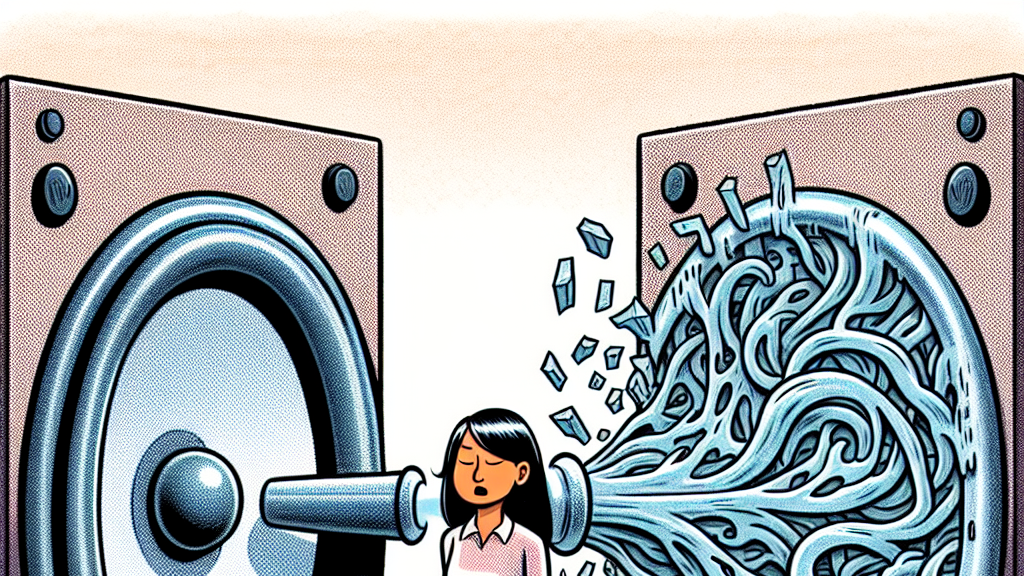
Did you know that you could spot fake news with fewer words? That’s exactly what a group of researchers set out to achieve. They recognized that the fight against online misinformation is critical for democracy and public trust, but current methods are often bogged down by the need for vast amounts of text to accurately assess news articles. This not only demands a lot of computational power but also makes it hard to adapt to the ever-changing landscape of information quality online.
Enter SLIM, a brand-new framework that turns this idea on its head by using less data to get the job done. By strategically selecting only the most necessary pieces of information, SLIM can spot fake news with an accuracy that matches or even exceeds traditional methods. The magic lies in its use of information theory to pinpoint just how much data is essential for an accurate assessment. Think of it as a super-efficient detective who can solve the case with just a few clues instead of needing the entire story.
Imagine a world where your social media feed is free from harmful misinformation. SLIM could make that dream a reality by making fake news detection faster, cheaper, and more adaptable to different types of content. By reducing reliance on extensive datasets, this method could make real-time analysis feasible, helping keep communities informed and safe. It’s like having a personal guardian against misinformation, ensuring you only get the facts you need to make informed decisions.
Fake news spreads six times faster than true news online!
FAQs
What makes SLIM different from traditional fake news detection methods?
SLIM stands out because it requires significantly less information to detect fake news effectively. By using information-theoretic measures, SLIM strategically selects minimal data to achieve high accuracy, making it more efficient and adaptable than traditional methods relying on full text.
How does the SLIM framework help combat online misinformation?
SLIM enhances the fight against fake news by reducing the computational resources needed for detection, allowing it to operate more efficiently and quickly. This means it can adapt to various forms of content and keep pace with the ever-changing landscape of online information.
Can SLIM be integrated into current social media platforms?
Yes, SLIM is designed to be versatile and could potentially be integrated into existing platforms. Its ability to use limited data allows for real-time analysis, which is crucial for promptly identifying and addressing fake news across social media networks.
What are the implications of SLIM for the future of news consumption?
The implementation of SLIM could revolutionize how we consume news by making online environments safer and more reliable. With faster and more accurate fake news detection, people can have more confidence in the information they encounter and make more informed decisions based on evidence.
Is SLIM more cost-effective than current fake news detection methods?
Yes, SLIM is more cost-effective as it relies on limited information, reducing the computational power and data storage required for traditional full-text analyses. This makes it a more sustainable and accessible option for platforms aiming to combat misinformation.
Background
Fake news detection is typically accomplished using detailed textual analysis of news articles. However, this can be computationally expensive and requires large datasets to train models to achieve high accuracy. The SLIM framework seeks to improve computational efficiency and robustness by using minimal data, strategically selected through information-theoretic measures, to identify fake news effectively.
History
The need for efficient fake news detection has grown due to concerns over misinformation affecting democracy and public trust. Previous methods have relied heavily on analyzing large amounts of text. This study builds on that by proposing a streamlined approach, SLIM, to achieve similar or better results using much less data.
Based on “Is Less Really More? Fake News Detection with Limited Information” by Zhaoyang Cao, John Nguyen, Reza Zafarani, available on arXiv (arxiv.org/abs/2504.01922), used under CC BY 4.0 (creativecommons.org/licenses/by/4.0/).