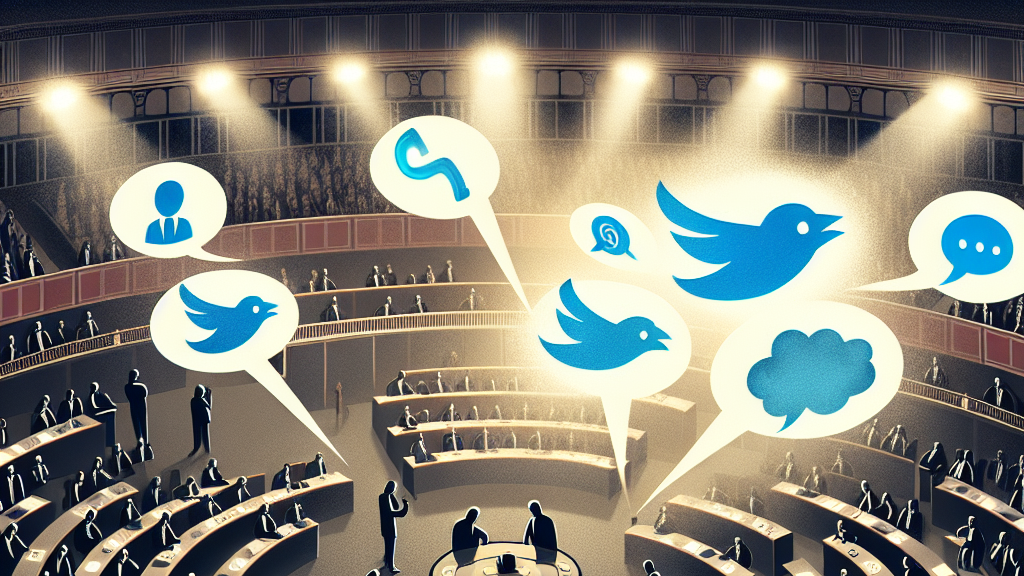
Politicians seem to be playing the blame game more than ever these days. After the 2016 U.S. presidential election, there was a noticeable shift in how politicians communicated, with a greater focus on calling out faults or wrongdoings rather than singing praises. It’s not just about finger-pointing; it’s a strategic move that reflects a change in how they engage their audience. This shift in rhetoric matters because it can influence public trust and how people perceive the effectiveness of their government.
Researchers noticed this pattern after analyzing millions of tweets by U.S. Congress members over a decade. They found that whether a politician was in power or opposition played a significant role in determining if they were more likely to praise or blame. Those in power, like the government, are more inclined to highlight achievements and merit, while those in opposition aren’t shy about pointing fingers and assigning blame. This style of communication is more than a mere emotional expression; it’s a calculated attempt to sway public opinion.
Imagine you’re a voter trying to decide who to trust. The constant flood of blame-focused messages can make it hard to believe in politicians or feel confident about the government’s capabilities. As blame spreads faster and wider than praise on social media, it subtly shapes the public’s opinions, making it crucial to discern the intent behind political messages. In the long run, understanding this dynamic can help us navigate political discourse more effectively and foster a more informed electorate.
Blame tweets by politicians spread more virally online than positive messages about merit.
FAQs
Why do politicians focus more on blame than merit in their communication?
After the 2016 election, politicians shifted towards blaming others more than praising achievements as a way to influence public perception and increase engagement, especially on social media.
How does this blame-focused communication affect public trust in politicians?
This strategy can decrease trust in politicians and the perceived effectiveness of the government, as blame can create a negative perception among the public.
What role does social media play in spreading blame-focused political messages?
Social media platforms, like Twitter, amplify these messages as blame tends to spread faster and more widely than positive messages about merit, reaching a larger audience.
Does the political position of a politician influence their communication style?
Yes, those in power tend to highlight achievements, while those in opposition are more likely to place blame, reflecting different rhetorical strategies based on their political roles.
Background
In political discourse, causal attribution refers to who gets credit or blame for certain events or outcomes. This study focuses on how U.S. Congress members use causal attribution in their tweets, distinguishing between expressions of merit and blame. Since elections in 2016, there has been a noticeable shift in the tone of political communication, with a stronger emphasis on blame rather than merit, influenced by politicians’ power status.
History
The study of political communication has evolved significantly over the years. Traditionally, politicians used speeches and interviews to shape public opinion, but the rise of social media platforms like Twitter has revolutionized how political messages are delivered and perceived. This study builds on previous work by exploring how political rhetoric has changed in the new digital age, particularly since the 2016 presidential election.
Based on “Blameocracy: Causal Attribution in Political Communication” by Francesco Bilotta, Alberto Binetti, Giacomo Manferdini, available on arXiv (arxiv.org/abs/2504.06550), used under CC BY 4.0 (creativecommons.org/licenses/by/4.0/).