Connect with us

Search by keyword

Economics

Can Cooperation Win in Life’s Little Games?

Ever wondered what makes people work together, even when they don’t have to? Turns out, in games where everyone benefits from cooperation, some people step up to lead the way—even if they don’t know who’s following. This could change how we think about teamwork and competition in real life!

Can Cooperation Win in Lifes Little Games
✨Researched by humans. Explained by robots. Learn more.

Imagine you’re playing a game where the best outcome is only possible if everyone works together, but you don’t know when it’ll be your turn to play. That’s the puzzle researchers wanted to solve—in what situations do people choose cooperation over selfishness when the outcome isn’t crystal clear? It’s like being part of a team where you can’t see everyone’s moves, but you still need to play your part for success.

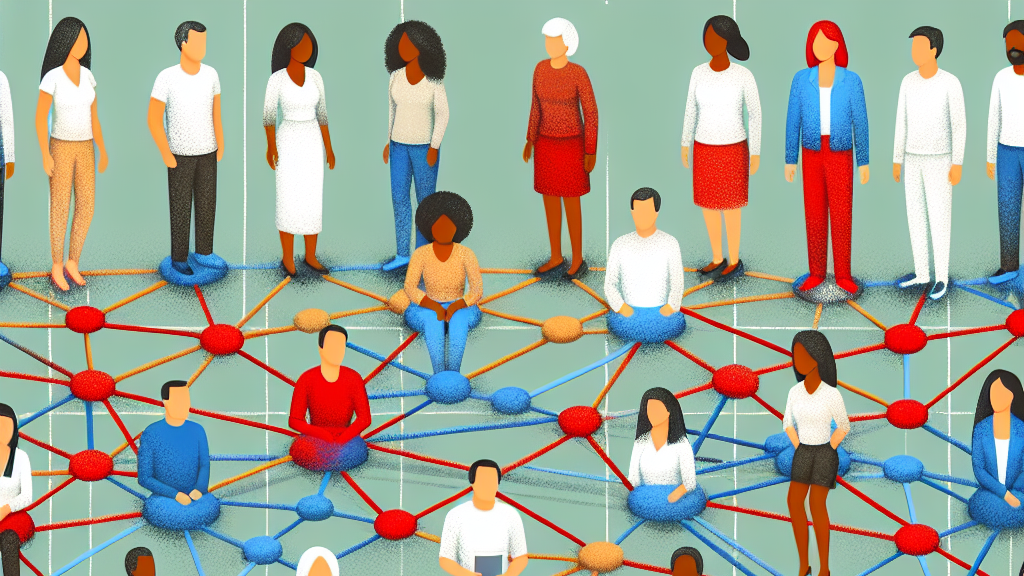
The researchers at Gallice and Monzon found that even when people didn’t know their turn or couldn’t fully see others’ actions, cooperation still emerged. Some players, driven by the hope others would follow their lead, took the first step towards positive teamwork. This theoretical prediction was put to the test in an experimental version of the prisoner’s dilemma, a classic problem that explores decision-making and trust.

So, how might this matter in real life? Think about a group project where everyone has to pitch in for the best grade. Even without knowing who’s done what, someone’s good example can inspire others, turning potential chaos into a well-oiled team effort. This principle could help us understand not just game strategies but also how we form communities and solve big problems together.

Did you know that in most group games like the prisoner’s dilemma, the majority of people tend to opt for free-riding, hoping others will do the hard work?

FAQs

What is the core topic of this research?

This research focuses on understanding cooperation in social dilemmas, like the prisoner’s dilemma, where individuals must choose between self-interest and the collective good.

How do researchers test cooperation in a controlled setting?

Researchers conduct experiments where participants play games with set rules, like the prisoner’s dilemma, and analyze their behavior under different conditions to understand strategies like cooperation and free-riding.

Why is the prisoner’s dilemma important in studying cooperation?

The prisoner’s dilemma is a classic scenario that illustrates the conflict between individual interest and mutual benefit, making it a perfect model to study how cooperation can develop even when it’s not the obvious choice.

What surprising behavior did researchers observe in the experiment?

While many participants defaulted to free-riding, a significant number showed cooperation by setting an example for others, demonstrating that even subtle cues can promote teamwork.

How can this research apply to real-world situations?

Understanding how cooperation can emerge in uncertain situations could inform strategies in teamwork, community building, and handling global challenges where collaboration is key but not guaranteed.

Background

The core principle behind this research is understanding social dilemmas, which are situations where individual decisions impact a group’s success. The prisoner’s dilemma is a foundational model used to explore these scenarios, focusing on the tension between personal gain and group benefit. The game challenges participants to either cooperate for mutual gain or defect for individual benefit, with the twist being that the best collective outcome only happens through full cooperation.

History

The concept of social dilemmas and the prisoner’s dilemma has been a staple in behavioral economics and game theory. Pioneers like John Nash have laid the groundwork, exploring the strategic decision-making processes. Gallice and Monzon’s research builds on these ideas by introducing the element of uncertainty and limited information, analyzing how these factors influence cooperative behavior.

Based on “Position Uncertainty in a Prisoner’s Dilemma Game : An Experiment” by Chowdhury Mohammad Sakib Anwar, Konstantinos Georgalos, Sonali SenGupta, available on arXiv (arxiv.org/abs/2504.10441), used under CC BY 4.0 (creativecommons.org/licenses/by/4.0/).


Trending

Latest

Can AI Save Water Discover How

Computers

AI is transforming the tech world, but it uses lots of water! A new tool, SCARF, helps us measure and reduce AI's water footprint,...

Whats a Forbush Decrease and Why Should We Care Whats a Forbush Decrease and Why Should We Care

Space

Scientists just observed the biggest solar storm event in years, revealing unexpected cosmic ray patterns. Understanding these changes could help us protect our technology...

Can Cars Spot Danger Faster Than Humans Can Cars Spot Danger Faster Than Humans

Computers

Think about how quickly you react when something unexpected happens on the road. This research brings us closer to creating self-driving cars that can...

Can Fear of the Other Stop Social Harmony Can Fear of the Other Stop Social Harmony

Physics

Fear of the unknown might make it harder for people to agree and get along. This study shows that when people have strong xenophobic...

Can AI Revolutionize Breast Cancer Diagnosis Can AI Revolutionize Breast Cancer Diagnosis

Electricity

This research introduces a groundbreaking AI model that can accurately assess HER2-positive breast cancer using widely accessible staining methods, potentially revolutionizing how we diagnose...

Can AI Transform Your Singing into a Choir Can AI Transform Your Singing into a Choir

Computers

Imagine singing solo and having AI turn you into a choir. This research unveils a groundbreaking AI tool that transforms your voice into rich...

You May Also Like

Economics

This research redefines happiness as a deeply interconnected web of relationships. It shows how a single person's positive actions can spark a ripple effect...

Computers

Imagine if AI could 'feel' fear to dodge danger! Researchers are tapping into biological and psychological insights to make machines smarter, using concepts like...

Math

Ever wonder if Minesweeper can always be beaten? Scientists have found that beyond a certain number of mines, solving it becomes almost impossible. But...

Quantum Biology

This research reveals how the cost of maintaining friendships can shift our willingness to work together. By understanding these dynamics, we could better design...

Computers

This research explores how strategically timed cyber deception can fool hackers and protect sensitive information. By using game theory, it helps defenders act one...

Quantum Biology

This study redefines fitness in evolution by linking it to machine learning, showing how nature's adaptations can inspire smarter AI and improve our understanding...

Computers

This study dives into how our future with AI might unfold by examining interactions between AI developers, regulators, and you, the user. It suggests...

Computers

Exploring how AI developers, users, and regulators can work together using game theory and advanced AI models to build trust and cooperation. This can...

Computers

Imagine if AI systems could play games to learn trust and cooperation! This study uses game theory to understand how AI developers, regulators, and...

Copyright © 2024 8ig8rain.

Disclaimer: The content on 8ig8rain.com consists of AI-generated summaries of scientific abstracts from arXiv. Please note that most arXiv abstracts are preprints and may not have undergone formal peer review. While these summaries aim to convey key ideas and potential applications, they are provided for informational purposes only and should not be interpreted as validated scientific findings or professional advice. The summaries are intended to educate, spark curiosity, and inspire further exploration of science.