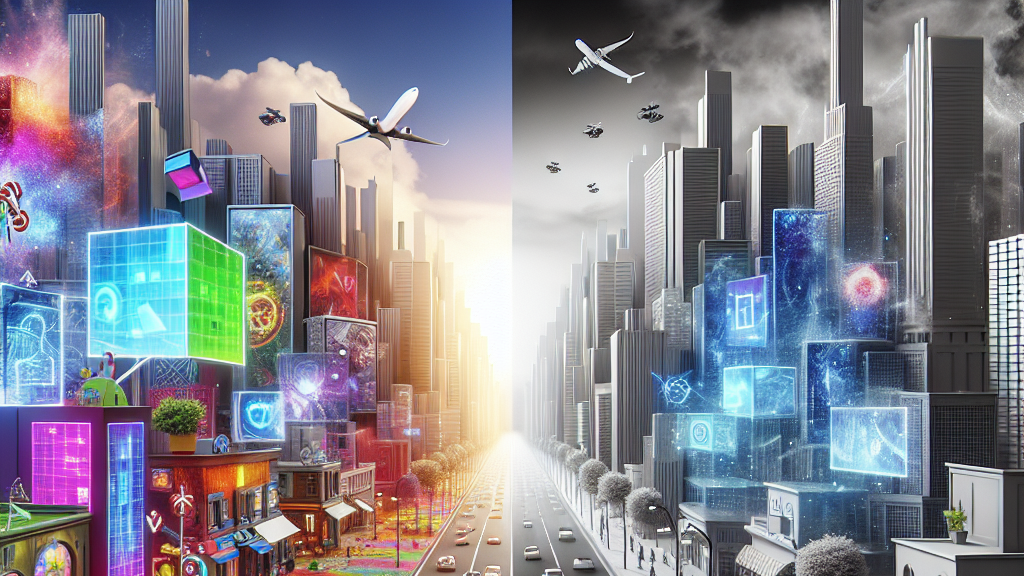
Imagine if everything you saw and experienced in life was perfectly tailored to your preferences—sounds amazing, right? But what if this personalized reality also trapped you in a bubble of your own beliefs, limiting your exposure to diverse perspectives? That’s where Extended Reality (XR) technology comes in, promising to create personalized experiences that could be both a blessing and a curse.
This research highlights how Extended Reality (XR) can create a Personalized Reality (PR) by adapting everything you perceive to match your tastes. While this means experiences could become more fun and safer, there’s a catch. This personalization can lead to ‘filter bubbles,’ where we only see what we already believe, potentially leading to societal issues like increased polarization. The study suggests increasing awareness of this issue through techniques like engineered serendipity, ensuring people occasionally encounter new ideas and perspectives.
In the future, this research could revolutionize how we interact with the world and each other. Imagine a world where your VR headset not only immerses you in a customized experience but also encourages you to step out of your comfort zone. This could make our digital lives more enriching and prevent us from being stuck in one narrow worldview. By balancing personalization with opportunities for growth, XR technology could empower us to see the world in more vibrant and diverse ways.
Did you know that social media algorithms often show you content that reinforces your beliefs? XR tech could do the same, but researchers are finding ways to diversify your digital diet!
FAQs
What are filter bubbles in the context of Extended Reality?
Filter bubbles in Extended Reality occur when personalized experiences limit exposure to diverse viewpoints, reinforcing existing beliefs. This can create echo chambers where people only encounter information that aligns with their current views.
How can Extended Reality lead to increased societal polarization?
By tailoring experiences to individual preferences, Extended Reality might isolate users in their own perceptual worlds. This isolation could increase polarization by reducing common ground for discussions and making it harder to understand different perspectives.
What solutions does the research propose for avoiding negative effects of Personalized Reality?
The research suggests increasing user awareness of their perceptual limitations and introducing engineered serendipity, helping users encounter diverse ideas. This approach encourages self-actualization and expands worldviews in traditional recommender systems, which could be adapted to XR.
How might XR technology impact future interactions?
By encouraging exposure to new ideas and diversifying personal experiences, XR technology could foster richer interactions and a more connected society, enhancing individual growth and collective understanding.
Could XR personalization enhance safety in everyday life?
Yes, personalization in XR can enhance safety by adapting environments to individual preferences and needs, potentially reducing risks and improving user comfort.
Background
Extended Reality (XR) involves merging digital and physical realities to create immersive experiences. It encompasses Virtual Reality (VR), Augmented Reality (AR), and Mixed Reality (MR). Personalized Reality uses XR to tailor experiences to user preferences, potentially leading to ‘filter bubbles,’ reducing exposure to diverse ideas. This research explores balancing personalization with awareness to prevent societal issues.
History
The concept of filter bubbles became prominent with social media, where algorithms curate content based on user preferences, potentially leading to polarization. XR technology extends this idea to immersive experiences. Previous studies focused on digital recommendation systems, and this research adapts those solutions to XR, suggesting that increased awareness and engineered serendipity can mitigate negative effects.
Based on “Change Your Perspective, Widen Your Worldview! Societally Beneficial Perceptual Filter Bubbles in Personalized Reality” by Jannis Strecker, Luka Bekavac, Kenan Bektaş, Simon Mayer, available on arXiv (arxiv.org/abs/2504.10271), used under CC BY 4.0 (creativecommons.org/licenses/by/4.0/).