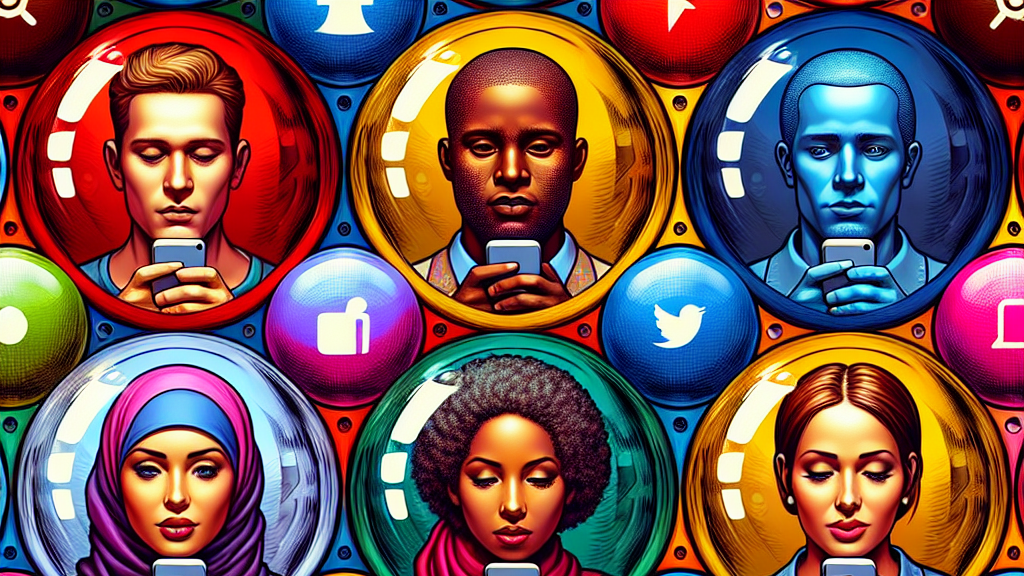
Have you ever wondered why conversations on social media can feel a bit like shouting across a canyon? It turns out, the algorithms behind your favorite platforms might be creating bigger divides than you realize. These algorithms, designed to show you content you’ll engage with, often end up creating echo chambers. Instead of bringing diverse ideas together, they push people into isolated bubbles where everyone shares similar views. This makes it harder to have meaningful conversations across different groups and can deepen social divides.
This study digs into how this happens by focusing on the way digital communities work. It combines philosophical theories about community and shared values with a detailed analysis of how social media interactions unfold. The research looks at how these algorithms amplify discussions around sensitive issues like sexism, racism, and xenophobia, especially when society is already on edge. By doing so, it shows how social media not only mirrors but also magnifies the tensions we feel in real life.
Imagine a future where social media platforms evolve to encourage more cross-group dialogue rather than division. This research highlights the importance of finding ways to tweak these algorithms for more balanced discourse. Imagine algorithms that promote more diverse viewpoints and help bridge the gap, making online discussions more reflective of a healthy community dialogue. With this kind of change, social media could become a tool for unity rather than division.
Did you know that social media algorithms can predict the types of content you’re likely to engage with, but in doing so, they might also be limiting your exposure to different viewpoints?
FAQs
[Collection], [Collection], [Collection], [Collection], [Collection]
Background
At the heart of this study are social media algorithms — those hidden codes that decide what content you see on your feeds based on your interests, clicks, likes, and shares. These algorithms are great at keeping you engaged but often at the cost of showing you only things you already agree with, creating a phenomenon known as a ‘filter bubble.’ They essentially craft a digital echo chamber where divergent ideas rarely penetrate, fostering division instead of understanding. This study also integrates philosophical insights into community and shared values, emphasizing how crucial cross-group dialogue is for society.
History
The concept of ‘filter bubbles’ gained attention with the rise of social media and its algorithms. Early social media aimed at connecting people, but over time, algorithms evolved to prioritize content that maximizes user engagement, often at the expense of diversity in discourse. Previous studies have shown how these algorithms tend to reinforce existing biases and create echo chambers. This research builds on these findings by integrating philosophical perspectives to understand the broader implications of such digital communication patterns.
Based on “From Public Square to Echo Chamber: The Fragmentation of Online Discourse” by Abhinav Pratap, Amit Pathak, available on arXiv (arxiv.org/abs/2501.18441), used under CC BY 4.0 (creativecommons.org/licenses/by/4.0/).