Ever wondered what it’d be like to create something just by thinking about it? We’re getting closer to that reality! Scientists are working on turning brain signals into 3D images. That’s right—your brain could soon be the ultimate creator! Imagine playing your favorite video game or designing something for work just by using your mind.
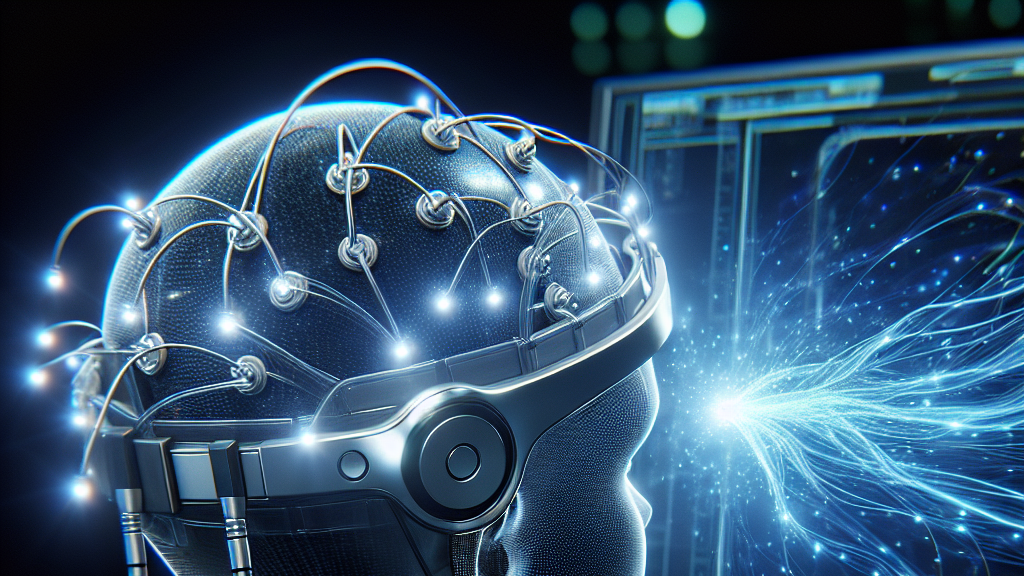
The secret sauce behind this magic is a special tool called EEG, which reads electrical activity from the brain. While it’s not as detailed as fMRI, it’s much cheaper and can be used anywhere, anytime. Researchers have developed a way to take these signals, decode them with advanced technology like deep learning, and turn them into structured, three-dimensional objects. It’s like building a virtual world in your head and seeing it come to life.
So, what does this mean for you? Well, there are limitless possibilities! For example, it could revolutionize virtual reality gaming, making experiences feel more lifelike. It could also offer new ways for people with disabilities to interact with the world by controlling devices with their thoughts. This could change how we live, play, and communicate in ways we’ve only dreamed of.
Did you know your brain emits enough energy to power a small light bulb?
FAQs
How does EEG technology turn brain signals into 3D models?
EEG technology reads electrical activity from the brain, and researchers use advanced neural decoding and generative models to translate these signals into structured 3D objects. This method involves training an encoder to capture visual features and using a generative model to build the 3D structures.
Why is EEG preferred over fMRI for real-time brain-computer interfaces?
While fMRI provides high spatial resolution, it is costly and not suitable for real-time or mobile applications. EEG, on the other hand, is affordable, non-invasive, and can be used anywhere, making it ideal for fast, real-time brain-computer interface tasks.
How could 3D reconstruction from brain signals impact everyday life?
3D reconstruction from brain signals has the potential to revolutionize virtual reality experiences, offer new interactive methods for gaming, and provide communication solutions for individuals with disabilities by allowing them to control devices through thought alone.
Background
Electroencephalography, or EEG, is a technique that measures electrical activity in the brain through sensors placed on the scalp. This technology is valuable for real-time applications because it’s non-invasive, relatively inexpensive, and portable. Decoding brain signals into 3D representations involves advanced technologies like neural decoding and generative models, which convert complex patterns of brain activity into visual data.
History
The journey to understanding brain signals began with early brain imaging techniques like magnetic resonance imaging. These studies laid the groundwork for more complex explorations into brain-computer interfaces. The development of EEG offered a more accessible way to study real-time brain activity, leading to the exciting potential of translating these signals into 3D models as showcased in this study.
Based on “Mind2Matter: Creating 3D Models from EEG Signals” by Xia Deng, Shen Chen, Jiale Zhou, Lei Li, available on arXiv (arxiv.org/abs/2504.11936), used under CC BY 4.0 (creativecommons.org/licenses/by/4.0/).