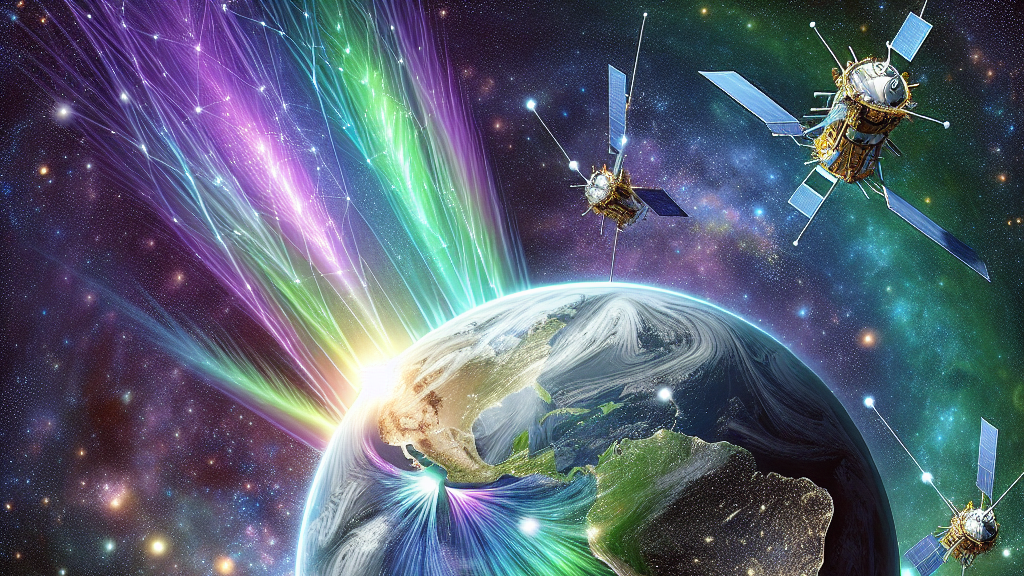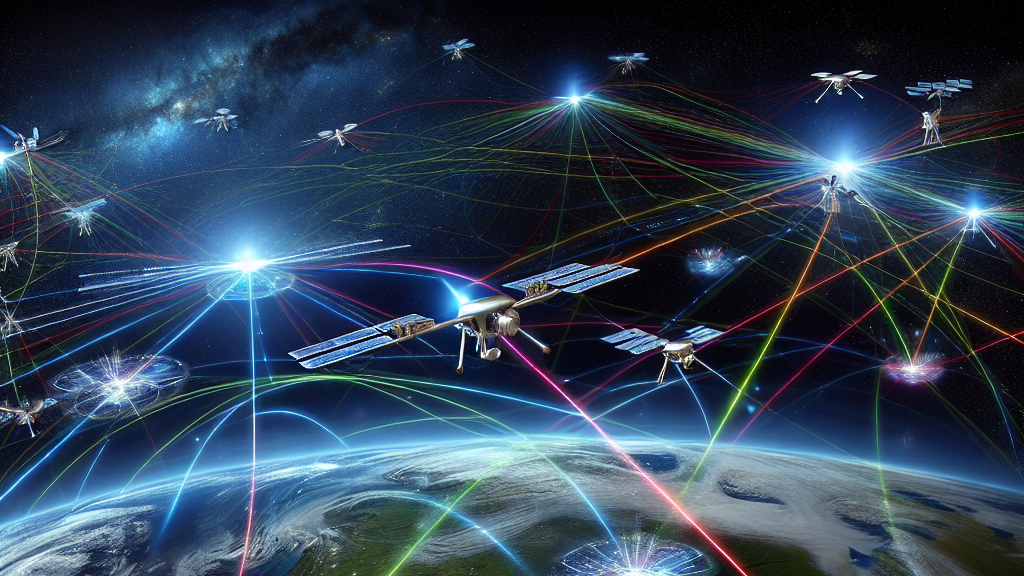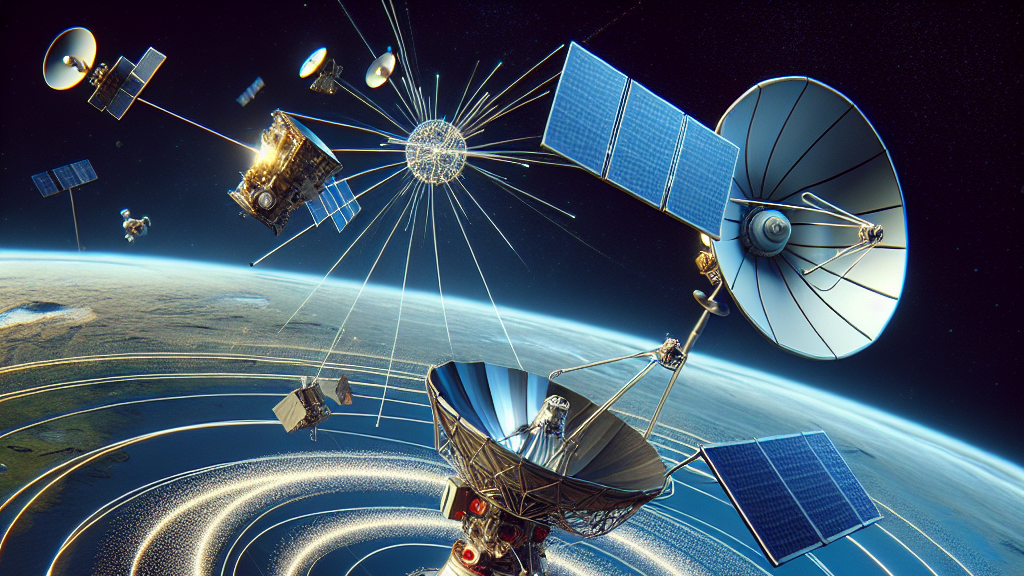
Ever wondered if we’re alone in the universe? While the question is still up for debate, scientists are exploring the idea that extraterrestrial beings might be surrounding their stars with giant swarms of satellites to harness energy or send signals to others far away. These aren’t just any satellite clusters; they’re vast, complex networks that could teach us a thing or two about sustainable energy solutions here on Earth.
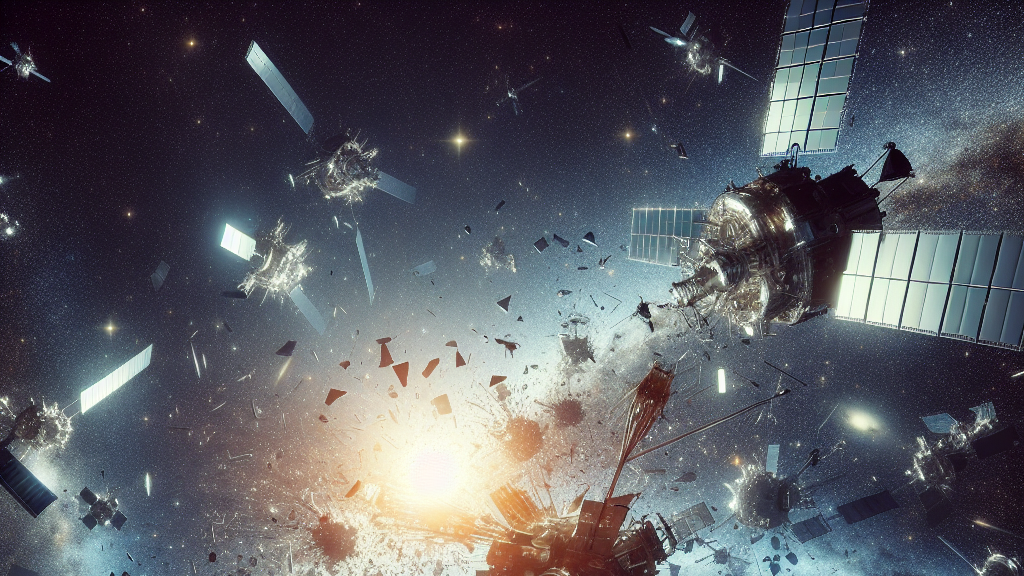
Researchers believe that if these ‘megaswarms’ exist, they might face challenges like cosmic collisions over time. Just like how your phone’s battery needs charging and care, these satellite networks would need regular maintenance to keep functioning. Scientists think that the very randomness built into their orbits might lead to fast and dangerous collisions, especially if anything goes awry with their guidance systems. The forces from nearby stars or planets can make these orbits cross and collide, making maintenance even trickier.
But why does this matter to us? Imagine if we could use similar technology to collect energy from our sun efficiently! These alien-built structures might inspire us to create our own satellite networks for a greener future. Plus, the search for these megastructures could give us hints about intelligent life beyond Earth. So, the next time you look up at the stars, think of the possibilities that might be circling around them.
The concept of megaswarms is inspired by the Dyson Sphere, a hypothetical structure that could envelop a star to capture its energy.
FAQs
What are megaswarms and how do they relate to extraterrestrial life?
Megaswarms are vast collections of satellites that could be built by intelligent extraterrestrial beings to harness energy from stars or communicate with distant civilizations. These structures are one of the potential signs of advanced extraterrestrial life.
How do these megaswarms face challenges in space?
Due to random orbit patterns and external forces like gravitational pulls from nearby stars or planets, megaswarms are prone to collisions over time. Without constant maintenance, the satellites may crash into each other, leading to a rapid breakdown of the swarm.
Can we build something like megaswarms to solve our energy problems?
While the technology for creating megaswarms doesn’t currently exist, the principles behind them could inspire new ways to collect solar energy efficiently from our sun, potentially paving the way for future advancements in sustainable energy.
What is the Lidov-Kozai effect and how does it affect megaswarms?
The Lidov-Kozai effect is a gravitational phenomenon where a third body, like a planet or a star, influences the orbit of satellites, leading to shifts that can cause orbits to intersect, increasing the likelihood of collisions in a megaswarm.
Why is the concept of megaswarms important in the search for alien life?
The presence of megaswarms could be considered ‘technosignatures,’ or evidence of advanced technology created by extraterrestrial intelligence. Detecting these structures around distant stars could provide clues to finding and understanding alien civilizations.
Background
The key ideas behind this research are ‘megaswarms’ and energy harvesting in space. A megaswarm involves a vast number of satellites orbiting a star, potentially built by extraterrestrial beings. These satellites could be used to collect energy or send signals. The idea stems from the Dyson Sphere concept, which envisions capturing a star’s energy with a massive structure. Such swarms need regular upkeep due to potential collision risks and disturbances from nearby celestial bodies.
History
The idea of using structures to harness a star’s energy was first popularized by physicist Freeman Dyson in the 1960s. The ‘Dyson Sphere’ concept imagined a giant shell capturing solar energy from a star. Over time, this idea evolved into more feasible constructs like rings or swarms of satellites, leading to modern speculation about extraterrestrial megaswarms that might serve the same purpose. Prior research focused on how we might detect such structures as potential signs of alien civilizations.
Based on “Ground to Dust: Collisional Cascades and the Fate of Kardashev II Megaswarms” by Brian C. Lacki, available on arXiv (arxiv.org/abs/2504.21151), used under CC BY 4.0 (creativecommons.org/licenses/by/4.0/).