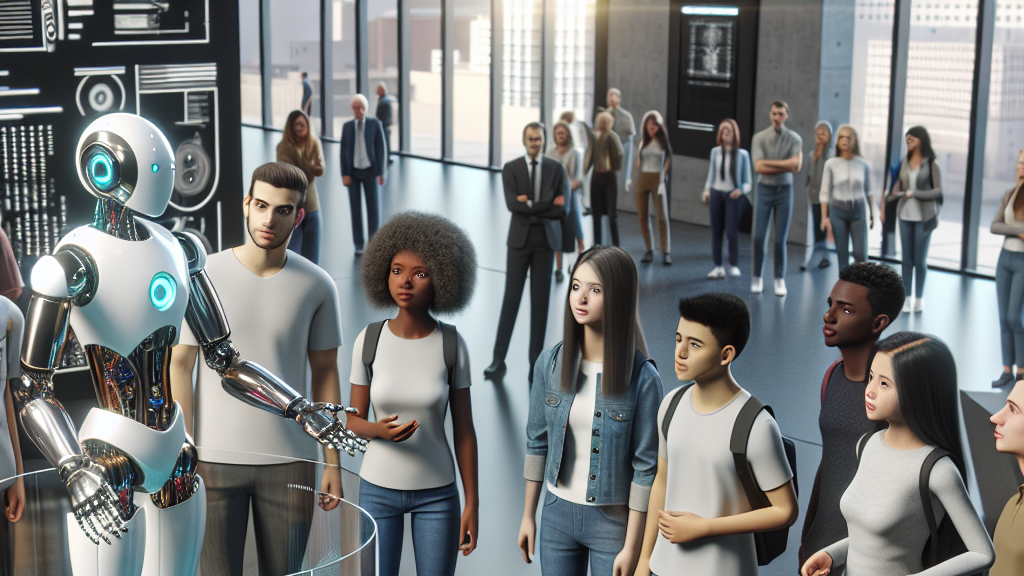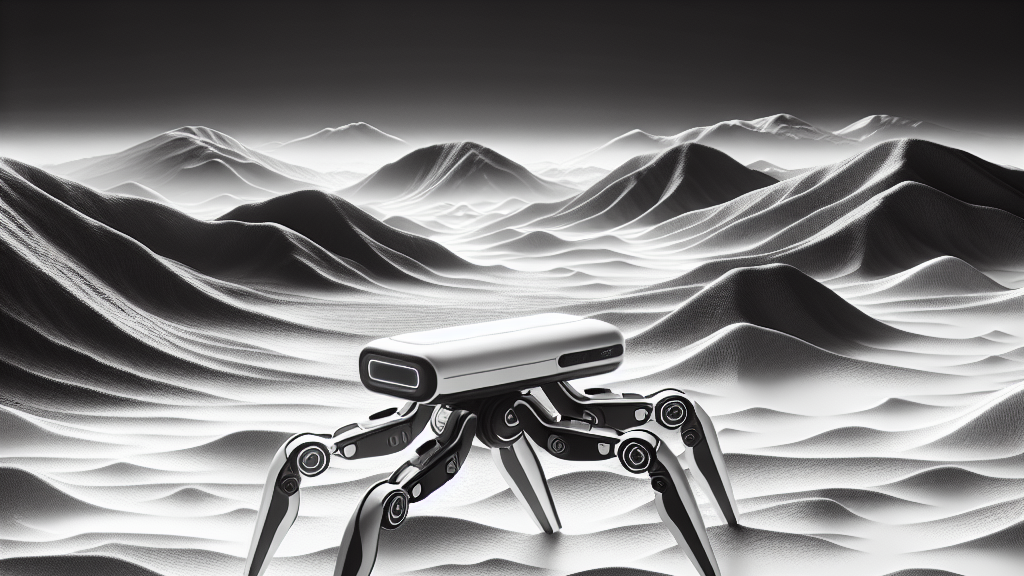
Imagine a world where robots can walk on rocky trails just as easily as they cross city streets. This vision is becoming a reality thanks to groundbreaking research that teaches robots to master any terrain. By drawing on expert knowledge and learning through their own experiences, these robots can now tackle places that were once impossible to navigate, potentially revolutionizing fields like rescue missions and space exploration.
The research introduces a new way for robots with legs to move smoothly over unpredictable surfaces. Initially, robots are trained on specialized skills for specific terrain, kind of like how athletes practice different sports. Then, these skills are combined into a mega-skillset through something called the DAgger algorithm, and finally, the robots fine-tune this set by practicing on challenging real-world terrains. The robots use depth images, which are sort of like really detailed photographs, to understand their surroundings and move effortlessly across anything from pebbly paths to dangerous debris.
In real life, this means that the robots could be used in disaster areas to find people trapped under rubble, or even explore the surface of Mars, where conventional wheels would get stuck or topple over. Imagine a future where robots can journey where humans can’t, making places we once thought inaccessible suddenly within reach. This research sets a new standard for what these clever machines can achieve, with exciting possibilities for the future!
Did you know that legged robots are learning to adapt and move across rough terrains by mimicking expert tricks and trial-and-error? This makes them perfect for exploring terrains like Mars!
FAQs
How do legged robots adapt to different terrains?
Legged robots use a combination of expert knowledge and reinforcement learning, similar to practicing and learning from experiences, to adapt to diverse terrains. They capture depth images of their environment to navigate with precision, allowing them to move smoothly even across unpredictable surfaces.
What makes this new framework for robot locomotion unique?
This framework is unique because it combines expert training with reinforcement learning to create a unified skillset for a robot. It uses depth images and the DAgger algorithm to help robots master various terrains, something previously challenging for them.
Why is the capability to navigate different terrains important for robots?
Navigating different terrains is crucial for robots because it allows them to operate in environments that are too dangerous or inaccessible for humans. This capability expands their utility in rescue missions and space exploration, where diverse and unstable terrains are common.
How does this research impact future search and rescue missions?
This research could significantly enhance future search and rescue missions by providing robots with the ability to quickly and efficiently traverse dangerous areas to locate and assist trapped victims, without being hindered by the terrain.
In what ways can this research benefit space exploration?
The ability for robots to master various terrains can make them valuable assets in space exploration, as they could safely traverse the unpredictable landscapes of planets like Mars, gathering data and conducting missions independently.
Background
To navigate various terrains, legged robots need a sophisticated approach to movement. This research uses a combination of ‘expert’ knowledge, which trains robots on how to handle specific terrains, and reinforcement learning, which allows them to learn and improve through trial and error. By blending these methods and using tools like depth images to sense their surroundings, robots can better adapt to and move across different types of terrain.
History
Previously, researchers trained robots to handle specific terrains but struggled to create a single system that could adapt to all terrains. With recent advances in algorithms and learning techniques, robots can now merge skills learned from multiple terrains into a comprehensive toolkit for diverse environments. This study builds on the idea of using combined learning approaches to create more adaptable robots, setting a new benchmark in robotic movement and navigation.
Based on “Parkour in the Wild: Learning a General and Extensible Agile Locomotion Policy Using Multi-expert Distillation and RL Fine-tuning” by Nikita Rudin, Junzhe He, Joshua Aurand, Marco Hutter, available on arXiv (arxiv.org/abs/2505.11164), used under CC BY 4.0 (creativecommons.org/licenses/by/4.0/).