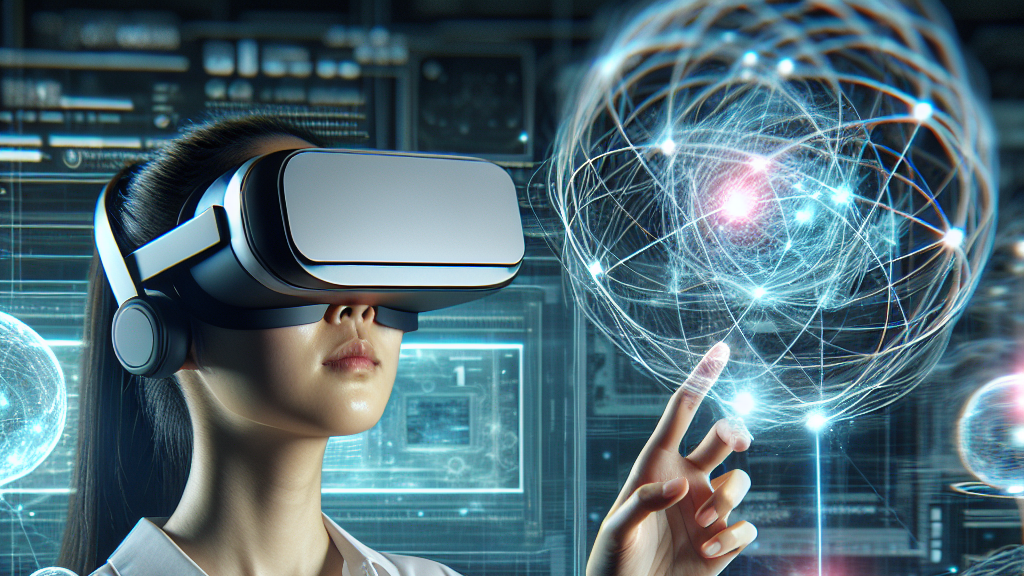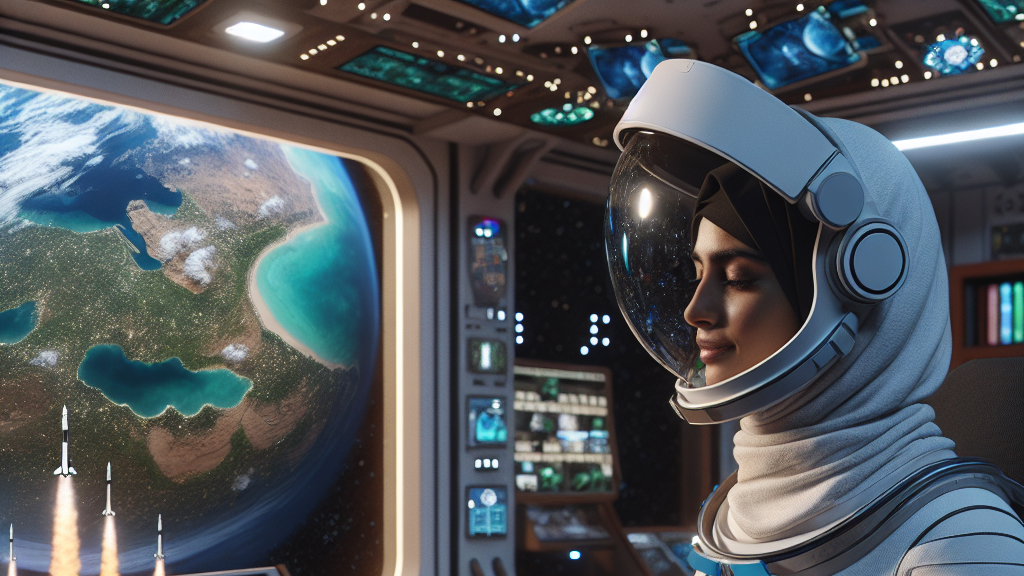
Imagine a future where humans and robots work together seamlessly on the Moon or Mars. Sounds like science fiction, right? But it’s becoming a reality thanks to virtual reality (VR)! Researchers are now teaching people how to control space robots through VR, making space missions faster and safer. With these digital twin systems, astronauts or technicians can practice in a virtual world that mimics the real environment, helping them master the art of operating these impressive machines.
The research used a VR system to simulate conditions on the Moon, allowing operators to familiarize themselves with the challenges of space. In a test with 24 participants, those who trained with VR completed tasks 28% faster and made far fewer mistakes—85% fewer, to be precise. They also reported feeling less mentally strained and had better awareness of their surroundings. This means that with VR, training for space missions can be more accessible, cost-effective, and efficient.
In the future, when we send robots to assemble equipment or mine resources on distant planets, VR training could be the secret to keeping our missions on track. Imagine someone on Earth using VR to control a rover on Mars, reducing costly errors and ensuring everything goes smoothly. It opens up exciting possibilities for space exploration and even more for how humans and technology can collaborate across distances that seem impossible today.
Training in VR made participants 28% faster at completing space mission tasks!
FAQs
How does virtual reality training improve space robot missions?
Virtual reality training can improve space robot missions by allowing operators to practice in a digital environment that replicates the real conditions they will face. This pre-mission training helps them become familiar with the controls and challenges, reducing mission time by 28% and minimizing errors by 85%.
Why is human teleoperation still needed for space rovers?
Human teleoperation is still needed for space rovers because fully autonomous systems struggle with unpredictable and harsh environmental conditions in space. Humans can adapt to unexpected situations and solve problems in real-time, providing essential guidance for rovers.
What are the benefits of using digital twin systems for training?
Digital twin systems offer a cost-effective and accessible alternative to physical analog environments, like those used by space agencies. They allow operators to train in a realistic virtual setting, improving their readiness and reducing cognitive load during actual missions.
How does VR training affect the mental state of space mission operators?
VR training has been shown to reduce cognitive load and increase situation awareness. Operators feel less mentally strained, which helps them focus better and perform tasks more effectively during space missions.
What tasks can space robots accomplish with the help of VR-trained operators?
With the help of VR-trained operators, space robots can accomplish tasks like assembling equipment, conducting mining operations, and deploying scientific instruments, enhancing the scope and success of space exploration missions.
Background
Virtual reality (VR) is a technology that creates a simulated experience that can be similar to or completely different from the real world. Digital twin systems use VR to create an exact digital replica of a physical object or environment, providing a platform for training and simulation. Human teleoperation involves humans remotely controlling robots, essential for tasks that autonomous systems cannot handle alone.
History
The idea of using virtual environments for training has been around for a while. NASA’s Jet Propulsion Laboratory, for instance, has used physical simulators like the Mars Yard to train operators in rover navigation. However, VR offers a more versatile and cost-effective approach. This study builds upon previous research by integrating VR with teleoperation training, showing significant improvements in task performance and error reduction.
Based on “Practice Makes Perfect: A Study of Digital Twin Technology for Assembly and Problem-solving using Lunar Surface Telerobotics” by Xavier O’Keefe, Katy McCutchan, Alexis Muniz, Jack Burns, Daniel Szafir, available on arXiv (arxiv.org/abs/2505.13722), used under CC BY 4.0 (creativecommons.org/licenses/by/4.0/).