Connect with us

Search by keyword

Computers

Can AI and Humans Team Up for Better Jobs?

Discover how AI isn’t here to take your job, but to make it easier by teaming up with human skills and boosting productivity.

Can AI and Humans Team Up for Better Jobs
✨Researched by humans. Explained by robots. Learn more.

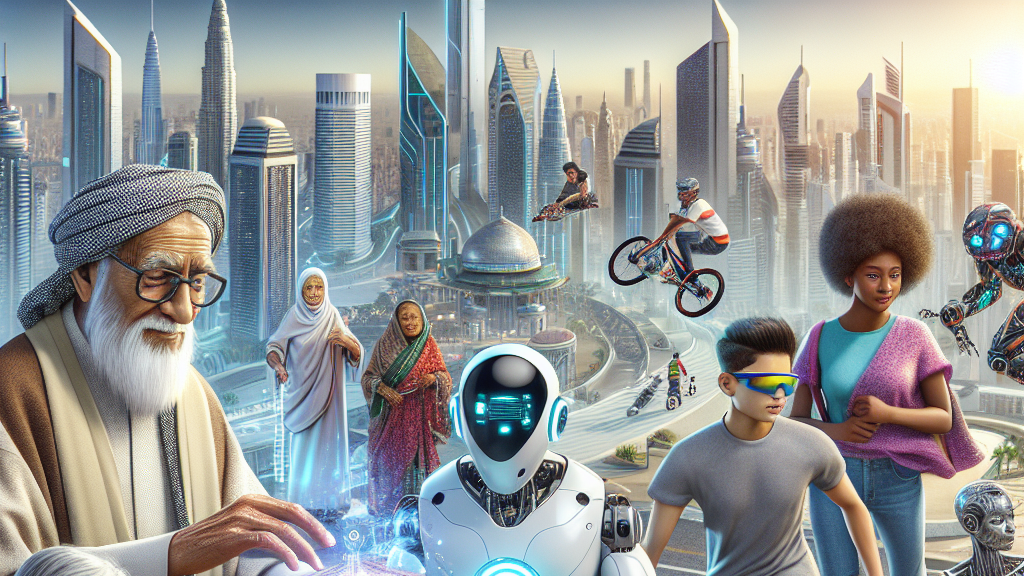
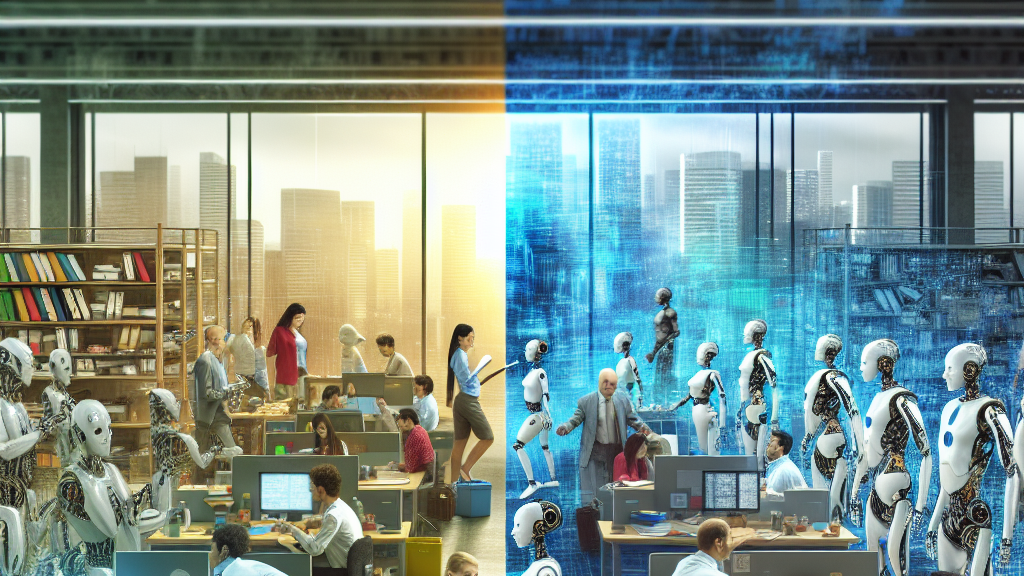
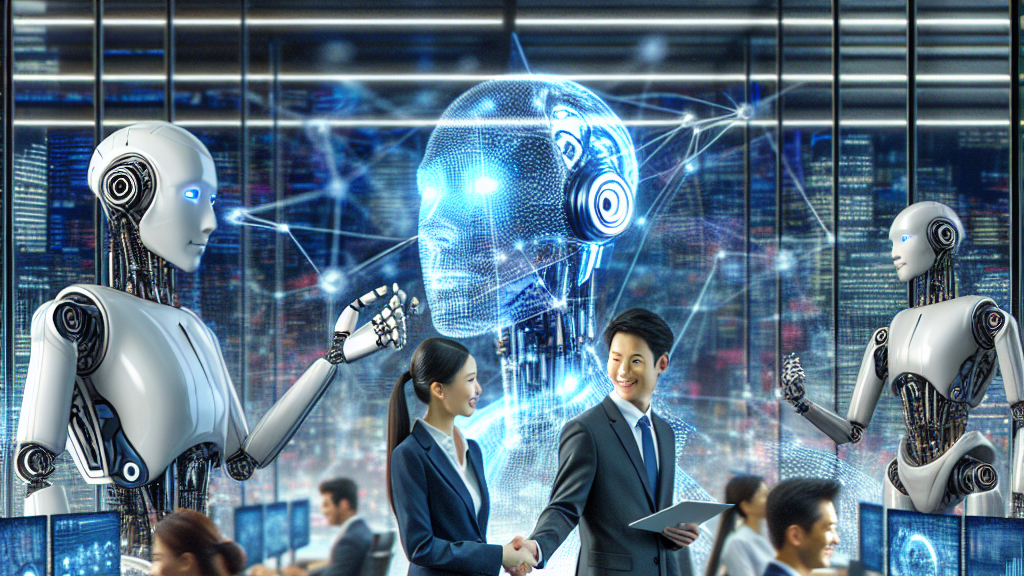
Imagine a world where AI doesn’t replace us at work but becomes our best partner. This isn’t just wishful thinking—it’s a real possibility, thanks to groundbreaking research in Generative AI (GenAI) technology. Researchers have created a model that shows how AI can work alongside humans, focusing on both our strengths and weaknesses.

The key lies in breaking down skills into tiny components called subskills. Think of these like the nuts and bolts of what makes someone good at their job. The research shows that when AI handles certain parts of a task, like repetitive actions, humans can shine in decision-making and creative thinking. This means job roles can evolve, with AI and people naturally complementing each other to succeed.

For instance, consider a customer service representative. AI can handle routine inquiries, freeing up the human worker to solve complex issues or provide personal touches that machines can’t. This kind of teamwork could boost productivity, especially for those just starting out in their careers, by helping them learn and grow faster. It’s a win-win for everyone, creating opportunities for workers and making businesses more efficient.

Did you know? AI assistance can actually help lower-skilled workers improve their productivity more than those with higher skills!

FAQs

How does Generative AI complement human skills in the workplace?

Generative AI complements human skills by taking over routine and repetitive tasks, allowing humans to focus on complex decision-making and creativity. This collaboration can enhance overall job performance and productivity.

Why does Generative AI lead to productivity compression?

Productivity compression occurs because GenAI assistance helps lower-skilled workers more significantly, narrowing the productivity gap between them and higher-skilled workers.

What role do subskills play in AI and human collaboration?

Subskills are the smaller components of a job’s overall skillset. By dividing tasks into subskills, AI can effectively manage those suited for automation, while humans handle parts requiring critical thinking and creativity.

Can AI fully replace human workers in jobs?

While AI can automate certain tasks, the research suggests it is more effective when used to complement human workers, enhancing skills and improving productivity rather than fully replacing human roles.

How can AI assistance improve job success in real-world scenarios?

In real-world scenarios, AI assistance can lead to improved job success by allowing workers to focus on tasks they excel at, increasing overall efficiency and job satisfaction.

Background

Generative AI, also known as GenAI, is a type of artificial intelligence designed to create content, ideas, or solutions based on input data. It excels at repetitive tasks that require straightforward action but struggles with complex decision-making. By integrating AI with human workers, each plays to their strengths, allowing for a more efficient and effective workforce.

History

The journey of AI technology in the workplace began with basic automation, gradually evolving into sophisticated AI systems like Generative AI. Early artificial intelligence systems were mainly task-oriented. Over time, advancements have led to AI that can learn and adapt to new circumstances. This study builds on the concept of collaboration rather than competition between humans and machines, offering a fresh perspective in the ongoing discourse about AI in the job market.

Based on “A Mathematical Framework for AI-Human Integration in Work” by Elisa Celis, Lingxiao Huang, Nisheeth K. Vishnoi, available on arXiv (arxiv.org/abs/2505.23432), used under CC BY 4.0 (creativecommons.org/licenses/by/4.0/).


Trending

Latest

Can AI Save Water Discover How

Computers

AI is transforming the tech world, but it uses lots of water! A new tool, SCARF, helps us measure and reduce AI's water footprint,...

Whats a Forbush Decrease and Why Should We Care Whats a Forbush Decrease and Why Should We Care

Space

Scientists just observed the biggest solar storm event in years, revealing unexpected cosmic ray patterns. Understanding these changes could help us protect our technology...

Can Cars Spot Danger Faster Than Humans Can Cars Spot Danger Faster Than Humans

Computers

Think about how quickly you react when something unexpected happens on the road. This research brings us closer to creating self-driving cars that can...

Can Fear of the Other Stop Social Harmony Can Fear of the Other Stop Social Harmony

Physics

Fear of the unknown might make it harder for people to agree and get along. This study shows that when people have strong xenophobic...

Can AI Revolutionize Breast Cancer Diagnosis Can AI Revolutionize Breast Cancer Diagnosis

Electricity

This research introduces a groundbreaking AI model that can accurately assess HER2-positive breast cancer using widely accessible staining methods, potentially revolutionizing how we diagnose...

Can AI Transform Your Singing into a Choir Can AI Transform Your Singing into a Choir

Computers

Imagine singing solo and having AI turn you into a choir. This research unveils a groundbreaking AI tool that transforms your voice into rich...

You May Also Like

Computers

Imagine your online searches giving you exactly what you need, every time. AI is enhancing search engines by generating synthetic data that helps make...

Computers

By learning from each other like humans do, AI systems can tackle more complex tasks faster and adapt over time, opening up new possibilities...

Computers

Researchers explore fairness in AI models, specifically vision-language ones, revealing biases in gender and race. They introduce a new method to balance these biases,...

Computers

This research delves into how advanced AI models can both transform and threaten internet security. It reveals AI's role in boosting cybercrime, urging a...

Computers

AI is not just smart; it's possibly involved in shady internet activities. New research explores how AI might be connected to cybercrime, urging policymakers...

Computers

AI tech might be aiding cybercriminals, raising big questions about how we balance innovation with safety. It's crucial for policymakers, developers, and the public...

Computers

AI management could change how we perform at work, but its impartiality might actually suppress our emotional checks on fairness, leading to silent exploitation.

Computers

AI-generated music is on the rise, making it crucial to distinguish between human and machine-made songs. This research delves into the methods and implications...

Computers

With AI becoming smarter but more mysterious, there's growing concern about its accountability. This research unveils the puzzle of making AI transparent and suggests...

Copyright © 2024 8ig8rain.

Disclaimer: The content on 8ig8rain.com consists of AI-generated summaries of scientific abstracts from arXiv. Please note that most arXiv abstracts are preprints and may not have undergone formal peer review. While these summaries aim to convey key ideas and potential applications, they are provided for informational purposes only and should not be interpreted as validated scientific findings or professional advice. The summaries are intended to educate, spark curiosity, and inspire further exploration of science.