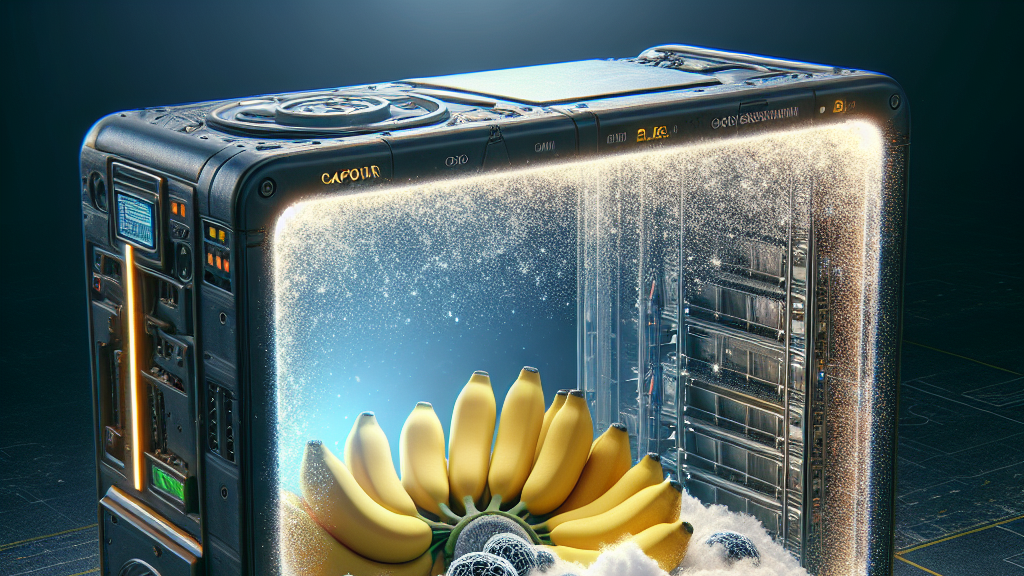
What if we told you that particles from outer space could help catch drug smugglers? That’s right! Researchers are exploring an incredible method using muon particles, tiny cosmic messengers, to reveal hidden drugs inside everyday cargo, like bananas. While it’s easy to overlook these particles that constantly pass through us, they might just hold the key to safer borders.
So, how does it work? Using a technology called muon tomography, researchers can detect how these particles scatter when they hit different materials. In their simulations, they could pick up on anomalies that suggest hidden items, like illicit drugs within legitimate cargo. A quick scan can indicate a suspicious spot, and a more detailed follow-up can pinpoint exactly where and what it is. Using smart detection methods, this system showed an impressive ability to flag and identify smuggled contraband.
Now imagine, in the near future, customs officers using this technique to scan shipments without the need for invasive checks. It’s fast, effective, and non-intrusive, meaning no cargo needs to be opened unless absolutely necessary. This new tech could make our borders safer by ensuring illegal items are caught without slowing down trade or causing unnecessary delays. It’s like combining the mysteries of the cosmos with cutting-edge tech to tackle one of the biggest challenges in global security today.
Every minute, tens of thousands of muons from space pass through your body without causing any harm!
FAQs
What is muon tomography used for in this study?
Muon tomography is used as a non-invasive technique for detecting concealed illicit drugs in cargo shipments by analyzing how muons scatter and absorb when passing through different materials.
How effective is muon tomography in identifying hidden contraband?
According to the study, the technique is highly effective, achieving excellent discrimination between benign cargo and smuggled contraband, with a Random Forest classifier achieving an AUC of 0.9969.
How does the scanning process work in muon tomography for cargo inspection?
The process involves two stages: a rapid initial scan lasting about 60 seconds to identify unusual scattering rates, followed by a detailed scan for accurate localization and identification if anomalies are detected.
Why is muon tomography considered safe for cargo inspection?
Muon tomography is safe because it uses cosmic-ray muons, which are naturally occurring particles that pass through us and our environment without causing any harm, allowing for passive and non-invasive scanning of cargo.
What kind of cargo scenarios were simulated in the study?
Realistic smuggling scenarios were simulated, including cocaine being hidden within legitimate cargo like banana boxes, to test the effectiveness of muon tomography in detecting such contraband.
Background
Muon tomography uses cosmic-ray muons, which are high-energy particles from space. These muons interact with matter differently based on the material, allowing them to be used for non-invasive inspection. By measuring how muons scatter and absorb in materials, scientists can discern the type of material they pass through, making it possible to identify hidden objects like drugs in cargo.
History
Muon tomography has been evolving for years, with its origins in the early work of particle physics and cosmic ray studies. Building on these foundations, researchers have developed methods to use muons for imaging purposes, previously applied in areas such as archeology and now expanding into security and cargo inspections.
Based on “Muon Imaging for Illicit Cargo Detection: A Simulation-Based Study” by Anzori Sh. Georgadze, available on arXiv (arxiv.org/abs/2505.18851), used under CC BY 4.0 (creativecommons.org/licenses/by/4.0/).