Connect with us

Search by keyword

Nonlinear Sciences

Can Our Minds Self-Heal Like Bodies?

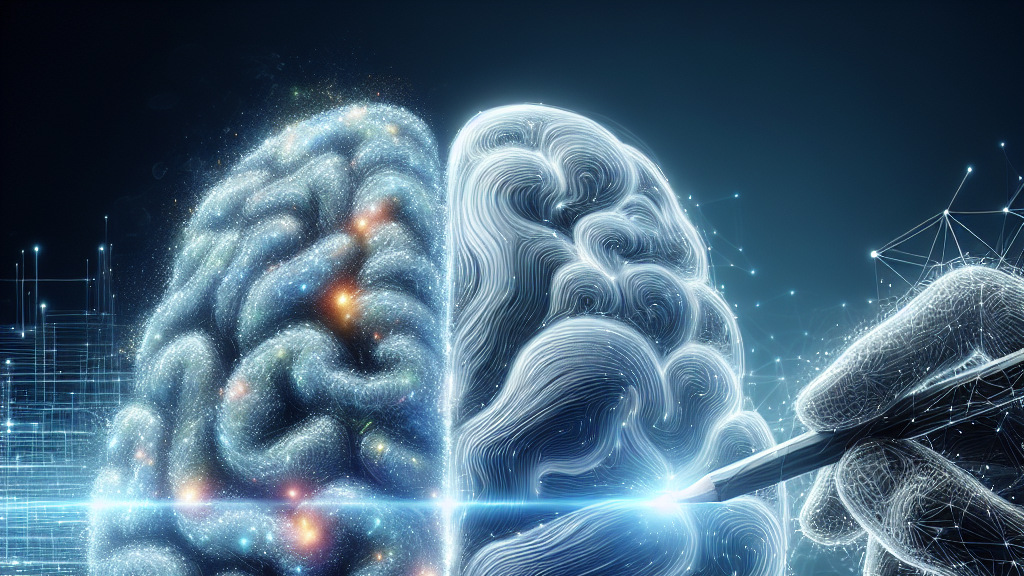
This research connects our mind’s resilience to its ability to adapt and stay whole, even when things around us change. By using the idea of the free energy principle, it suggests that our minds naturally reconfigure themselves to hold onto our identity, potentially opening up new ways to boost mental health and self-care.

Can Our Minds Self Heal Like Bodies
✨Researched by humans. Explained by robots. Learn more.

Imagine if our minds could self-heal just like our bodies do. This groundbreaking research explores how the concept of the free energy principle can explain the resilience of our identity. Think of it as a natural self-care system that keeps us mentally grounded, even when life throws curveballs our way.

The study dives into how our brains naturally adapt to maintain their sense of self, using a framework known as the free energy principle. This principle suggests that our minds are constantly reorganizing themselves to hold onto what makes us ‘us,’ ensuring our identity remains stable despite changes. By understanding this process better, we might find new ways to enhance our mental resilience and navigate life’s challenges more smoothly.

Imagine being able to boost your mental resilience as easily as taking a vitamin for your body. This research hints that fostering self-awareness might allow us to consciously guide our mind’s natural reconfiguration process, potentially leading to better mental health outcomes. It’s a glimpse into a future where maintaining a healthy mind could become as routine as maintaining a healthy body.

Did you know? The free energy principle suggests our brains are like engines, always working to keep our identity intact even in changing circumstances!

FAQs

What is the free energy principle in mind science?

The free energy principle is a theory that suggests our brains constantly adapt and self-organize to minimize surprises and maintain stability, keeping our identity intact even as the world changes around us.

How does the free energy principle relate to mental resilience?

The free energy principle relates to mental resilience by proposing that our minds naturally reorganize themselves to cope with changes, helping us maintain our sense of self through life’s ups and downs.

What practical applications could arise from understanding mental resilience better?

By understanding mental resilience, we may be able to develop new self-care strategies and therapeutic approaches that enhance our ability to adapt and thrive mentally, much like how we care for our physical health.

Why is holding onto our identity important for resilience?

Maintaining our identity is crucial for resilience because it provides a stable base from which we can handle life’s challenges, ensuring we remain grounded and self-aware despite external changes.

Could fostering self-awareness enhance mental resilience?

Yes! By fostering self-awareness, we might be able to consciously guide our mind’s natural reconfiguration process, potentially improving our ability to adapt and maintain mental well-being.

Background

The free energy principle is a theory from neuroscience that explores how the brain processes information and adapts to maintain a stable sense of self, even as the outside world changes. It’s like a mental algorithm that helps keep us grounded.

History

The exploration of resilience in the context of neuroscience has evolved over decades. Initially, resilience was viewed as a passive trait, but recent studies have shifted towards understanding it as an active process. The free energy principle, first introduced in the early 21st century, has been leveraged to better explain this process of active self-organization and adaptation.

Based on “Resilience and adaptability in self-evidencing systems” by Mahault Albarracin, Dalton A R Sakthivadivel, available on arXiv (arxiv.org/abs/2506.06897), used under CC BY 4.0 (creativecommons.org/licenses/by/4.0/).

Trending

Latest

Can AI Save Water Discover How

Computers

AI is transforming the tech world, but it uses lots of water! A new tool, SCARF, helps us measure and reduce AI's water footprint,...

Whats a Forbush Decrease and Why Should We Care Whats a Forbush Decrease and Why Should We Care

Space

Scientists just observed the biggest solar storm event in years, revealing unexpected cosmic ray patterns. Understanding these changes could help us protect our technology...

Can Cars Spot Danger Faster Than Humans Can Cars Spot Danger Faster Than Humans

Computers

Think about how quickly you react when something unexpected happens on the road. This research brings us closer to creating self-driving cars that can...

Can Fear of the Other Stop Social Harmony Can Fear of the Other Stop Social Harmony

Physics

Fear of the unknown might make it harder for people to agree and get along. This study shows that when people have strong xenophobic...

Can AI Revolutionize Breast Cancer Diagnosis Can AI Revolutionize Breast Cancer Diagnosis

Electricity

This research introduces a groundbreaking AI model that can accurately assess HER2-positive breast cancer using widely accessible staining methods, potentially revolutionizing how we diagnose...

Can AI Transform Your Singing into a Choir Can AI Transform Your Singing into a Choir

Computers

Imagine singing solo and having AI turn you into a choir. This research unveils a groundbreaking AI tool that transforms your voice into rich...

You May Also Like

Materials

This research reveals that traditional basket weaving techniques can be a breakthrough in creating modern, super-resilient materials for tech and robotics, potentially leading to...

Computers

Our computers could soon fix themselves just like our bodies heal from cuts—thanks to AI!

Physics

Imagine if things could organize themselves into perfect order from total chaos, without anyone in charge. This research explores how random movements, like those...

Materials

Imagine if animals could teach us new ways to organize and work together. Researchers have discovered how simple interactions between different species can lead...

Nonlinear Sciences

Ever wondered how chaos leads to order? Scientists are exploring the mesmerizing transition of random particles into stunning patterns. This research could unlock secrets...

Computers

Ever wondered why parasites and hackers exist? They might just be the unexpected heroes, pushing both biological and digital systems to reveal their weaknesses...

Statistics

Ever wondered how we can make technology greener without sacrificing profit? A new algorithm is helping engineers design systems that are not only more...

Computers

Scientists are looking to our own brains to solve the problems that current AI systems face. By designing AI that mimics the way our...

Copyright © 2024 8ig8rain.

Disclaimer: The content on 8ig8rain.com consists of AI-generated summaries of scientific abstracts from arXiv. Please note that most arXiv abstracts are preprints and may not have undergone formal peer review. While these summaries aim to convey key ideas and potential applications, they are provided for informational purposes only and should not be interpreted as validated scientific findings or professional advice. The summaries are intended to educate, spark curiosity, and inspire further exploration of science.