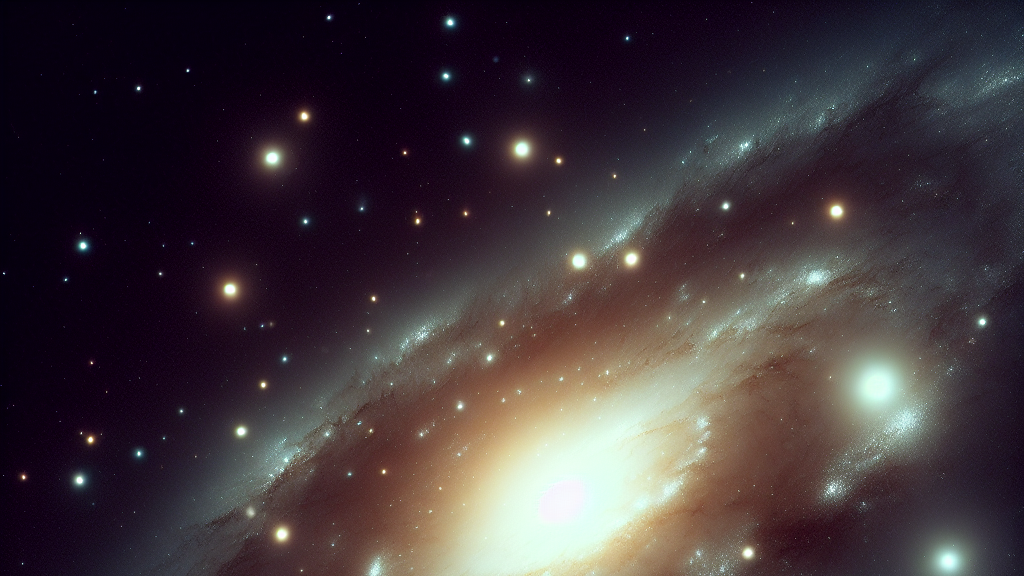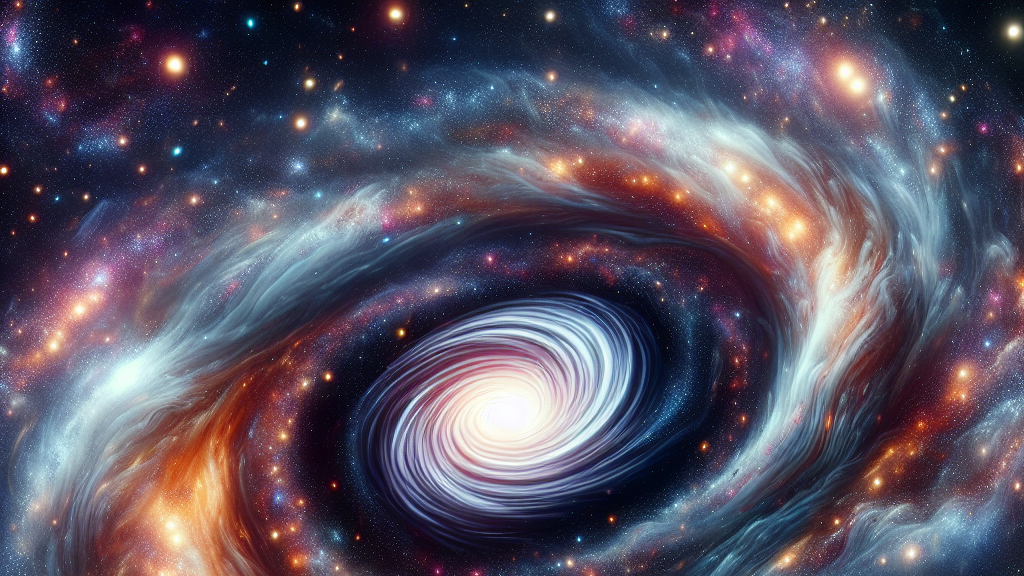
**Did you know that some galaxies are born without any stars at all?** That’s right! While we think of galaxies as glittering collections of stars, some start their life starless. This fascinating mystery has puzzled scientists for a while, but recent studies using high-tech simulations have begun to unravel this cosmic conundrum. Turns out, the environment where these galaxies form plays a crucial role in their development—or lack thereof. Imagine a galaxy that never had the chance to twinkle with stars because of the conditions it was born into. Incredible, isn’t it? In these recent simulations, researchers discovered that it’s not supernova explosions or the galaxies’ wild movements through space that prevent star formation. Instead, it’s a process called reionization. This cosmic event keeps these galaxies from accumulating enough dense gas to form stars. Without dense gas, there is no way for these galaxies to cool down to temperatures where stars can form. So, these little cosmic neighborhoods remain dark and starless, just floating through the universe like ghost towns. Now, why does this matter to us Earthlings? Understanding how galaxies form and evolve can give us clues about the very fabric of our universe, including the enigmatic dark matter that makes up most of it. By knowing why some galaxies never light up, scientists can refine their models of how our universe has shaped up over billions of years. Who knows, this might even help us discover new, hidden aspects of our cosmic neighborhood, shedding light on the mysteries of space and time!
Despite being born in the same universe, some galaxies never get the chance to shine due to cosmic reionization.
FAQs
What makes some galaxies starless, according to new research?
Some galaxies are born starless due to reionization, which prevents them from gathering enough dense gas to cool and form stars.
How does supernova feedback affect galaxies?
Supernova feedback reduces cold gas in galaxies that already have stars, but it doesn’t significantly impact galaxies that are already starless and don’t form stars in the first place.
Why does understanding starless galaxies matter?
Studying starless galaxies helps scientists refine their models of the universe’s evolution and better understand the role of dark matter.
Background
In the context of astronomy, galaxies are large systems of stars, star clusters, gas, dust, and dark matter all bound together by gravity. Dark matter is a mysterious and invisible form of matter that makes up most of the universe’s mass. Reionization refers to a phase early in the universe’s history when radiation ionized the gas that filled space, affecting the ability of some regions to cool and form stars.
History
The study of galaxies and their formation has a rich history, rooted in earlier observations of our local group of galaxies. The debate over the existence of dark matter began when scientists observed that there weren’t enough visible stars and galaxies to account for the gravitational forces at play in the universe. Recent investigations focus on how dark matter and cosmic events like reionization influence the formation of galaxies and their star content.
Based on “Born to be Starless: Revisiting the Missing Satellite Problem” by Seyoung Jeon, Sukyoung K. Yi, Emanuele Contini, Yohan Dubois, San Han, Katarina Kraljic, Sebastien Peirani, Christophe Pichon, Jinsu Rhee, available on arXiv (arxiv.org/abs/2506.09152), used under CC BY 4.0 (creativecommons.org/licenses/by/4.0/).