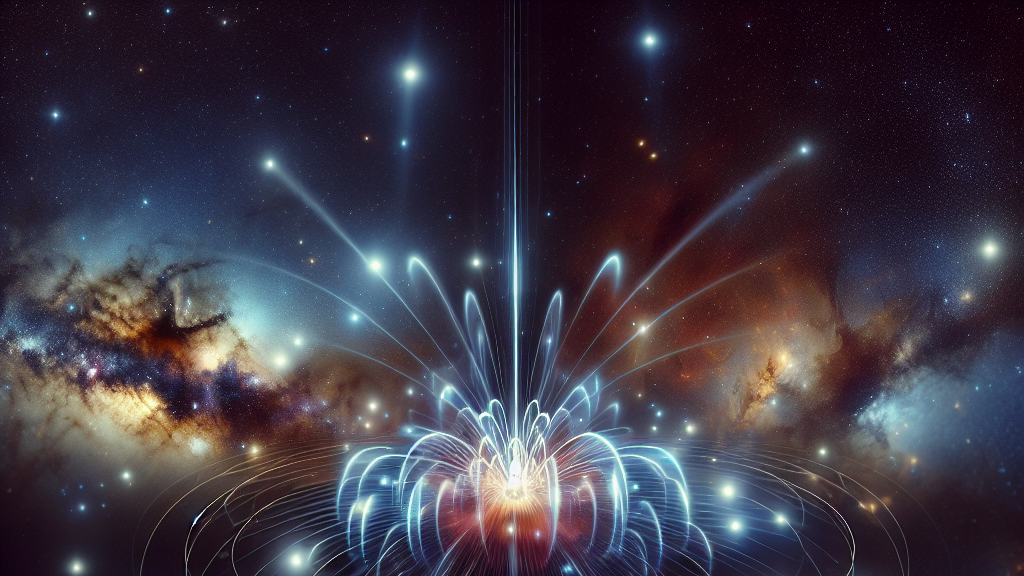
Imagine being able to hear the universe, not through words or numbers, but through actual music. This is exactly what researchers are doing with blazars—extremely bright and energetic astronomical objects. By turning data about these blazars into sound, scientists are opening a whole new way to explore space.
Using advanced techniques like MIDI and Parameter Mapping Sonification, researchers have taken the complexity of blazar data and translated it into something as simple and beautiful as a song. These ‘star songs’ help identify patterns and unlock secrets of the universe that might be missed with traditional methods.
The future of this research could mean that anyone with an ear for music can dive into the depths of space exploration. Imagine apps that let you ‘listen’ to the stars or even your favorite constellations. This could revolutionize how we engage with the cosmos, making it accessible and exciting for people of all abilities and interests.
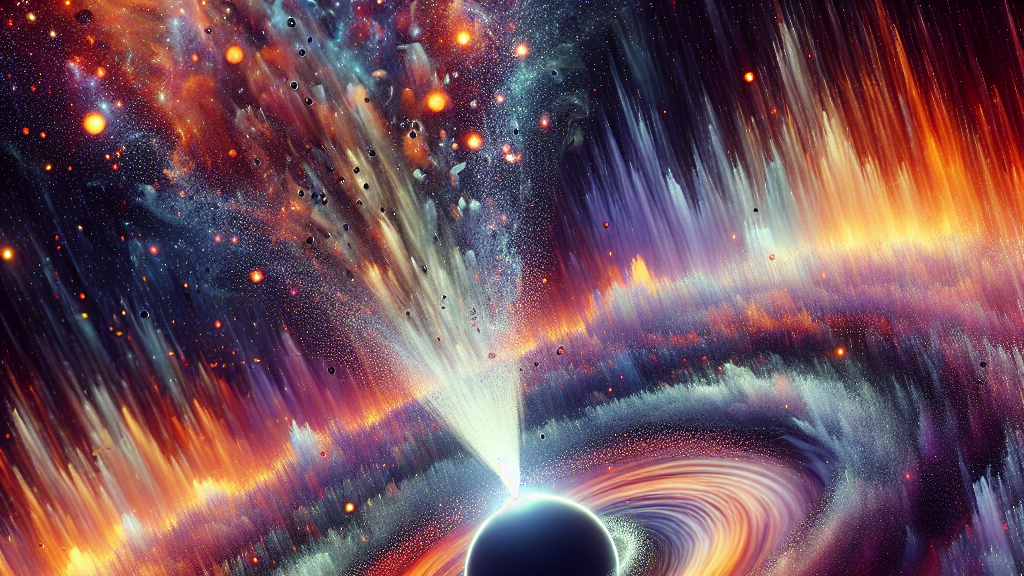
Blazars are among the most powerful and energetic objects in the universe, capable of emitting more light than entire galaxies.
FAQs
What is sonification in astronomy?
Sonification in astronomy involves converting astronomical data into sound waves, allowing researchers and the public to ‘hear’ information about objects like blazars.
How does sonification help in understanding blazars?
Sonification transforms complex blazar data into audio patterns, helping scientists identify patterns and variations that are difficult to spot visually.
Why is making astronomy accessible important?
By transforming data into sound, sonification makes astronomy more inclusive, enabling those with visual impairments and non-scientists to experience and understand cosmic phenomena.
Background
Blazars are a type of galaxy with a supermassive black hole at their center, which emits extremely energetic jets of particles. These emissions cover a vast spectrum of frequencies, making them ideal for multifrequency analysis—where data from different parts of the light spectrum is combined to get a fuller picture of the blazar’s activity.
History
The idea of sonification—turning data into sound—is not new. It has been used in various scientific fields to provide alternative ways of understanding complex data sets. This study builds on previous methods by applying sonification to astronomy, specifically to the study of blazars, to enhance data interpretation and accessibility.
Based on “Exploring blazars through sonification. Visual and auditory insights into multifrequency variability” by Gustavo Magallanes-Guijón, Sergio Mendoza, available on arXiv (arxiv.org/abs/2502.01929), used under CC BY 4.0 (creativecommons.org/licenses/by/4.0/).