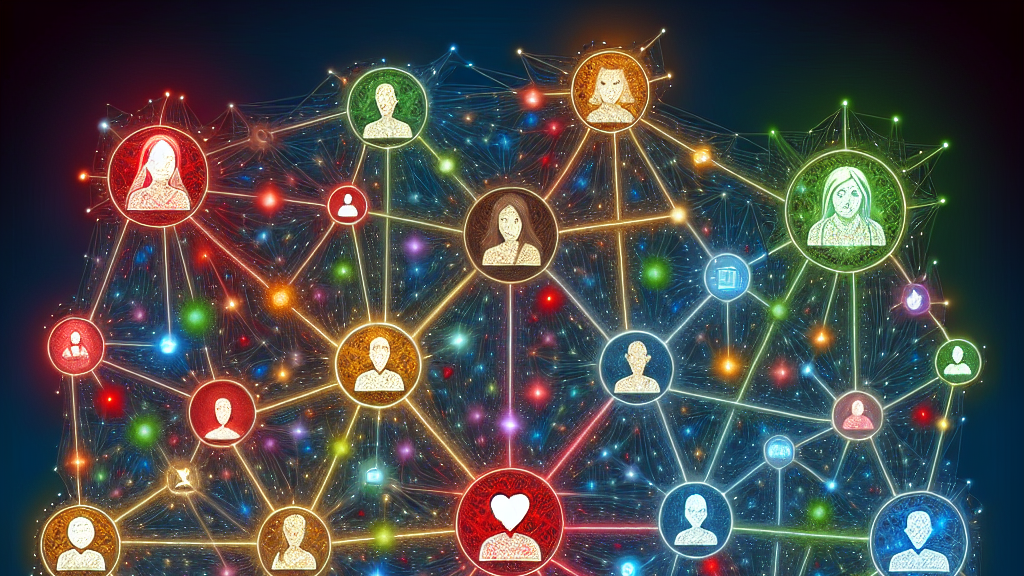
Did you know that social media might actually help stop the spread of fake news? While you might have heard that social media is often blamed as the culprit for spreading misinformation, this new research shows that in certain regions, it can play a crucial role in reducing fake news. When there’s active public engagement, social media ramps up transparency and accountability, making it much harder for misinformation to thrive.
Researchers looked at local governments in China and discovered that regions with high public scrutiny saw a marked decrease in false GDP reporting once they started using social media. It turns out that when people actively engage with political matters, social media platforms become tools of truth rather than deception. In these areas, the cost of spreading lies is higher because social media encourages information disclosure and public monitoring. However, in places where public engagement is low, the opposite happens, and misinformation can actually increase.
Imagine how this could change the way we think about social media and its role in our lives. If platforms are designed with public scrutiny in mind, we might see a world where misinformation is less rampant. This could lead to more accurate public decision-making and a stronger trust in institutions. The study highlights the power of civic engagement and could transform how platforms and policies are designed to foster truth and accountability.
In regions with strong public scrutiny, social media can turn into a truth-finding tool by fostering transparency and discouraging misinformation.
FAQs
Can social media actually reduce misinformation?
Yes, in regions with high public engagement, social media has been shown to increase transparency and accountability, reducing misinformation as people become more involved in monitoring political matters.
Why does social media sometimes increase misinformation?
In regions with low public scrutiny, the absence of active civic engagement means social media can amplify misinformation rather than mitigate it, as users do not actively monitor or challenge the information being shared.
How can this research affect social media platform design?
This research suggests designing platforms that promote civic engagement and public scrutiny could help reduce misinformation, encouraging transparency and truthfulness in public communication.
What regions were studied in this research?
The research focused on local government GDP reporting in China, analyzing data from 2011 to 2019 to determine the impact of social media on misinformation in areas with varying levels of public engagement.
How does public engagement influence misinformation on social media?
Public engagement increases the cost of disseminating false information by encouraging greater transparency and accountability through active information disclosure and monitoring.
Background
Misinformation is basically false or misleading information spread unintentionally or deliberately, often affecting trust in institutions and decision-making. Social media, while often blamed for spreading misinformation, has the potential to enhance transparency and accountability when people are actively involved in monitoring content. This dual nature is crucial for understanding how misinformation can be curbed.
History
The study of misinformation has evolved alongside the rise of social media, initially focusing on how these platforms contribute to false narratives. Early studies often highlighted the role of social media in spreading misinformation widely and quickly. However, recent research suggests that social media’s impact is not one-dimensional. By facilitating information sharing and public participation, these platforms could potentially counter misinformation, a perspective that this study builds upon.
Based on “Social Media Can Reduce Misinformation When Public Scrutiny is High” by Gavin Wang, Haofei Qin, Xiao Tang, Lynn Wu, available on arXiv (arxiv.org/abs/2506.16355), used under CC BY 4.0 (creativecommons.org/licenses/by/4.0/).