Connect with us

Search by keyword

Computers

Do We All Have a Secret Conspiracy Radar?

This study uncovers how a ‘conspiratorial mindset’ exists in some social media users before they become part of conspiracy groups. It highlights the need for better strategies to prevent online radicalization.

Do We All Have a Secret Conspiracy Radar
✨Researched by humans. Explained by robots. Learn more.

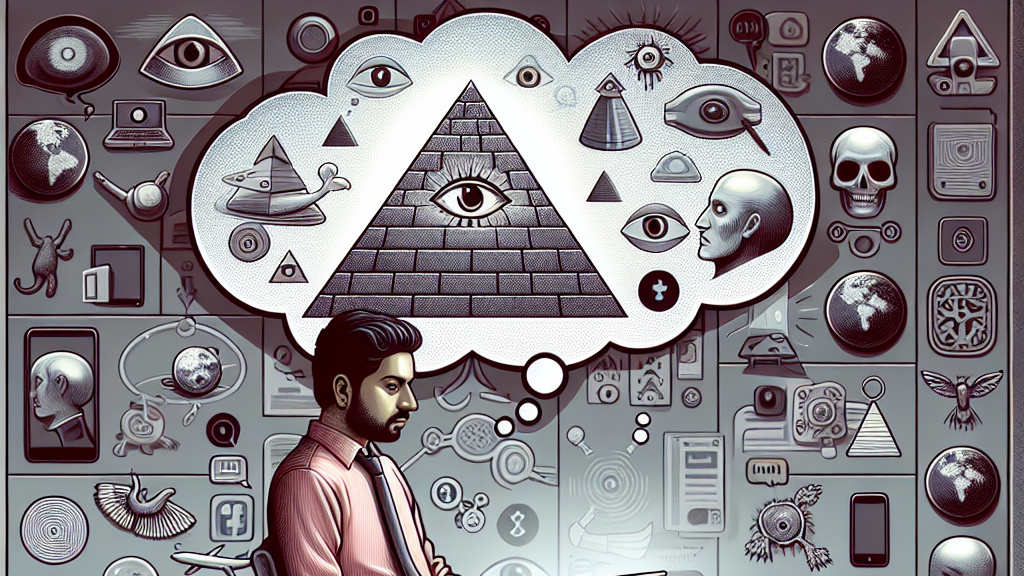
Ever wondered if there’s a secret radar that tunes people into conspiracy theories? Turns out, some users on social media show signs of a ‘conspiratorial mindset’ before they ever engage with conspiracy communities online. This study reveals how these individuals might be drawn into these groups not because they’re being radicalized by the community, but because they’re already predisposed to thinking in a particular way.

Researchers analyzed social media activity, specifically focusing on users who later participate in conspiracy-focused Reddit communities. They found that these users exhibit distinct linguistic patterns in their online interactions, setting them apart from other users even before joining conspiracy groups. This means that these individuals possess a unique way of perceiving the world, potentially making them more susceptible to conspiratorial beliefs.

So what does this mean for the future? If we can identify people with a predisposed conspiratorial mindset early, we could develop more effective, supportive interventions to help prevent them from diving deeper into extreme communities. This research suggests that focusing on understanding and addressing the mindset could lead to safer and more constructive public discourse both online and offline.

Did you know that your choice of words can reveal your hidden biases towards conspiracy theories before you even join a conspiracy group online?

FAQs

What is a ‘conspiratorial mindset’ and how does it affect people online?

A ‘conspiratorial mindset’ is a way of perceiving the world where people are more likely to see hidden plots and connections. This mindset can predispose individuals to engage with conspiracy theories even before they join related online communities.

How can understanding a ‘conspiratorial mindset’ help in moderating online platforms?

By identifying users with a conspiratorial mindset early, platforms can tailor interventions to prevent deeper radicalization, moving beyond standard moderation techniques that may not be effective for these individuals.

Do social media platforms play a role in radicalizing users into conspiracy beliefs?

This research suggests that social media platforms may not actively radicalize users; instead, individuals with a pre-existing mindset seek out conspiracy communities, indicating a need for different intervention methods.

What implications does this research have for online safety and public discourse?

Understanding that some people are predisposed to conspiracy thinking can help in designing more targeted interventions, fostering a safer environment for both online and offline public conversations.

Background

In the realm of social media, conspiracy theories are a form of radicalization where people come to believe in hidden plots or schemes, often resistant to efforts to moderate or control them. The concept of a ‘conspiratorial mindset’ refers to a cognitive predisposition that inclines people towards these beliefs, which can be identified through their language and behavior online.

History

The research builds on past studies exploring online radicalization and the psychological profiles of conspiracy believers. Previous work has often focused on community influence in radicalizing individuals, but recent findings suggest that a pre-existing mindset may be the driving force, sparking a need for new moderation strategies.

Based on “Early linguistic fingerprints of online users who engage with conspiracy communities” by Francesco Corso, Giuseppe Russo, Francesco Pierri, Gianmarco De Francisci Morales, available on arXiv (arxiv.org/abs/2506.05086), used under CC BY 4.0 (creativecommons.org/licenses/by/4.0/).


Trending

Latest

Can AI Save Water Discover How

Computers

AI is transforming the tech world, but it uses lots of water! A new tool, SCARF, helps us measure and reduce AI's water footprint,...

Whats a Forbush Decrease and Why Should We Care Whats a Forbush Decrease and Why Should We Care

Space

Scientists just observed the biggest solar storm event in years, revealing unexpected cosmic ray patterns. Understanding these changes could help us protect our technology...

Can Cars Spot Danger Faster Than Humans Can Cars Spot Danger Faster Than Humans

Computers

Think about how quickly you react when something unexpected happens on the road. This research brings us closer to creating self-driving cars that can...

Can Fear of the Other Stop Social Harmony Can Fear of the Other Stop Social Harmony

Physics

Fear of the unknown might make it harder for people to agree and get along. This study shows that when people have strong xenophobic...

Can AI Revolutionize Breast Cancer Diagnosis Can AI Revolutionize Breast Cancer Diagnosis

Electricity

This research introduces a groundbreaking AI model that can accurately assess HER2-positive breast cancer using widely accessible staining methods, potentially revolutionizing how we diagnose...

Can AI Transform Your Singing into a Choir Can AI Transform Your Singing into a Choir

Computers

Imagine singing solo and having AI turn you into a choir. This research unveils a groundbreaking AI tool that transforms your voice into rich...

You May Also Like

Economics

Social media might not always be the villain when it comes to spreading fake news. In regions with strong public engagement, social media can...

Computers

Did you know that Google might be hiding info from you? This research shows that Google's algorithms can suppress certain online content, like conspiracy...

Computers

Imagine AI systems helping businesses plan and carry out tasks—but they're relying on potentially fake online reviews. Sound risky? This research dives into how...

Computers

This study introduces a new dataset to better identify violent threats on social media. This can lead to more effective tools to keep online...

Physics

This research unveils how social media can spotlight political divides, showing that including negative interactions helps reveal the most extreme political views and behaviors...

Computers

Discover how social media could transform disaster response by giving emergency workers real-time, life-saving insights during floods and other extreme events.

Computers

Countries worldwide are making new laws to tackle fake news and misinformation online. With diverse strategies and global reach, these laws aim to protect...

Physics

Ever wonder how social media spreads misinformation so quickly? A new study reveals that the structure of social media networks can amplify falsehoods as...

Computers

This research uncovers how content creators are using the 'Pin of Shame' to highlight and confront bad behavior in comments, addressing the complex dance...

Copyright © 2024 8ig8rain.

Disclaimer: The content on 8ig8rain.com consists of AI-generated summaries of scientific abstracts from arXiv. Please note that most arXiv abstracts are preprints and may not have undergone formal peer review. While these summaries aim to convey key ideas and potential applications, they are provided for informational purposes only and should not be interpreted as validated scientific findings or professional advice. The summaries are intended to educate, spark curiosity, and inspire further exploration of science.