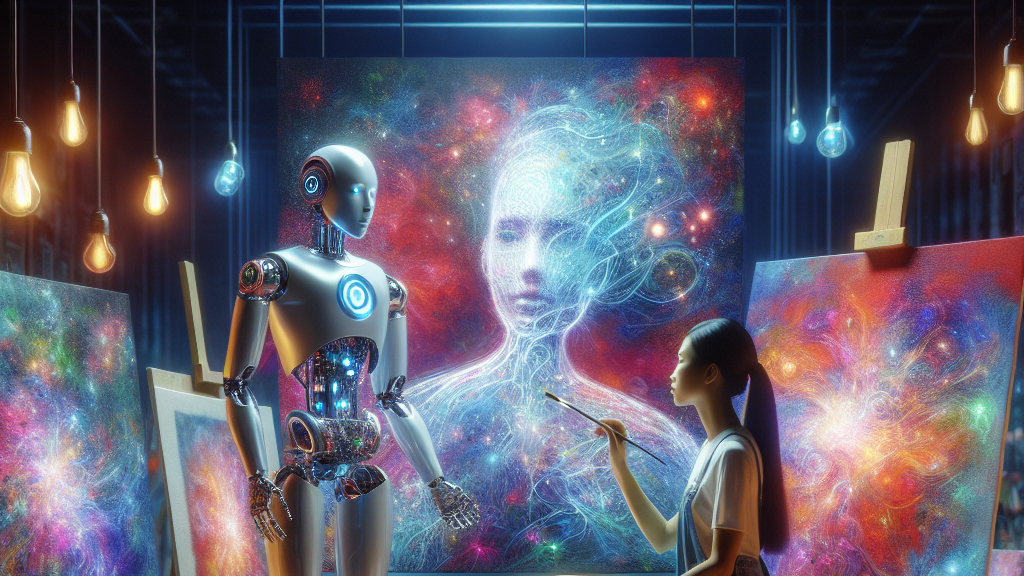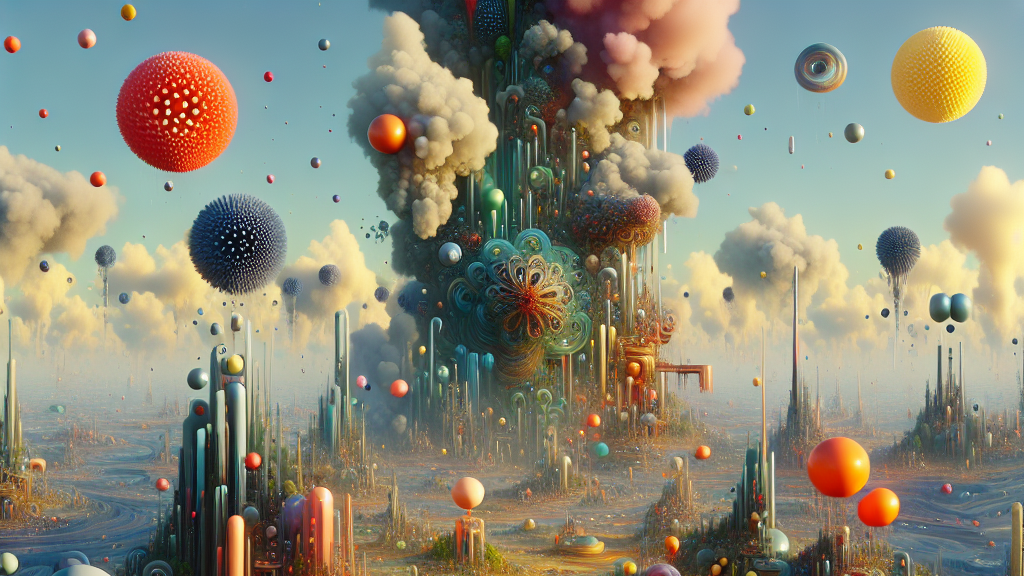
Artificial intelligence is often expected to be perfect and accurate—like a calculator that never gets its sums wrong. But what if the so-called ‘mistakes’ made by AI could open up entire new worlds of creativity? Imagine a machine that doesn’t just repeat facts but invents stories, conjures wild ideas, and takes us places we never thought possible. That’s the exciting potential of Purposefully Induced Psychosis, a new way of making AI’s ‘hallucinations’ work for us as engines of creativity.
This approach turns traditional thinking on its head. Rather than seeing AI errors as failures, a team of researchers has discovered they can be harnessed for good. By tweaking AI to spin off wild, imaginative ideas, it can help create speculative fiction, interactive plays, and virtual realities that are unexpected and brilliant. Drawing inspiration from Herman Melville’s ‘Moby-Dick,’ where a character’s madness reveals deep truths, these ‘mistakes’ are being reimagined as drivers of new thought rather than errors to fix. In this way, AI can become a partner in creativity, helping us dream and imagine like never before.
Consider the impact this could have on entertainment and art! Imagine writers using AI to brainstorm new plot twists, or game designers working with it to craft worlds beyond our wildest dreams. By intentionally inviting AI to ‘hallucinate,’ creators could explore new dimensions of storytelling and play that invite us all to suspend disbelief and dive into the unknown. This innovative collaboration between human and machine might just revolutionize the way we create and consume stories, sparking possibilities we haven’t yet imagined.
AI’s so-called hallucinations can create stories like an AI version of Picasso’s paintings!
FAQs
How does Purposefully Induced Psychosis in AI work?
Purposefully Induced Psychosis involves encouraging AI to produce imaginative, speculative, and surreal outputs—’hallucinations’—which can be useful for creative tasks where accuracy isn’t the main goal, such as storytelling or art.
What applications can benefit from AI-induced hallucinations?
Creative domains like speculative fiction writing, interactive storytelling, and mixed-reality simulations can greatly benefit from AI-induced hallucinations by offering fresh, innovative ideas and experiences.
Can AI’s ‘mistakes’ reshape the future of storytelling?
Yes, AI’s ‘mistakes,’ when harnessed creatively, can revolutionize storytelling by providing unexpected plot twists, unique character developments, and innovative world-building ideas that challenge conventional narrative structures.
Background
Large Language Models are often seen as tools for delivering accurate information. However, they sometimes produce what users perceive as ‘hallucinations’—responses not grounded in fact. In the context of creative work, these unexpected outputs can be viewed as opportunities rather than flaws. The idea is to exploit these ‘mistakes’ as a source of inventive thinking and narrative innovation.
History
Traditionally, the field of artificial intelligence has focused on accuracy and eliminating errors. However, with the growing interest in exploring AI’s role in creative industries, researchers began to look at errors from a new perspective. Inspired by historic works of literature, like Melville’s ‘Moby-Dick,’ researchers explored how intentional deviation from fact could foster creativity, paving the way for this innovative approach to AI’s role in storytelling.
Based on “Purposefully Induced Psychosis (PIP): Embracing Hallucination as Imagination in Large Language Models” by Kris Pilcher, Esen K. Tütücü, available on arXiv (arxiv.org/abs/2504.12012), used under CC BY 4.0 (creativecommons.org/licenses/by/4.0/).