Connect with us

Search by keyword

Computers

Can Promises and Reputation Boost Teamwork?

This study explores how promises and reputation can keep teamwork strong. It suggests that when we publicly commit to cooperate and back it with a reputation system, it encourages everyone to stick to their commitments, like how wedding vows work.

Can Promises and Reputation Boost Teamwork
✨Researched by humans. Explained by robots. Learn more.

Ever wonder why wedding vows, job contracts, or even simple promises between friends often happen in front of others? This research might have the answer. It suggests that joint commitments, or promises, paired with a keen sense of reputation can boost cooperation in situations where it would otherwise fall apart, like in the infamous Prisoner’s Dilemma.

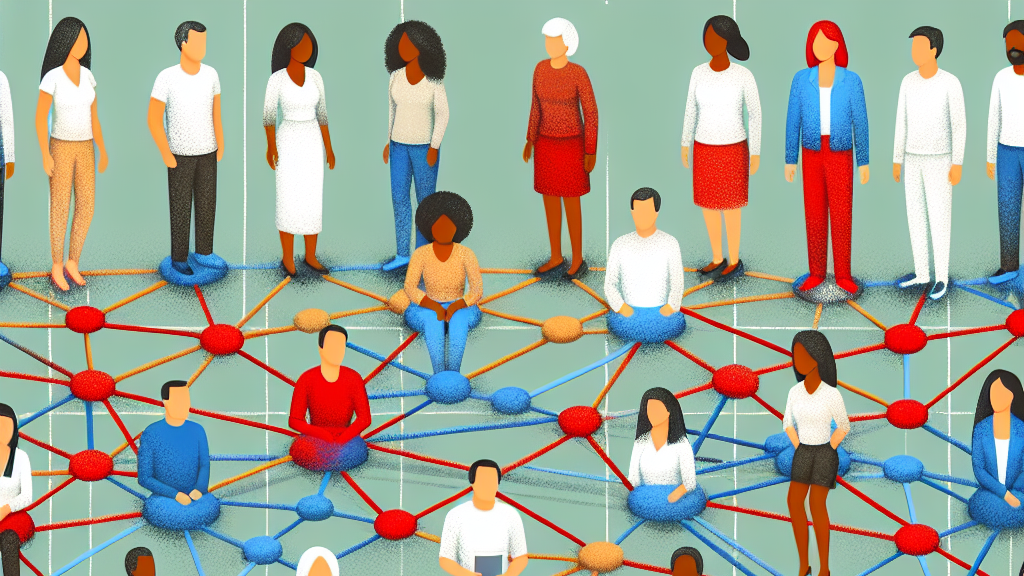
Using evolutionary game theory, researchers proposed a system where people not only make commitments but also observe others’ interactions. This means they judge and value cooperation, which generates a stable circle of trust. This way, even when there’s a chance of someone exploiting another’s cooperation, the fear of gaining a bad reputation keeps deceit in check. It’s like having a social safety net that encourages people to stick to their word.

Imagine if this system was applied universally—from boardrooms to classrooms. It could radically transform how we work together by promoting honest collaboration. For example, in businesses, a reputation-based commitment system could dramatically increase productivity and trust among teams, making every promise a building block toward success.

Did you know that in many cultures, breaking a public commitment can lead to losing valuable social trust, which is as precious as gold?

FAQs

How do joint commitments influence teamwork?

Joint commitments help in fostering trust and cooperation within a team by creating a shared goal that all members are encouraged to contribute towards, reducing the allure of self-serving actions.

Why are some promises made in public?

Public promises, like wedding vows, come with an added pressure to uphold commitment because the fear of damaging one’s reputation acts as a deterrent against breaking them, fostering trust among peers.

How can reputation affect cooperation in groups?

Reputation acts as a social currency; a good reputation encourages others to cooperate with you, while a bad reputation can isolate you, thus promoting overall cooperation through social accountability.

Is reputation-based cooperation a new concept?

No, reputation-based cooperation is an age-old concept but this research refines it by connecting reputations to joint commitments, which can enhance cooperation even in challenging situations.

How might this research change workplaces?

If implemented, such systems could increase trust and productivity by ensuring that agreements are respected due to the social pressure of maintaining a positive reputation.

Background

The study leverages evolutionary game theory, a concept used to understand strategic interactions in situations where individuals have conflicting interests. The Prisoner’s Dilemma is a classic scenario in game theory used to explore cooperation between individuals facing the temptation to act selfishly despite mutual benefits. This research introduces a novel twist by incorporating a system of joint commitments, similar to indirect reciprocity, where third parties rate others based on their cooperative behaviors.

History

The concept of joint commitments and reputation traces back to traditional practices in communities where verbal agreements were secured by the standing of the individuals involved. In modern times, formal contracts and public promises serve a similar function. This study builds on these ideas, merging them with evolutionary theory to propose a model of cooperation that works even when direct enforcement isn’t possible.

Based on “Words are not Wind — How Public Joint Commitment and Reputation Solve the Prisoner’s Dilemma” by Marcus Krellner, The Anh Han, available on arXiv (arxiv.org/abs/2307.06898), used under CC BY 4.0 (creativecommons.org/licenses/by/4.0/).


Trending

Latest

Can AI Save Water Discover How

Computers

AI is transforming the tech world, but it uses lots of water! A new tool, SCARF, helps us measure and reduce AI's water footprint,...

Whats a Forbush Decrease and Why Should We Care Whats a Forbush Decrease and Why Should We Care

Space

Scientists just observed the biggest solar storm event in years, revealing unexpected cosmic ray patterns. Understanding these changes could help us protect our technology...

Can Cars Spot Danger Faster Than Humans Can Cars Spot Danger Faster Than Humans

Computers

Think about how quickly you react when something unexpected happens on the road. This research brings us closer to creating self-driving cars that can...

Can Fear of the Other Stop Social Harmony Can Fear of the Other Stop Social Harmony

Physics

Fear of the unknown might make it harder for people to agree and get along. This study shows that when people have strong xenophobic...

Can AI Revolutionize Breast Cancer Diagnosis Can AI Revolutionize Breast Cancer Diagnosis

Electricity

This research introduces a groundbreaking AI model that can accurately assess HER2-positive breast cancer using widely accessible staining methods, potentially revolutionizing how we diagnose...

Can AI Transform Your Singing into a Choir Can AI Transform Your Singing into a Choir

Computers

Imagine singing solo and having AI turn you into a choir. This research unveils a groundbreaking AI tool that transforms your voice into rich...

You May Also Like

Economics

This research redefines happiness as a deeply interconnected web of relationships. It shows how a single person's positive actions can spark a ripple effect...

Computers

Imagine AI models learning to work together like a team, adapting to their environment and tasks as they go. This innovation could lead to...

Computers

This cutting-edge research explores how AI can revolutionize teamwork, making teams more cohesive and satisfied. By using AI to match team member preferences and...

Quantum Biology

This research reveals how the cost of maintaining friendships can shift our willingness to work together. By understanding these dynamics, we could better design...

Economics

Ever wondered what makes people work together, even when they don't have to? Turns out, in games where everyone benefits from cooperation, some people...

Computers

This study dives into how our future with AI might unfold by examining interactions between AI developers, regulators, and you, the user. It suggests...

Computers

Imagine if AI systems could play games to learn trust and cooperation! This study uses game theory to understand how AI developers, regulators, and...

Computers

This research shows how students forming their own teams in class can unintentionally make things unfair. By creating teams based on students' backgrounds and...

Computers

Imagine you and a friend solving mysteries together in an escape room, but without leaving your living room! ARctic Escape uses augmented reality to...

Copyright © 2024 8ig8rain.

Disclaimer: The content on 8ig8rain.com consists of AI-generated summaries of scientific abstracts from arXiv. Please note that most arXiv abstracts are preprints and may not have undergone formal peer review. While these summaries aim to convey key ideas and potential applications, they are provided for informational purposes only and should not be interpreted as validated scientific findings or professional advice. The summaries are intended to educate, spark curiosity, and inspire further exploration of science.