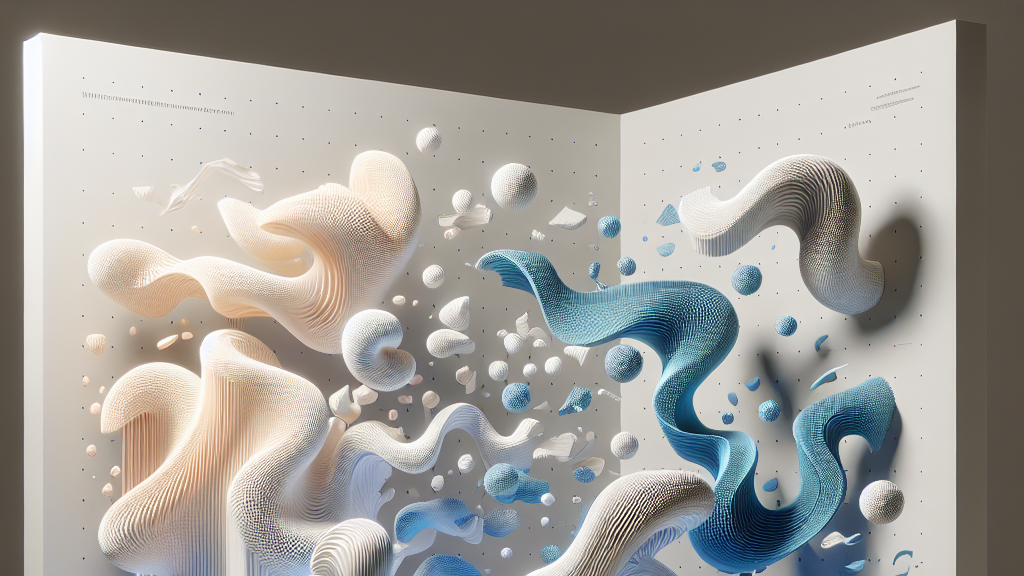
Imagine a world where trash isn’t just discarded and forgotten, but instead, it tells stories and interacts with us. That’s exactly what “THE WASTIVE” art installation does. It takes leftover pieces from digital creations and turns them into something extraordinary—an art piece that wakes up and pays attention when you’re nearby. It’s like the trash is watching you, letting you feel the gentle rhythms of the ocean as it ‘speaks’ without words.
So, how does it work? When you walk close to the installation, its elements start to move and mimic the waves of the sea. It’s as if these discarded materials suddenly come alive, engaging in a silent conversation with you. This brilliant idea not only makes for a captivating art experience but also nudges you to think about your own habits. It’s an intriguing way to use art to make us more aware of how much we consume and waste.
In the future, this concept could change how we look at waste in general. Imagine if more and more waste was turned into art, inviting us to reflect and prompting us to be more careful about what we throw away. This could spark a shift towards more sustainable, eco-friendly lifestyles. By making us interact with waste in such an artistic manner, “THE WASTIVE” challenges us to see trash not just as junk but as a vital part of our environment story.
Did you know that turning waste into art can make people rethink their wasteful habits and embrace sustainability?
FAQs
What is the main idea behind “THE WASTIVE” installation?
The main idea of “THE WASTIVE” is to transform digital fabrication waste into an interactive art installation that ‘observes’ and ‘responds’ to human presence, encouraging viewers to rethink their consumption habits and embrace sustainability.
How does “THE WASTIVE” installation work?
“THE WASTIVE” installation works by using sensors to detect when viewers are nearby. When someone approaches, the waste materials in the installation move in a way that resembles ocean waves, creating a silent dialogue between the viewer and the art piece.
What message does “THE WASTIVE” convey about waste and the environment?
“THE WASTIVE” conveys a message that waste materials can be more than just discarded items. By transforming waste into art, it encourages viewers to reflect on their daily habits and promotes a more sustainable and environmentally-conscious way of living.
Background
In digital fabrication, excess materials and scraps often end up as waste. The concept behind “THE WASTIVE” is to give these remnants a second life by turning them into interactive art. This process blends technology and artistry, using sensors and creative design to create an installation that reacts to people, making viewers more aware of their consumption and waste habits.
History
For years, artists and environmentalists have explored ways to reduce waste. Earlier art installations have often focused on recycling or repurposing materials creatively. “THE WASTIVE” builds on these ideas, pushing the boundaries by adding an interactive element where waste materials seem to have a voice, urging audiences to consider their environmental impact more deeply.
Based on “THE WASTIVE: An Interactive Ebb and Flow of Digital Fabrication Waste” by Yifan Shan, Bo Liu, Sebastian Bidegain, Thijs Roumen, available on arXiv (arxiv.org/abs/2505.21153), used under CC BY 4.0 (creativecommons.org/licenses/by/4.0/).