Connect with us

Search by keyword

Computers

Can Your Brain Build 3D Worlds?

Imagine controlling virtual or real-world objects with just your thoughts. This research turns signals from your brain into 3D models, opening doors to exciting possibilities in gaming, VR, and even helping those with disabilities.

Can Your Brain Build 3D Worlds
✨Researched by humans. Explained by robots. Learn more.

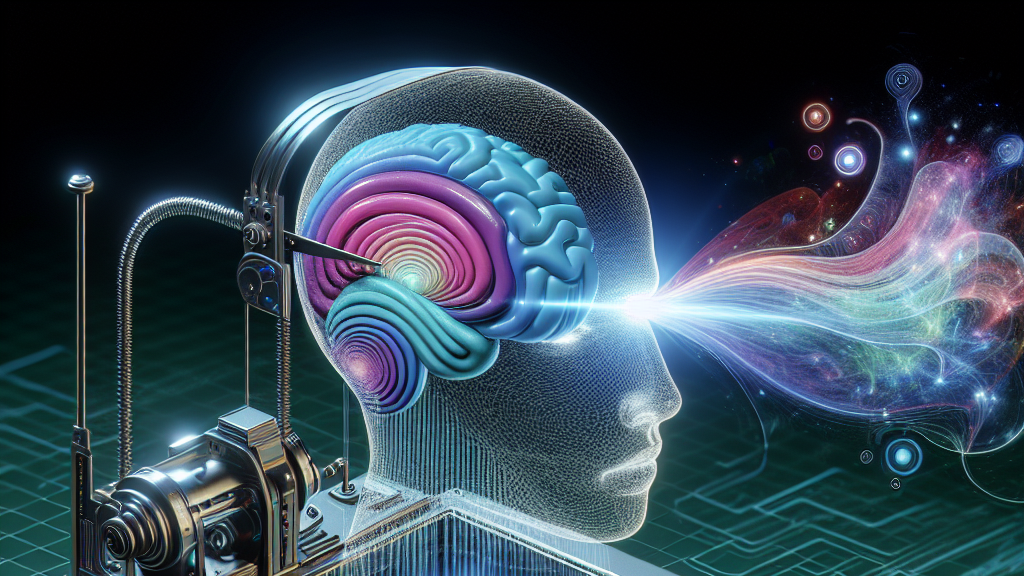
Ever wondered what it’d be like to create something just by thinking about it? We’re getting closer to that reality! Scientists are working on turning brain signals into 3D images. That’s right—your brain could soon be the ultimate creator! Imagine playing your favorite video game or designing something for work just by using your mind.

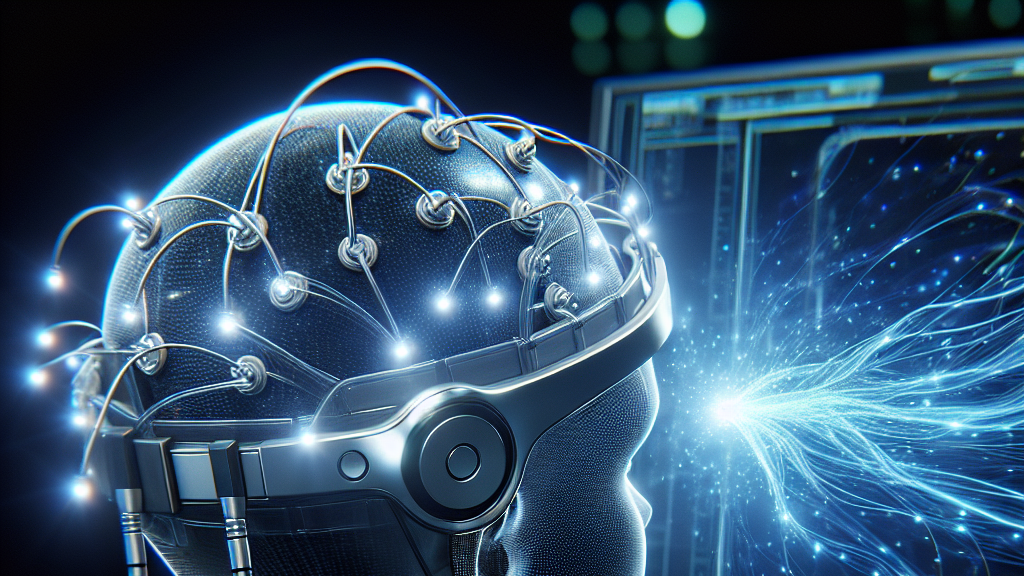
The secret sauce behind this magic is a special tool called EEG, which reads electrical activity from the brain. While it’s not as detailed as fMRI, it’s much cheaper and can be used anywhere, anytime. Researchers have developed a way to take these signals, decode them with advanced technology like deep learning, and turn them into structured, three-dimensional objects. It’s like building a virtual world in your head and seeing it come to life.

So, what does this mean for you? Well, there are limitless possibilities! For example, it could revolutionize virtual reality gaming, making experiences feel more lifelike. It could also offer new ways for people with disabilities to interact with the world by controlling devices with their thoughts. This could change how we live, play, and communicate in ways we’ve only dreamed of.

Did you know your brain emits enough energy to power a small light bulb?

FAQs

How does EEG technology turn brain signals into 3D models?

EEG technology reads electrical activity from the brain, and researchers use advanced neural decoding and generative models to translate these signals into structured 3D objects. This method involves training an encoder to capture visual features and using a generative model to build the 3D structures.

Why is EEG preferred over fMRI for real-time brain-computer interfaces?

While fMRI provides high spatial resolution, it is costly and not suitable for real-time or mobile applications. EEG, on the other hand, is affordable, non-invasive, and can be used anywhere, making it ideal for fast, real-time brain-computer interface tasks.

How could 3D reconstruction from brain signals impact everyday life?

3D reconstruction from brain signals has the potential to revolutionize virtual reality experiences, offer new interactive methods for gaming, and provide communication solutions for individuals with disabilities by allowing them to control devices through thought alone.

Background

Electroencephalography, or EEG, is a technique that measures electrical activity in the brain through sensors placed on the scalp. This technology is valuable for real-time applications because it’s non-invasive, relatively inexpensive, and portable. Decoding brain signals into 3D representations involves advanced technologies like neural decoding and generative models, which convert complex patterns of brain activity into visual data.

History

The journey to understanding brain signals began with early brain imaging techniques like magnetic resonance imaging. These studies laid the groundwork for more complex explorations into brain-computer interfaces. The development of EEG offered a more accessible way to study real-time brain activity, leading to the exciting potential of translating these signals into 3D models as showcased in this study.

Based on “Mind2Matter: Creating 3D Models from EEG Signals” by Xia Deng, Shen Chen, Jiale Zhou, Lei Li, available on arXiv (arxiv.org/abs/2504.11936), used under CC BY 4.0 (creativecommons.org/licenses/by/4.0/).

Trending

Latest

Can AI Save Water Discover How

Computers

AI is transforming the tech world, but it uses lots of water! A new tool, SCARF, helps us measure and reduce AI's water footprint,...

Whats a Forbush Decrease and Why Should We Care Whats a Forbush Decrease and Why Should We Care

Space

Scientists just observed the biggest solar storm event in years, revealing unexpected cosmic ray patterns. Understanding these changes could help us protect our technology...

Can Cars Spot Danger Faster Than Humans Can Cars Spot Danger Faster Than Humans

Computers

Think about how quickly you react when something unexpected happens on the road. This research brings us closer to creating self-driving cars that can...

Can Fear of the Other Stop Social Harmony Can Fear of the Other Stop Social Harmony

Physics

Fear of the unknown might make it harder for people to agree and get along. This study shows that when people have strong xenophobic...

Can AI Revolutionize Breast Cancer Diagnosis Can AI Revolutionize Breast Cancer Diagnosis

Electricity

This research introduces a groundbreaking AI model that can accurately assess HER2-positive breast cancer using widely accessible staining methods, potentially revolutionizing how we diagnose...

Can AI Transform Your Singing into a Choir Can AI Transform Your Singing into a Choir

Computers

Imagine singing solo and having AI turn you into a choir. This research unveils a groundbreaking AI tool that transforms your voice into rich...

You May Also Like

Computers

Think about how quickly you react when something unexpected happens on the road. This research brings us closer to creating self-driving cars that can...

Electricity

What if you could control a computer just by moving your eyes? This study explores a new technology, using a tiny device in the...

Computers

Imagine if we could see the images your mind creates just by reading brain waves! This groundbreaking research uses brain responses to predict and...

Electricity

Discover Brain2Vec, a groundbreaking tool that uses brainwave data to spot stress, paving the way for personalized stress management and healthier living.

Computers

Imagine a world where computers can understand your feelings just by reading signals from your brain. This breakthrough in emotion recognition through brain waves...

Computers

Imagine using your brainwaves to design 3D objects! This groundbreaking research translates EEG brain signals into digital avatars, revolutionizing virtual reality and opening new...

Computers

New research shows that we can turn brain waves into 3D objects using affordable and non-invasive brainwave recordings. This could bring mind-controlled tech closer...

Electricity

Scientists are using brain signals to decode thoughts, raising possibilities for technology that can read your mind without you saying a word.

Electricity

This study highlights how AI models, when paired with brainwave readings, could revolutionize Parkinson's disease treatments by personalizing care based on medication states, paving...

Copyright © 2024 8ig8rain.

Disclaimer: The content on 8ig8rain.com consists of AI-generated summaries of scientific abstracts from arXiv. Please note that most arXiv abstracts are preprints and may not have undergone formal peer review. While these summaries aim to convey key ideas and potential applications, they are provided for informational purposes only and should not be interpreted as validated scientific findings or professional advice. The summaries are intended to educate, spark curiosity, and inspire further exploration of science.